

What is a Solid Powder Pneumatic Conveying System? And What Are Its Design Principles?
For industries dealing with bulk solid materials, especially powders and granules, efficient and reliable material handling is crucial. Among the various methods available, solid powder pneumatic conveying systems have emerged as a preferred solution due to their versatility and ability to transport materials over long distances with minimal maintenance. This article aims to explain what a solid powder pneumatic conveyor is and delve into the core design principles that make it an effective choice for material transport.
What is a Solid Powder Pneumatic Conveyor?
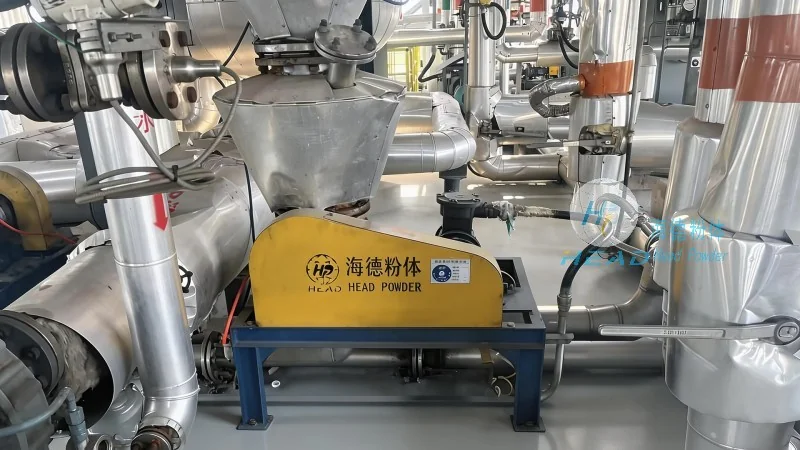
A solid powder pneumatic conveying system, commonly referred to as a pneumatic conveyor, is a mechanical device that uses compressed air or other gases to transport solid materials from one location to another. Unlike traditional mechanical conveyors like belt or screw conveyors, which rely on physical contact and friction to move materials, pneumatic conveyors utilize the force of air to create a flow of material particles. The system typically consists of a hopper, a blower or compressor, a pipeline network, and a discharge device, all working in tandem to ensure smooth and continuous material transport.
Key Design Principles of Pneumatic Conveying Systems
The design principles of a solid powder pneumatic conveying system are centered around the balance of air velocity, material properties, and system pressure. The primary goal is to achieve a stable, homogeneous flow of particles within the pipeline without causing blockages or excessive wear. Several key factors are considered during the design process:
1. **Air Velocity and Particle Size**: The air velocity in the pipeline must be sufficient to lift and carry the material particles. This velocity is determined by the size, density, and shape of the solid particles. For example, fine powders require higher air velocities compared to larger granules to maintain a consistent flow. The design ensures that the air velocity remains above the minimum conveying velocity, which is the threshold at which particles start to move with the air stream.
2. **System Pressure and Flow Rate**: The pressure of the compressed air or gas influences the flow rate and the distance over which materials can be conveyed. Higher pressure allows for longer conveying distances and larger volumes of material. However, excessive pressure can lead to increased energy consumption and potential wear on components. Engineers must optimize the pressure and flow rate to match the specific requirements of the application.
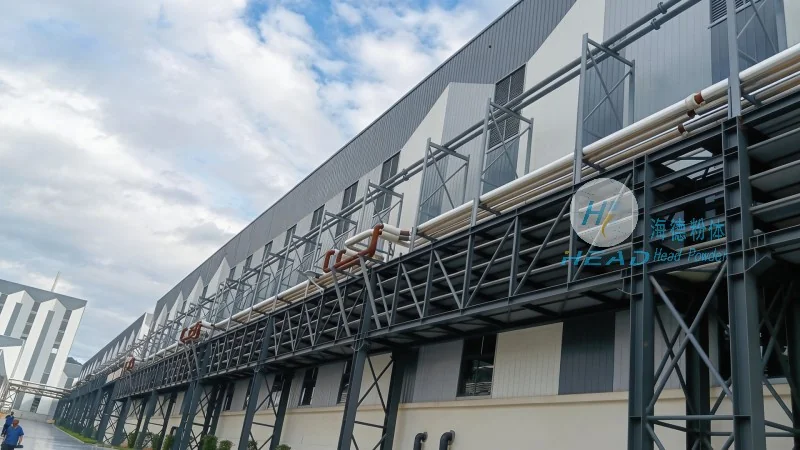
3. **Pipeline Design and Layout**: The layout of the pipeline, including the number of bends, vertical and horizontal sections, and the use of expansion joints, is critical to the system's performance. Sharp bends can cause particle separation and increase pressure losses, while proper pipe sizing ensures that the air velocity remains within the optimal range. The design also considers the need for cleaning and maintenance, incorporating features like access points and cleaning ports.
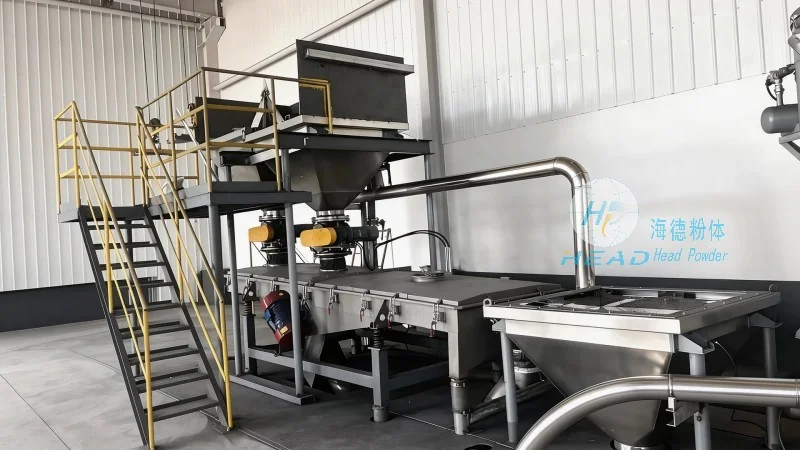
4. **Material Handling and Conditioning**: Some systems may include additional components such as feeders, classifiers, or conditioners to prepare the material for conveying. These components help to ensure that the material is in the correct state (e.g., dry, free-flowing) and to prevent issues like agglomeration or clogging. The design integrates these elements to enhance the overall efficiency and reliability of the system.
Components and Working Mechanism
The core components of a solid powder pneumatic conveying system work together to facilitate material transport. The process typically begins with the material being fed into a hopper, where it is stored and prepared for transport. From the hopper, the material is transferred to the pipeline via a feeder, which may be a rotary valve or a venturi feeder. The feeder controls the flow rate of the material, ensuring a consistent supply to the system.
Next, a blower or compressor provides the necessary compressed air or gas. This air is introduced into the pipeline, creating a flow that lifts and carries the solid particles. The air and material mixture travels through the pipeline network, which may include vertical lifts, horizontal runs, and bends. At the discharge end, a receiver or silo collects the material, and the air is separated from the particles using a cyclone or filter. The cleaned air is then discharged back into the environment or recirculated if the system is designed for that purpose.
Applications and Benefits
Solid powder pneumatic conveying systems are widely used in various industries, including food processing, pharmaceuticals, chemicals, and mining. Their applications range from transporting raw materials to finished products, and they are particularly suitable for materials that are difficult to handle with traditional conveyors, such as fine powders, abrasive materials, or those that are prone to dust generation.
The benefits of using pneumatic conveying systems include:
1. **Versatility**: The ability to transport a wide range of materials, from fine powders to bulk granules, without the need for multiple systems.
2. **Cleanliness and Hygiene**: The enclosed pipeline design prevents dust and contamination, making it ideal for food and pharmaceutical applications.
3. **Low Maintenance**: Compared to mechanical conveyors, pneumatic systems have fewer moving parts and require less maintenance, reducing downtime and operational costs.
4. **Energy Efficiency**: Modern systems use energy-efficient blowers and compressors, and the enclosed design minimizes energy losses.
5. **Space Efficiency**: The compact design of pneumatic conveyors allows for installation in limited spaces, making them suitable for retrofitting existing facilities.