

What is Organic Salt Powder Pneumatic Conveying? And What Are Its Design Principles?
HeadPowder, a leading provider in the field of powder handling solutions, specializes in advanced pneumatic conveying systems for organic salt powders. With a strong presence in Shandong, China, the company has established itself as a trusted partner for industries requiring efficient and reliable material transport. This article explores the concept of organic salt powder pneumatic conveying and delves into the core design principles that underpin such systems.

Understanding Organic Salt Powder Pneumatic Conveying
Organic salt powder pneumatic conveying is a method of transporting dry powder materials, such as organic salts, through a pipeline using a pressurized air or gas stream. Unlike traditional mechanical conveying systems, which rely on physical components like screws or belts, pneumatic conveying utilizes the force of air to move particles. This approach is particularly advantageous for organic salt powders due to their fine particle size and potential for dust generation, as it minimizes contact with moving parts and reduces the risk of contamination.
The Core Design Principles of Pneumatic Conveying Systems
The design of an organic salt powder pneumatic conveying system is governed by several key principles that ensure efficient and safe operation. These principles include the selection of appropriate air velocity, the configuration of the pipeline system, and the integration of components like feeders, cyclones, and filters. The air velocity must be carefully controlled to prevent particle deposition and ensure consistent flow. Typically, higher velocities are used for short-distance transport, while lower velocities are employed for longer distances to maintain particle integrity and prevent degradation.
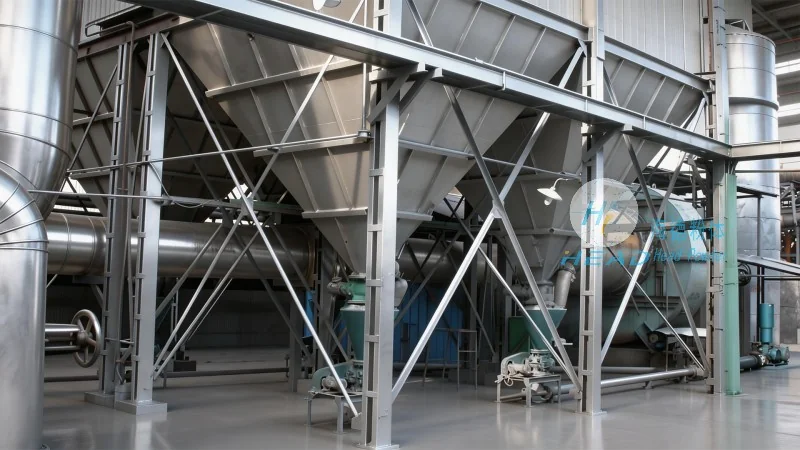
Another critical design principle is the pipeline layout, which must be designed to minimize pressure drops and ensure smooth particle flow. The system often incorporates bends, expansions, and contractions that are optimized to maintain the velocity of the air-salt mixture. Additionally, the inclusion of feeders, such as rotary valves or star feeders, is essential to control the flow rate of the organic salt powder into the system. These feeders ensure a consistent feed, preventing surges or blockages that could disrupt the conveying process.
Key Components and Their Functions in the System
Several components work in tandem to enable effective organic salt powder pneumatic conveying. The primary components include the air compressor or blower, which generates the necessary pressure to move the particles. The pipeline network, which may consist of straight sections, elbows, and tees, forms the path for the conveying medium. Cyclones are commonly used as separators to separate the organic salt powder from the air stream, allowing the powder to be collected at the destination while the air is discharged or recirculated. Filters are also integrated to capture any fine particles that may escape the cyclone, ensuring compliance with environmental regulations and maintaining product purity.
Advantages of Organic Salt Powder Pneumatic Conveying
Organic salt powder pneumatic conveying offers numerous advantages over traditional conveying methods. One of the most significant benefits is the ability to transport materials over long distances without the need for multiple transfer points. This reduces the risk of material loss and contamination, as the entire process is contained within a sealed system. Additionally, the system is highly flexible, allowing for changes in flow rate and direction without significant modifications. The absence of moving parts in contact with the organic salt powder minimizes wear and tear, leading to lower maintenance costs and longer system lifespans.
Applications in Industrial Settings
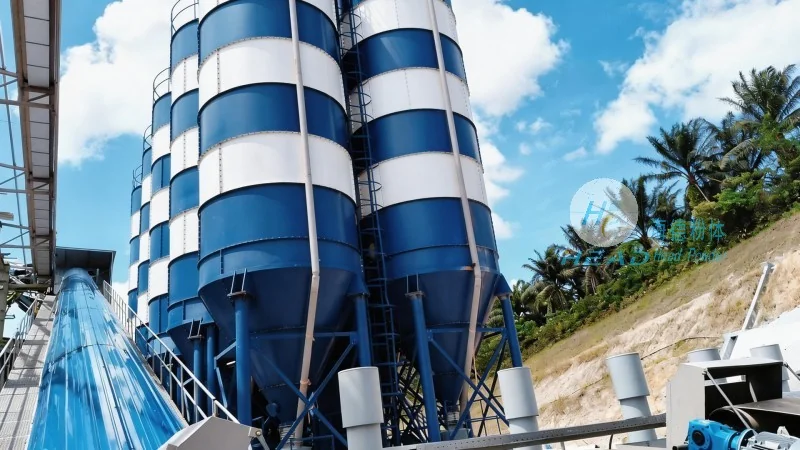
Organic salt powder pneumatic conveying is widely used in various industrial applications, particularly in the chemical, food, and pharmaceutical industries. In the chemical sector, it is used to transport organic salts used in the production of fertilizers, detergents, and other chemical products. The food industry employs this technology to handle organic salt powders used as flavor enhancers or preservatives. The pharmaceutical industry benefits from the system's ability to maintain product purity and prevent cross-contamination, which is critical for drug manufacturing.
Conclusion
Organic salt powder pneumatic conveying is a sophisticated and efficient method for transporting fine organic salt powders. The design principles, including controlled air velocity, optimized pipeline layout, and the integration of key components like feeders and cyclones, are crucial for ensuring reliable operation. As a leading company in this field, HeadPowder Engineering Co., Ltd., based in Shandong, China, provides tailored solutions that meet the specific needs of industries, enhancing productivity and maintaining product quality. The adoption of such systems not only improves operational efficiency but also contributes to a safer and more sustainable industrial environment.