

[Efficient and Clean Solution for Lithium-Ion Battery Material Handling: An In-Depth Look at Pneumat
As the demand for lithium-ion batteries continues to grow in the modern energy landscape, the efficiency and cleanliness of material handling processes have become critical factors in battery manufacturing. Among the various technologies available for transporting lithium-ion battery materials, pneumatic conveying stands out as a preferred choice for its ability to deliver high efficiency and a clean transfer environment. This article delves into the principles, advantages, and practical applications of pneumatic conveying technology, specifically tailored for the handling of ternary lithium materials, and highlights how companies like Shandong HeadPowder Engineering Co., Ltd. are leveraging this technology to enhance production efficiency.
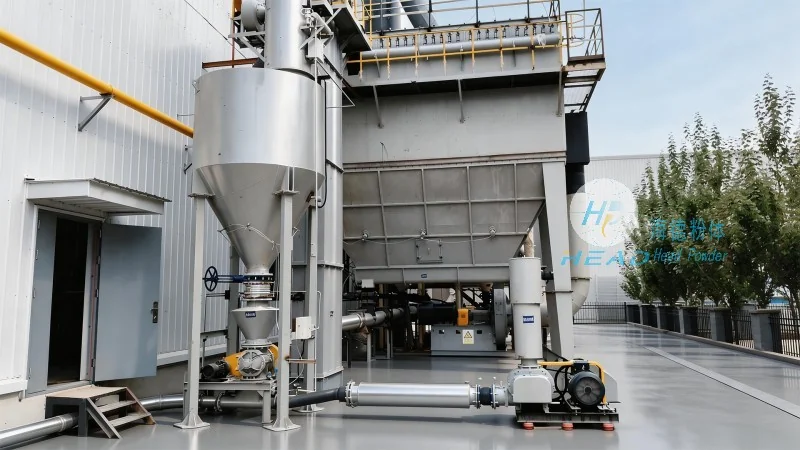
Understanding Pneumatic Conveying Technology for Ternary Lithium Materials
Pneumatic conveying, also known as air conveying, is a method of transporting bulk materials through a pipeline using air pressure or vacuum. In the context of ternary lithium battery production, this technology is particularly valuable for handling fine powders such as lithium cobalt oxide (LCO), lithium nickel manganese cobalt oxide (NMC), and other raw materials used in the battery manufacturing process. The core principle involves creating a flow of air within a pipeline, which then carries the material particles from the source to the destination. This process eliminates the need for mechanical components like belts or buckets, reducing maintenance and increasing operational reliability.
The Advantages of Pneumatic Conveying in Lithium-Ion Battery Material Handling
When compared to traditional mechanical conveying methods, pneumatic conveying offers several distinct advantages that are crucial for modern battery production. First and foremost, it provides a completely clean and dust-free transfer environment. Unlike belt or screw conveyors, which can generate significant dust and contamination, pneumatic systems enclose the material within a sealed pipeline, preventing exposure to the air and minimizing the risk of cross-contamination. This is especially important for high-purity lithium materials, where even trace impurities can affect battery performance and safety.
Secondly, pneumatic conveying systems are highly efficient in terms of material throughput. By utilizing air pressure to move materials, these systems can achieve high flow rates and reduce the time required for material transfer. This efficiency is further enhanced by the ability to integrate multiple conveying lines and control systems, allowing for precise and automated material handling. Additionally, pneumatic conveying is flexible and can be easily adapted to different production layouts, making it suitable for both small-scale and large-scale battery manufacturing facilities.
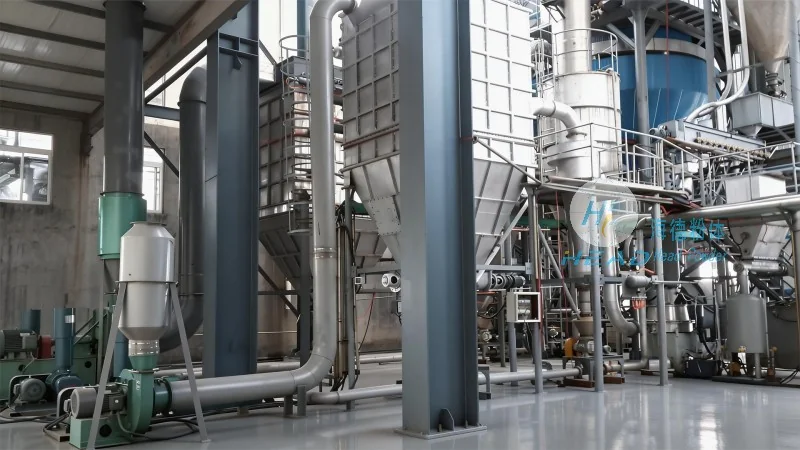
Shandong HeadPowder Engineering Co., Ltd.: A Leader in Pneumatic Conveying Solutions
At the forefront of providing advanced material handling solutions for the lithium-ion battery industry is Shandong HeadPowder Engineering Co., Ltd., commonly known as HeadPowder. With its headquarters located in Shandong, China, HeadPowder specializes in designing, manufacturing, and implementing customized pneumatic conveying systems tailored to the specific needs of battery manufacturers. The company's expertise lies in understanding the unique properties of ternary lithium materials, such as their fine particle size, reactivity, and sensitivity to moisture, and developing systems that address these challenges effectively.
HeadPowder's pneumatic conveying solutions are engineered to ensure optimal performance and reliability. The company employs advanced design software and rigorous testing protocols to ensure that each system meets the highest standards of efficiency, cleanliness, and safety. For example, their systems may incorporate features like positive pressure or negative pressure operation, depending on the specific application requirements. Positive pressure systems are commonly used for long-distance or high-volume conveying, while negative pressure systems are ideal for handling materials that are sensitive to air exposure or require a controlled environment.
Key Features and Applications of Pneumatic Conveying for Ternary Lithium
One of the key features of pneumatic conveying systems is their ability to handle a wide range of material characteristics. Whether dealing with dry powders, granules, or even wet materials, these systems can be configured to accommodate different particle sizes and flow properties. In the case of ternary lithium materials, the systems are designed to handle fine powders with high purity, ensuring that the material remains intact and free from degradation during transport. This is achieved through the use of specialized components such as high-efficiency cyclones, filters, and material separators that maintain the integrity of the lithium powder.
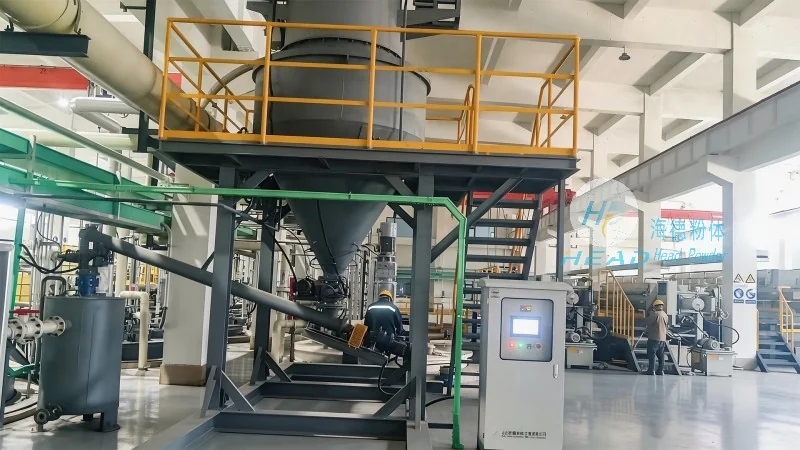
Furthermore, pneumatic conveying systems can be integrated with other production equipment, such as mixers, dryers, and coating machines, to create a seamless material handling workflow. This integration allows for a continuous production process, reducing downtime and improving overall productivity. For instance, a pneumatic conveying system can be used to transport lithium powder from a storage silo to a mixing machine, where it is combined with other battery active materials before being sent to a coating line. This streamlined process minimizes material handling steps and ensures consistent material quality.
Ensuring Clean and Efficient Material Transfer: Best Practices
To maximize the benefits of pneumatic conveying in ternary lithium battery production, several best practices should be followed. First, regular maintenance of the system components is essential to prevent clogging and ensure consistent performance. This includes cleaning the pipeline, replacing filters, and inspecting the air compressor and other moving parts. Second, proper system design is crucial to avoid material degradation or contamination. This involves selecting the appropriate air pressure, flow rate, and pipeline diameter based on the material properties and conveying distance. Third, implementing safety measures, such as explosion-proof designs and dust collection systems, is vital to protect both the equipment and the personnel working with the lithium materials.
By adhering to these best practices, battery manufacturers can achieve significant improvements in material handling efficiency and product quality. The clean and efficient transfer of ternary lithium materials through pneumatic conveying not only reduces operational costs but also enhances the overall safety and reliability of the battery production process. As the demand for lithium-ion batteries continues to rise, the role of advanced material handling technologies like pneumatic conveying will become increasingly important in meeting the industry's growing needs.