

Advantages and Disadvantages Comparison of Negative Pressure and Positive Pressure Conveying in Fine
When it comes to the efficient and reliable transportation of fine powders, pneumatic conveying systems play a crucial role in various industrial applications. Among the different methods available, negative pressure (suction) and positive pressure (blowing) conveying are two primary approaches. Each method has its own set of advantages and disadvantages, which can significantly impact the overall performance, cost, and operational considerations of a system. This article provides a detailed comparison of negative pressure and positive pressure conveying in the context of fine powder handling, helping industry professionals make informed decisions based on their specific needs.
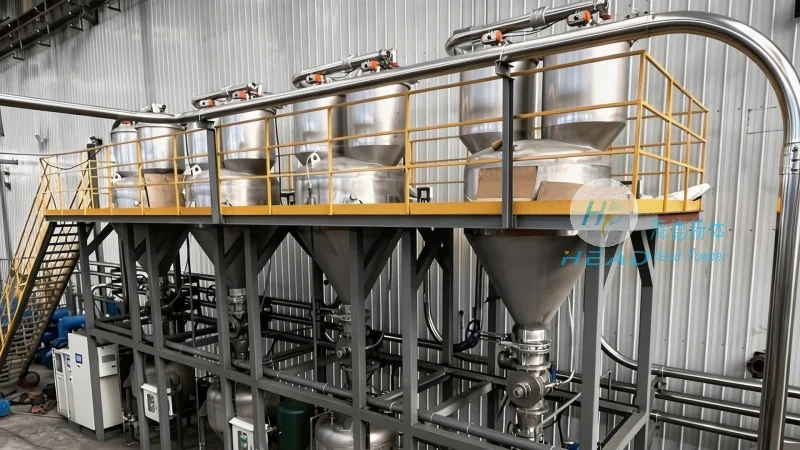
Overview of Pneumatic Conveying Systems
Pneumatic conveying systems utilize air or gas to transport bulk materials, including fine powders, through a pipeline network. The fundamental principle involves creating a pressure differential to move the material from the source to the destination. The choice between negative pressure and positive pressure systems depends on factors such as material properties, system layout, and operational requirements.
Negative Pressure (Suction) Conveying
Negative pressure conveying, also known as suction conveying, operates by creating a low-pressure zone at the material source. This is typically achieved using a vacuum pump or fan that draws air and material particles into the system. The primary advantage of this method is that it can collect material from multiple points and transport it to a central collection point without the need for additional material handling equipment at the source. This makes it particularly suitable for applications where the material is generated in a dispersed manner, such as in dust collection systems or from multiple production lines.
One of the key benefits of negative pressure conveying is its ability to handle fine powders without causing excessive wear on the system components. The low pressure environment reduces the risk of particle degradation and ensures that the material remains in its original state. Additionally, this method is generally less intrusive at the source, as it does not require the installation of blowers or other equipment directly at the material generation point, which can be advantageous in sensitive or confined spaces.
However, negative pressure conveying also has several drawbacks. The most significant limitation is its limited conveying distance and capacity. The suction effect diminishes over longer distances, making it less suitable for applications requiring long-distance transport. Furthermore, the system can be more susceptible to blockages and clogging, especially with cohesive or sticky powders, as the low pressure may not provide sufficient force to maintain flow. This can lead to increased maintenance and downtime.
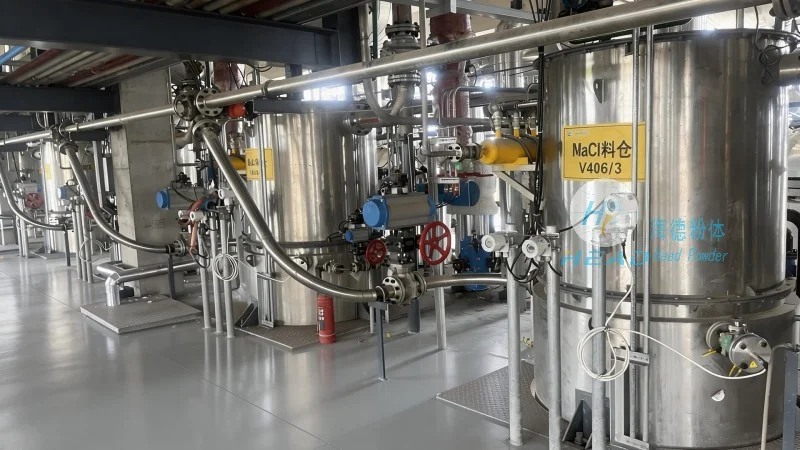
Positive Pressure (Blowing) Conveying
Positive pressure conveying, or blowing conveying, works by forcing air and material particles through the pipeline using a positive pressure source, such as a blower or compressor. This method is generally more suitable for longer conveying distances and higher material capacities compared to negative pressure systems. The high pressure environment ensures that the material is propelled through the system with sufficient force, reducing the risk of blockages and clogging.
A major advantage of positive pressure conveying is its ability to handle a wide range of materials, including abrasive and cohesive powders, with minimal wear on the system components. The high pressure also allows for the transportation of materials over longer distances without significant loss of efficiency. Additionally, this method is often more reliable in terms of maintaining consistent flow rates, as the positive pressure source provides a steady supply of air to push the material forward.
Nevertheless, positive pressure conveying has its own set of challenges. The high pressure environment can lead to increased wear on the pipeline and other components, particularly with abrasive powders. This may require more frequent maintenance and replacement of parts, which can increase operational costs. Furthermore, the system can be more intrusive at the source, as it requires the installation of blowers or compressors directly at the material generation point, which may not be feasible in all environments or may pose safety concerns.
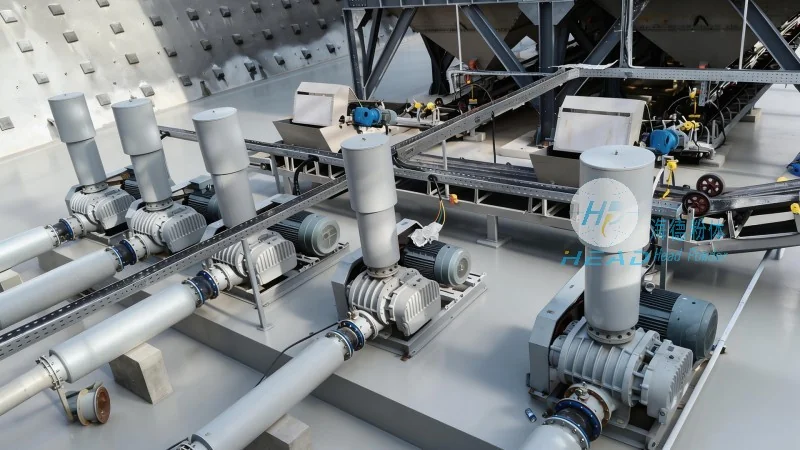
Key Considerations for Choosing Between the Two Methods
When selecting between negative pressure and positive pressure conveying for fine powder applications, several factors must be considered. The first and most critical factor is the material properties, including particle size, density, and flow characteristics. Fine powders with high moisture content or cohesive tendencies may perform better in negative pressure systems due to the lower pressure environment, which reduces the risk of agglomeration. Conversely, abrasive or high-density powders may benefit from the higher pressure and force provided by positive pressure systems.
The second factor is the system layout and distance requirements. If the material needs to be transported over long distances or from multiple sources to a central destination, positive pressure conveying is often the preferred choice due to its longer effective range. In contrast, for short-distance or localized collection, negative pressure conveying can be more practical and cost-effective.
Operational costs and maintenance considerations also play a significant role. Negative pressure systems typically have lower initial costs and require less maintenance, as they do not involve high-pressure components. However, the potential for increased downtime due to blockages may offset these initial savings. Positive pressure systems, while more expensive to install, may offer lower long-term maintenance costs due to their higher reliability and ability to handle a wider range of materials.
Conclusion
In conclusion, both negative pressure and positive pressure conveying systems have their own unique advantages and disadvantages when applied to fine powder handling. The choice between the two methods should be based on a thorough analysis of the specific material characteristics, system requirements, and operational constraints. By carefully evaluating these factors, industry professionals can select the most appropriate conveying system to ensure efficient, reliable, and cost-effective material transport. As a leading provider of pneumatic conveying solutions, Shandong HeadPowder Engineering Co., Ltd. specializes in designing and implementing customized systems tailored to meet the diverse needs of various industries, ensuring optimal performance and longevity for their clients' operations.