Working Principle and Features of High-Alumina Fly Ash Powder Conveying System Equipment
Release time:2026-09-17 15:01:21
name of the company:Shandong Headpowder Engineering Co., Ltd.
telephone:156-6277-7102
contacts:Zhang manager
High-alumina fly ash powder conveying systems are critical components in industrial processes, particularly in the handling and transportation of high-alumina fly ash, a byproduct from coal combustion. These systems are designed to efficiently transport the fine powder over long distances while maintaining product integrity and operational efficiency. The equipment from Shandong HeadPowder Engineering Co., Ltd. (commonly known as HeadPowder) exemplifies advanced technology in this field, offering reliable solutions tailored to various industrial applications.
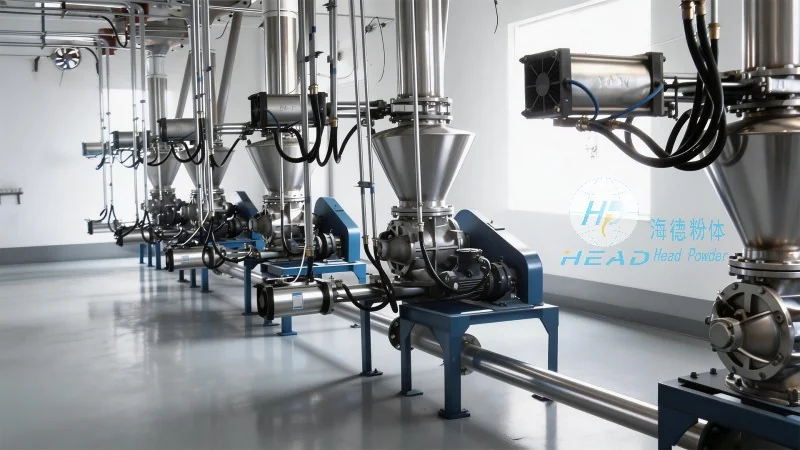
Overview of High-Alumina Fly Ash Powder Conveying Systems
High-alumina fly ash, also known as aluminous fly ash, is a fine powder with high alumina content, typically used in cement production, concrete manufacturing, and other construction materials. The conveying system's primary function is to move this powder from its source, such as a storage silo or a processing plant, to the end-use location, like a cement kiln or a batching plant. The efficiency of the system directly impacts production throughput and operational costs, making it a vital investment for industrial facilities.
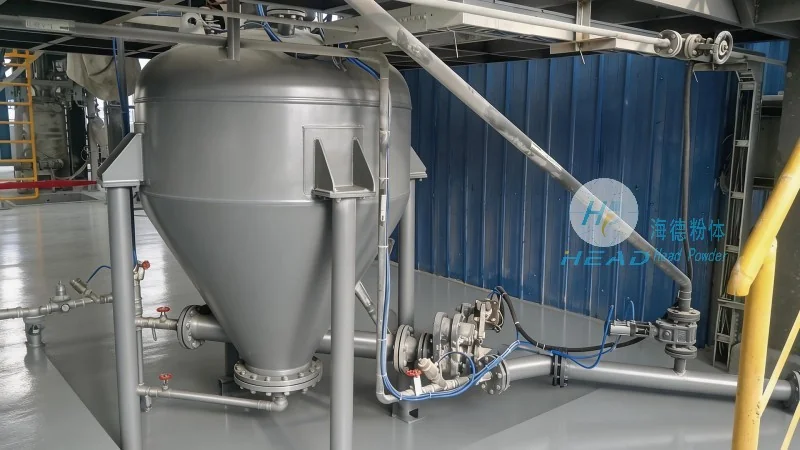
Working Principle of the High-Alumina Fly Ash Powder Conveying System
The core of the conveying system is a combination of components that work in tandem to achieve seamless powder transport. The system typically includes a hopper for material storage, a feeder to control the flow rate, a conveyor (such as a pneumatic or mechanical conveyor), and a control system to regulate operations. The working principle involves the following key steps:
- Material Storage and Feeding: The high-alumina fly ash is stored in a hopper. A feeder, often a rotary valve or a screw feeder, controls the discharge rate, ensuring a consistent flow of powder into the conveyor.
- Pneumatic Conveying: Many systems utilize pneumatic conveying, where the powder is transported through a pipeline using compressed air. The air pressure creates a flow that carries the fine particles, minimizing particle degradation and ensuring uniform distribution.
- Control and Monitoring: Advanced control systems monitor parameters such as pressure, flow rate, and temperature, adjusting operations in real-time to maintain optimal performance and prevent system failures.
Key Features of the High-Alumina Fly Ash Powder Conveying System
The equipment from Shandong HeadPowder Engineering Co., Ltd. incorporates several notable features that enhance its performance and reliability:
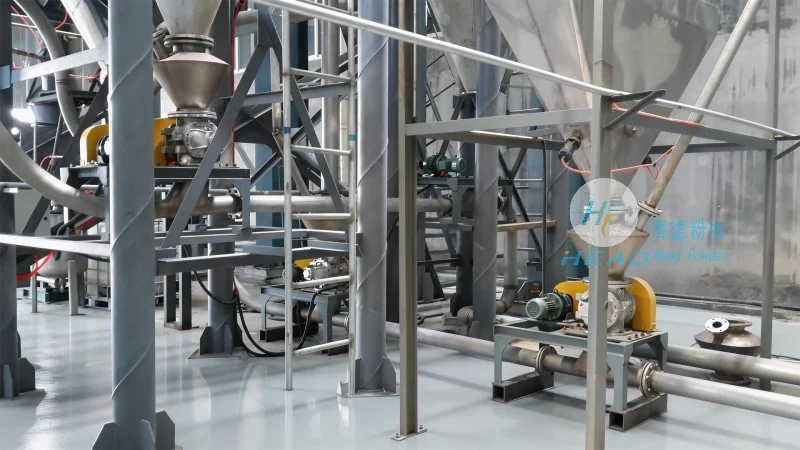
- High Efficiency and Low Energy Consumption: The system is engineered to minimize energy usage while maximizing conveying capacity, reducing operational costs for industrial clients.
- Material Integrity Preservation: Specialized design elements, such as smooth pipelines and low-friction components, prevent particle agglomeration and degradation, ensuring the high-alumina fly ash retains its quality for downstream applications.
- Customization and Scalability: HeadPowder offers customizable solutions to fit specific industrial needs, with options for different conveyor lengths, material capacities, and operational environments. The systems can be scaled to accommodate varying production demands.
- Robust Construction and Durability: The equipment is built with high-quality materials to withstand the abrasive nature of high-alumina fly ash, ensuring long-term reliability and minimal maintenance requirements.
- Advanced Control and Safety: Integrated control systems provide precise operation and safety features, such as overload protection and emergency stop mechanisms, to safeguard personnel and equipment.
Application and Benefits in Industrial Settings
High-alumina fly ash powder conveying systems are widely used in the cement, concrete, and construction industries. The primary benefits of implementing such a system include improved production efficiency, reduced labor costs, and enhanced product quality. By ensuring consistent and reliable transport of high-alumina fly ash, these systems contribute to higher overall plant productivity and better control over the final product's properties.




