Quantitative weighing powder conveying lines are essential equipment in modern powder handling systems, widely used across various industries such as pharmaceuticals, food processing, chemical manufacturing, and more. These systems are designed to accurately measure and transport powders in precise quantities, ensuring consistent quality and efficiency in production processes.
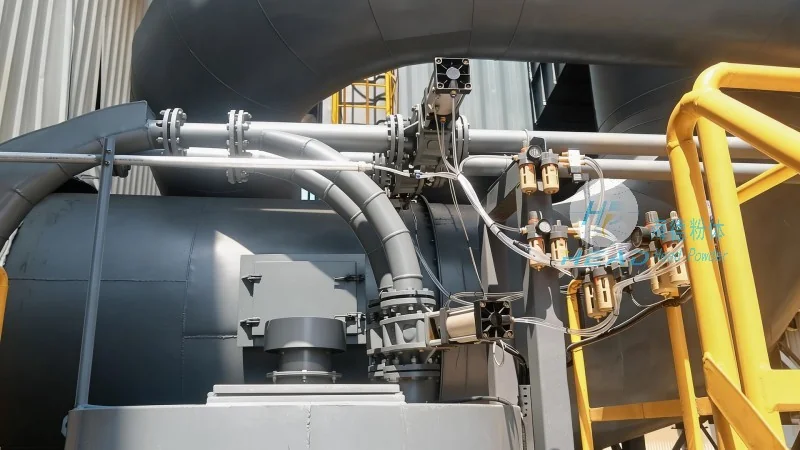
Company Introduction: HeadPowder
HeadPowder, or Shandong HeadPowder Engineering Co., Ltd., is a leading manufacturer specializing in the design, development, and production of advanced powder handling solutions. With a strong focus on innovation and precision engineering, the company has established itself as a trusted partner for businesses seeking reliable and efficient powder conveying systems. HeadPowder is headquartered in Shandong, China, where its state-of-the-art facilities and experienced team of engineers ensure the highest standards of quality and performance.
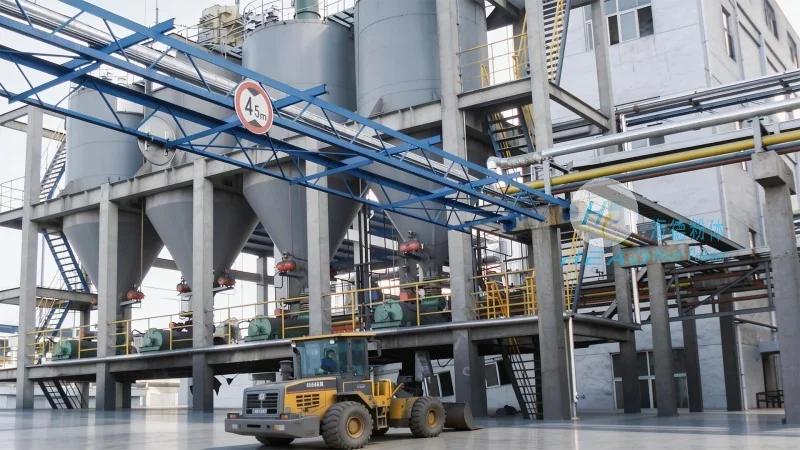
Overview of Quantitative Weighing Powder Conveying Lines
Quantitative weighing powder conveying lines combine the functions of material feeding, weighing, and conveying into a single integrated system. The primary goal is to deliver powders in exact, pre-determined quantities, which is crucial for applications that require strict dosage control, such as in pharmaceutical compounding, food formulation, and chemical batching. These systems typically consist of several key components, including a hopper for material storage, a weighing platform or scale, a conveyor mechanism (often a screw or pneumatic conveyor), and a control unit that manages the entire process.
The Operation Process of Quantitative Weighing Powder Conveying Lines
The operation of a quantitative weighing powder conveying line involves a series of coordinated steps to ensure accurate and consistent powder delivery. The process typically begins with the material being fed into the hopper from a bulk storage container or a silo. As the material accumulates in the hopper, it exerts pressure on the weighing platform, which is equipped with load cells or sensors that detect the weight of the material. The control unit continuously monitors the weight data and compares it against the target setpoint. When the target weight is reached, the control system triggers the conveyor to stop, preventing overfilling or underfilling. The system then proceeds to the next phase, which may involve discharging the weighed material into a container, bag, or further processing equipment. After the discharge, the conveyor resets and prepares for the next cycle, ensuring a seamless and repeatable operation.
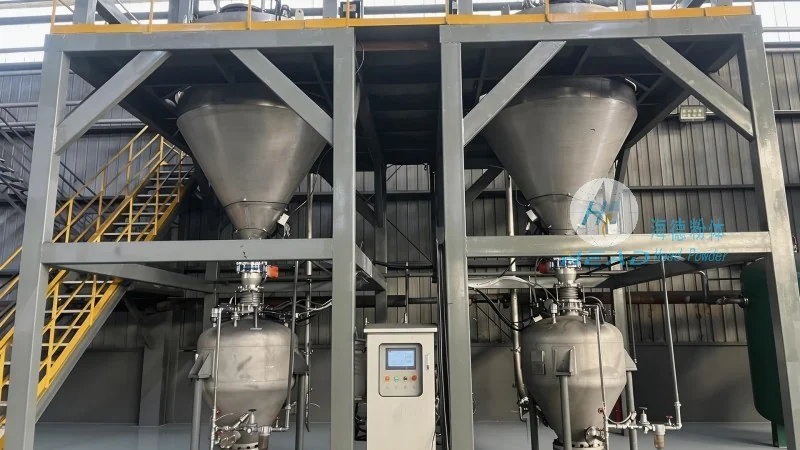
Working Principle of Quantitative Weighing Powder Conveying Lines
The working principle of quantitative weighing powder conveying lines is based on precision measurement and automated control. At the core of the system is the weighing mechanism, which uses load cells or strain gauges to convert the force exerted by the powder into an electrical signal. This signal is transmitted to the control unit, which processes the data and adjusts the conveyor speed or feeding rate accordingly. The control unit may employ advanced algorithms, such as PID (Proportional-Integral-Derivative) control, to maintain the desired weight accuracy, even when faced with variations in material density or flow rate. Additionally, the system often includes features like anti-clogging mechanisms, material flow monitoring sensors, and automatic cleaning functions to ensure reliable operation and prevent downtime. The integration of these components allows the system to operate with high precision, repeatability, and efficiency, making it an indispensable tool for industries where accuracy and consistency are paramount.




