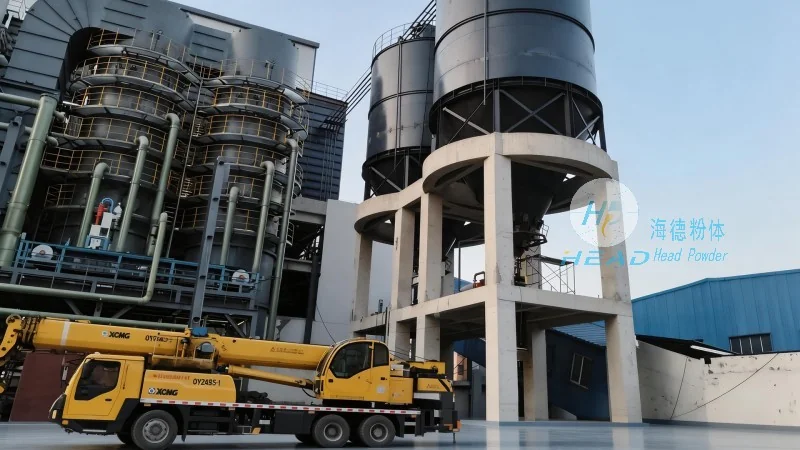
For manufacturers and engineers in the battery materials industry, the efficient and reliable handling of ternary cathode materials is a critical concern. As a key component in lithium-ion batteries, ternary cathode materials (typically composed of nickel, cobalt, and manganese) require specialized handling systems to ensure quality and safety throughout the production process. Among the various methods for material transport, pneumatic conveying stands out as a preferred solution due to its ability to minimize contamination, maintain material integrity, and enhance operational flexibility. This article explores the primary pneumatic conveying structures used for ternary cathode materials, highlighting their design principles, operational advantages, and practical applications.
Understanding Ternary Cathode Materials and Their Handling Challenges
Ternary cathode materials are a class of lithium-ion battery cathodes that combine nickel, cobalt, and manganese in specific ratios to optimize performance. These materials are known for their high energy density, improved thermal stability, and enhanced cycle life compared to traditional cathode chemistries. However, their fine particle size, hygroscopic nature, and sensitivity to moisture and oxygen make them challenging to handle. Conventional bulk material handling methods, such as belt conveyors or bucket elevators, often introduce friction, heat, and contamination, which can degrade the material's performance and reduce battery efficiency. Pneumatic conveying systems address these challenges by transporting materials in a closed, controlled environment, minimizing exposure to external factors.
Key Pneumatic Conveying Structures for Ternary Cathode Materials
Several pneumatic conveying structures are commonly employed in the processing of ternary cathode materials, each with distinct characteristics suited to different production scales and material properties. The selection of a specific structure depends on factors such as material flow rate, particle size distribution, and the need for low contamination levels. Below are the primary structures used in industry:
1. Dilute Phase Pneumatic Conveying Systems
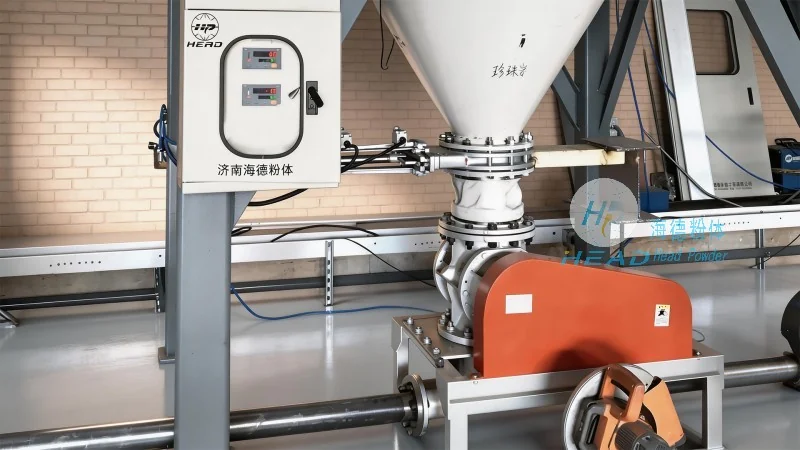
Dilute phase pneumatic conveying systems are widely used for ternary cathode materials due to their efficiency and ability to handle fine powders. In this system, material is suspended in a high-velocity air stream and transported through a pipeline. The key components include a feed hopper, a rotary airlock valve, a venturi or pressure drop device, and a receiver. The feed hopper stores the material, while the rotary airlock valve controls the flow rate to maintain a consistent material-air ratio. The venturi or pressure drop device creates the necessary pressure differential to move the material through the pipeline. Dilute phase systems are particularly effective for low to medium flow rates and are suitable for materials with a particle size range of 1-100 microns. They offer advantages such as low pressure drop, minimal material degradation, and easy integration with existing processing lines.
2. Dense Phase Pneumatic Conveying Systems
For applications requiring higher material flow rates or more sensitive materials, dense phase pneumatic conveying systems are preferred. Unlike dilute phase systems, dense phase systems transport material in a more compact form, with the material forming a plug or slug within the air stream. This results in lower air velocity and reduced particle attrition. The system typically includes a positive displacement blower or compressor, a feed hopper with a metering device, and a receiver. The positive displacement equipment provides a consistent pressure and flow rate, ensuring stable material transport. Dense phase systems are ideal for materials that are prone to agglomeration or require gentle handling, such as certain grades of ternary cathode powders. They are commonly used in large-scale production facilities where high throughput is essential.
3. Hybrid Pneumatic Conveying Systems
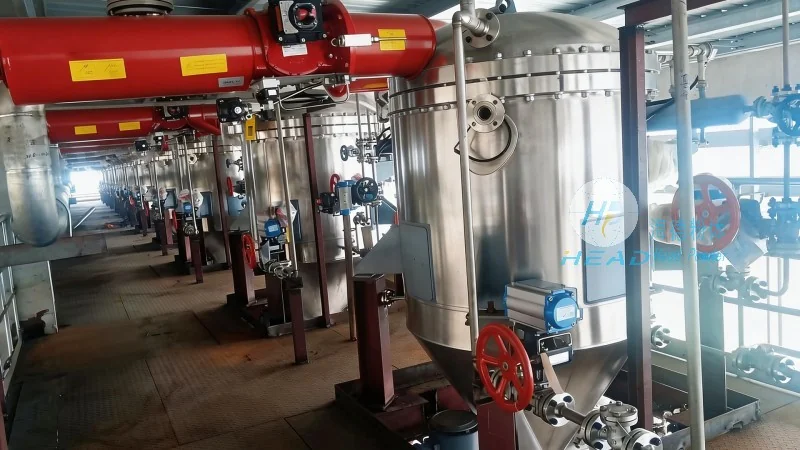
Hybrid pneumatic conveying systems combine elements of both dilute and dense phase systems to offer a balance of efficiency and material protection. These systems may use a dilute phase approach for the initial transport of material from the feed hopper to a transfer point, followed by a dense phase section for the final delivery to the receiver. This configuration allows for the handling of a wide range of material types and flow rates while maintaining low contamination levels. Hybrid systems are often employed in complex production lines where multiple material streams need to be integrated or where space constraints require a compact design.
4. Closed Loop Pneumatic Conveying Systems
For applications where material recovery and environmental compliance are critical, closed loop pneumatic conveying systems are utilized. These systems recycle the air used for conveying, reducing energy consumption and minimizing emissions. The system includes a filter to capture any fine particles that may escape, ensuring that the air is returned to the system for reuse. Closed loop systems are particularly important for handling hygroscopic materials like ternary cathode powders, as they prevent moisture absorption from the air and maintain material quality. They are commonly used in facilities that operate under strict environmental regulations or where material cost is a significant factor.
Operational Advantages and Considerations for Ternary Cathode Materials
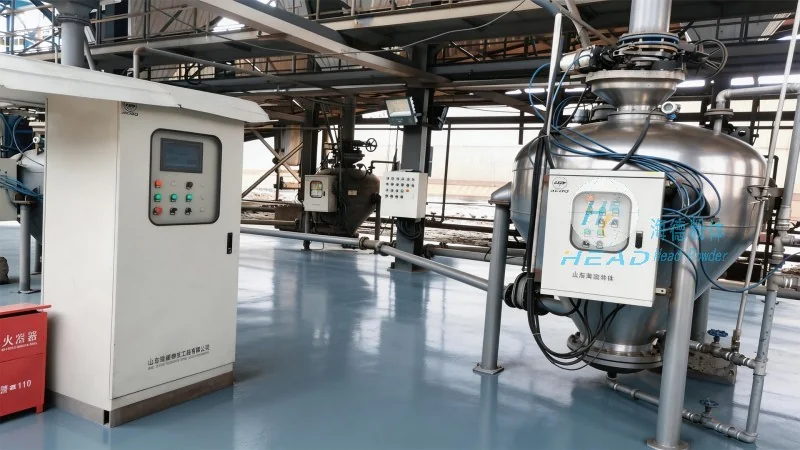
Each pneumatic conveying structure offers unique advantages for the handling of ternary cathode materials. Dilute phase systems excel in terms of energy efficiency and low pressure drop, making them suitable for medium-scale operations. Dense phase systems provide higher throughput and gentler handling, which is essential for sensitive materials. Hybrid systems offer flexibility and adaptability, while closed loop systems enhance environmental performance and material recovery. When selecting a pneumatic conveying structure, manufacturers must consider factors such as material properties (e.g., particle size, moisture content), production scale, and operational costs. Additionally, regular maintenance and cleaning of the system are crucial to prevent material buildup and ensure consistent performance.
Conclusion
The efficient handling of ternary cathode materials is vital to the success of lithium-ion battery production. Pneumatic conveying structures, particularly those designed for fine powders, play a pivotal role in maintaining material quality and operational efficiency. By understanding the characteristics of different pneumatic conveying systems and selecting the appropriate structure based on specific requirements, manufacturers can optimize their production processes and enhance overall performance. As the battery industry continues to evolve, the development of advanced pneumatic conveying technologies will remain a key focus for ensuring the reliability and sustainability of battery materials handling.




