

Pneumatic Conveying of Ternary Cathode Material Powders: Design Principles Explained
Understanding the pneumatic conveying of ternary cathode material powders is crucial for optimizing material handling in battery manufacturing processes. This article delves into the design principles that underpin efficient and reliable systems for transporting these critical components.
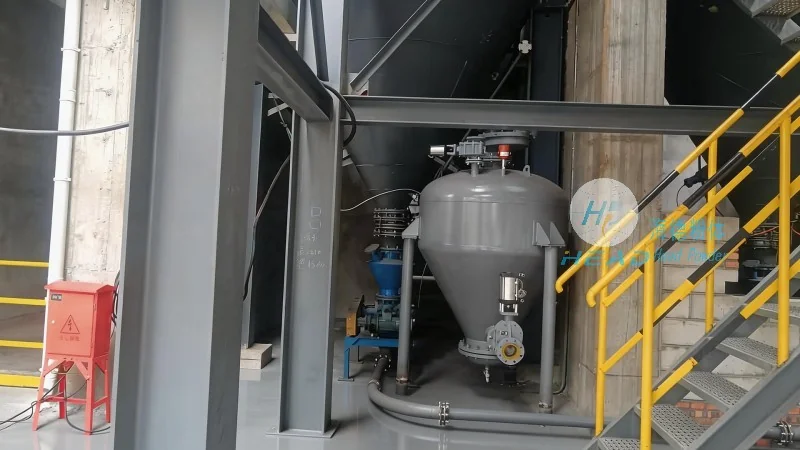
Introduction to Ternary Cathode Material Pneumatic Conveying
Ternary cathode materials, commonly used in lithium-ion batteries, require precise and controlled handling to maintain their quality and performance. Pneumatic conveying systems offer a solution by transporting these powders through a pressurized or vacuum environment, eliminating the need for mechanical components that could cause contamination or degradation. The design of such systems must balance efficiency, material integrity, and operational safety.
Key Design Principles for Ternary Cathode Material Conveying Systems
The core design principles for pneumatic conveying of ternary cathode powders revolve around several critical factors. First, the system must ensure minimal particle degradation, as these materials are sensitive to mechanical stress and temperature variations. This is achieved through the selection of appropriate duct materials, such as stainless steel or specialized polymers, and the use of gentle acceleration and deceleration mechanisms. Second, the system must maintain consistent flow rates and pressure differentials to prevent clogging or uneven distribution of the material. This often involves the integration of flow control devices, such as rotary valves or pressure regulators, to regulate the air and material mixture.
Third, the design must address the potential for material segregation or agglomeration, which can occur during transport. To mitigate this, systems may incorporate features like vibration or agitation elements, or use air classification techniques to maintain a uniform particle size distribution. Additionally, the system must ensure proper filtration and dust collection to protect both the environment and downstream equipment from fine particulate emissions.
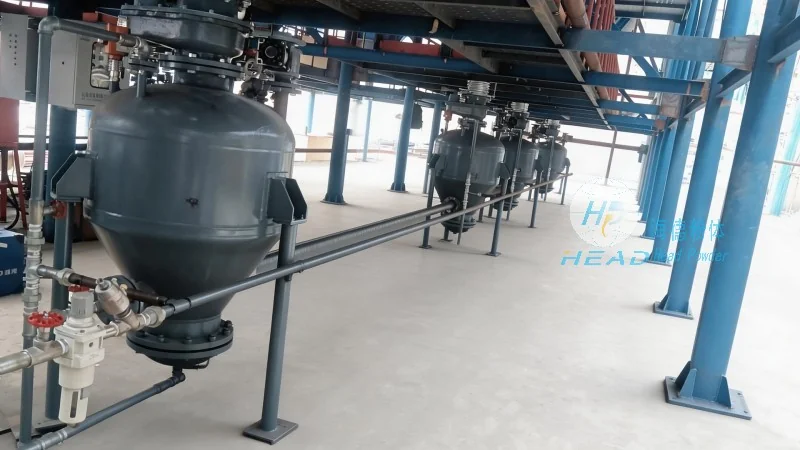
Company Overview: Shandong HeadPowder Engineering Co., Ltd.
HeadPowder, a leading provider in the field, specializes in the engineering and manufacturing of advanced material handling solutions. With a focus on precision and reliability, the company has developed tailored pneumatic conveying systems for the battery industry. Based in Shandong, China, HeadPowder leverages years of experience to deliver customized solutions that meet the stringent requirements of modern battery production.
Technical Considerations in Ternary Cathode Material Conveying
When designing a pneumatic conveying system for ternary cathode materials, several technical aspects must be carefully considered. The choice between positive pressure and negative pressure systems depends on the material's properties and the system's layout. Positive pressure systems, where air is blown into the system, are often preferred for long-distance transport and to prevent contamination from external sources. Negative pressure systems, on the other hand, are suitable for short distances and when handling materials that are sensitive to air exposure.
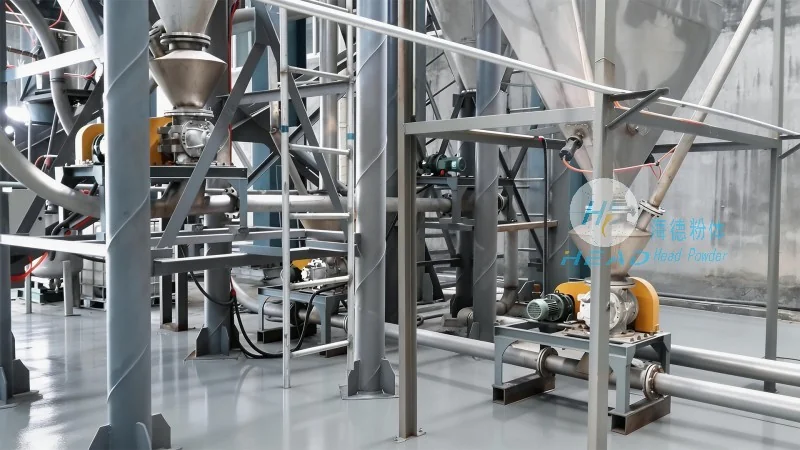
Another critical consideration is the velocity of the air-stream. The air velocity must be high enough to keep the material suspended but low enough to prevent particle attrition. This is typically determined by the material's density, particle size, and flow characteristics. Properly sizing the ducts and using appropriate fittings, such as elbows and transitions, is essential to maintain the required velocity without excessive energy consumption.
The system's control and monitoring capabilities also play a vital role in ensuring consistent performance. Modern pneumatic conveying systems often include sensors for pressure, flow, and temperature, allowing for real-time adjustments and fault detection. This helps in maintaining the material's quality and preventing operational issues that could lead to downtime or product defects.
Conclusion
Pneumatic conveying of ternary cathode material powders is a sophisticated process that requires a deep understanding of material properties and system design. By adhering to the key principles outlined above, manufacturers can achieve efficient, reliable, and safe material handling, ultimately contributing to the quality and performance of lithium-ion batteries. HeadPowder, with its expertise and commitment to innovation, continues to provide advanced solutions that meet the evolving needs of the battery industry.