HeadPowder, a leading engineering company based in Shandong, China, specializes in the design, manufacturing, and installation of advanced pneumatic conveying systems tailored for the efficient handling of cement and aggregate materials. This article delves into the operational process and underlying working principles of such systems, providing a comprehensive understanding for industry professionals and potential clients.
Pneumatic Conveying Systems: An Overview
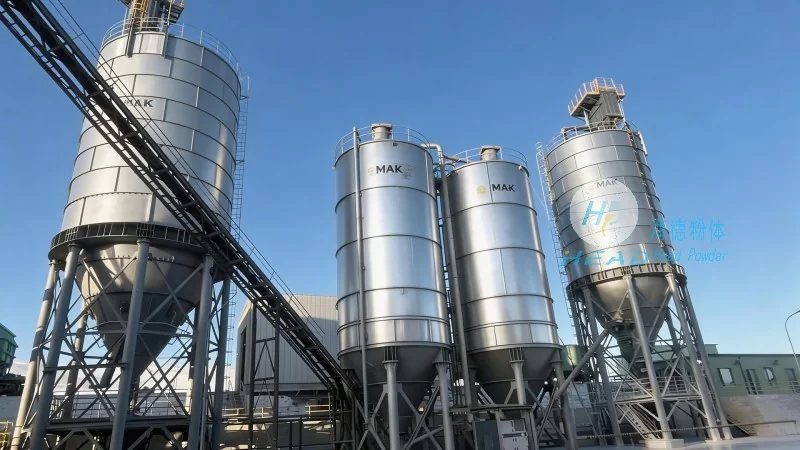
Pneumatic conveying, also known as air conveying, is a method of transporting bulk materials through a pipeline using pressurized or vacuum air. In the context of cement and aggregate industries, this technology offers a highly effective solution for moving materials from storage silos, processing units, or production lines to various destinations, such as mixing plants, storage facilities, or packaging areas. The system typically consists of several key components, including a hopper for material loading, a conveyor line (often with bends and straight sections), a dust collector or filter system, and a control unit for managing air flow and pressure.
HeadPowder's Expertise in Pneumatic Conveying Solutions
Shandong HeadPowder Engineering Co., Ltd. has established itself as a trusted provider of customized pneumatic conveying solutions for the cement and construction material sectors. With a strong focus on innovation and adherence to industry standards, the company leverages decades of experience to develop systems that meet the unique demands of each project. HeadPowder's team of engineers and technicians works closely with clients to assess material characteristics, flow rates, and operational requirements, ensuring that the final system is optimized for efficiency, reliability, and cost-effectiveness.
The Operational Process of Pneumatic Conveying for Cement Aggregate Materials
The operation of a pneumatic conveying system for cement and aggregate materials involves a series of coordinated steps. Initially, the bulk material is fed into a hopper equipped with a loading mechanism, such as a rotary valve or a screw feeder. The material then enters the conveyor line, where it is propelled by a stream of air generated by a blower or a vacuum pump. The air flow can be either positive pressure (where air is forced through the system) or negative pressure (where air is drawn out, creating a vacuum). The choice of pressure type depends on factors like material density, particle size, and the distance to be conveyed.
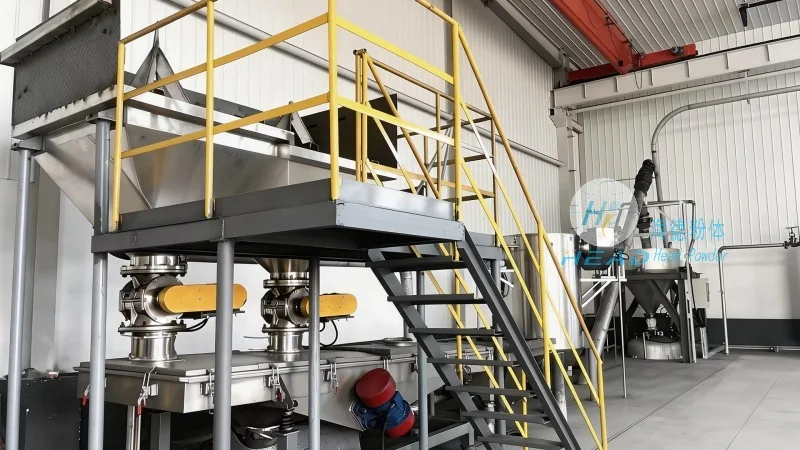
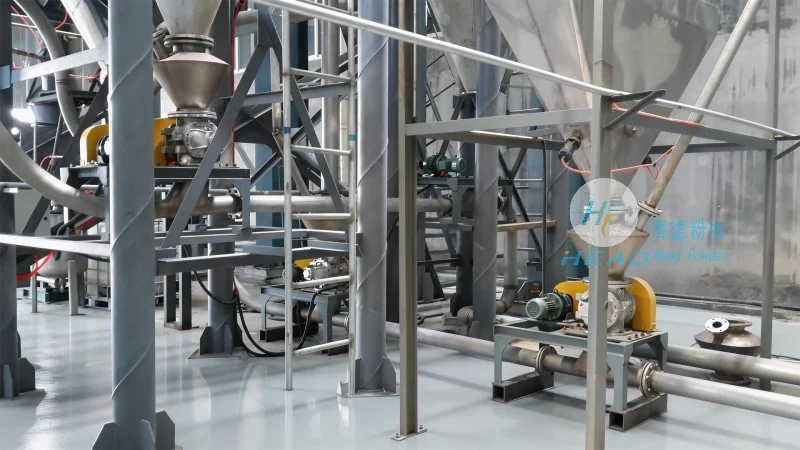
As the material travels through the pipeline, it encounters various components, including bends, elbows, and straight sections, which are designed to minimize friction and maintain consistent flow. At the receiving end, the material is discharged into a storage silo or processing unit. Simultaneously, the air carrying the material is filtered and cleaned by a dust collector, ensuring that the exhaust air is free from particulate matter and complies with environmental regulations.
Working Principle: How Pneumatic Conveying Transports Materials
The core working principle of pneumatic conveying relies on the interaction between the material particles and the air stream. In a positive pressure system, the blower creates a high-pressure air flow that pushes the material through the pipeline. The air velocity is typically maintained above the material's terminal velocity to prevent settling or blockages. Conversely, in a negative pressure system, the vacuum pump draws air and material through the pipeline, with the air flow velocity again exceeding the material's settling velocity.
Key factors influencing the efficiency of pneumatic conveying include air velocity, material density, particle size distribution, and the system's pressure drop. Proper design of the pipeline diameter, length, and bends is crucial to minimize energy consumption and prevent material degradation or blockages. HeadPowder's engineers employ advanced computational fluid dynamics (CFD) and material flow analysis to optimize these parameters, ensuring that the system operates at peak performance.
Advantages of Pneumatic Conveying for Cement and Aggregate Handling
Pneumatic conveying offers several advantages over traditional mechanical conveying methods, such as belt conveyors or screw conveyors. These include: (1) Reduced risk of material contamination, as the system is enclosed and air is filtered; (2) Lower maintenance requirements due to fewer moving parts; (3) Flexibility in system layout, allowing for complex routing and multiple destinations; (4) Improved safety, as there are no exposed moving parts or open conveyors; and (5) Enhanced efficiency in terms of energy consumption and material throughput.
Customization and Integration: Tailoring Systems to Client Needs
HeadPowder recognizes that each cement and aggregate operation has unique requirements. Therefore, the company provides comprehensive customization services to ensure that the pneumatic conveying system is perfectly matched to the client's specific needs. This includes selecting the appropriate pressure type (positive or negative), determining the optimal pipeline dimensions and material of construction (e.g., stainless steel, carbon steel, or plastic), and integrating the system with existing production lines or storage facilities.
The company's engineering team also considers factors such as material compatibility with the system components, environmental regulations, and operational safety. By conducting thorough site assessments and material testing, HeadPowder ensures that the final system is not only efficient but also compliant with all relevant standards and regulations.
Conclusion: The Role of Pneumatic Conveying in Modern Cement and Aggregate Industries
Pneumatic conveying has become an indispensable technology in the modern cement and aggregate industries, enabling efficient, safe, and reliable material handling. With its ability to transport materials over long distances and through complex layouts, this technology enhances productivity and reduces operational costs. HeadPowder, with its expertise and commitment to quality, continues to provide cutting-edge pneumatic conveying solutions that meet the evolving needs of the industry. By leveraging advanced engineering and customization, the company ensures that its clients achieve optimal performance and long-term success in their material handling operations.




