For industrial applications requiring efficient and reliable dry sand handling, the dry sand pneumatic conveying system emerges as a critical solution. This equipment is designed to transport dry granular materials like sand through an air stream, offering advantages such as minimal material degradation, reduced contamination, and the ability to handle materials in a closed system. The following overview details the structural components and operational principles of this technology, highlighting its relevance in modern material handling processes.
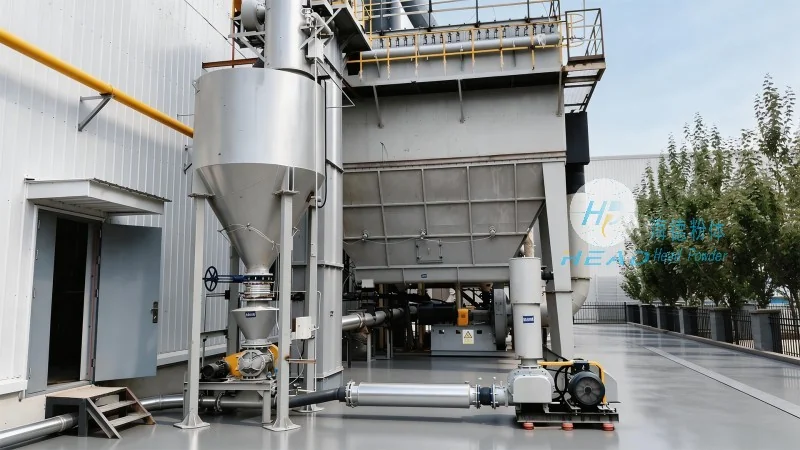
Key Structural Components of Dry Sand Pneumatic Conveying Systems
The dry sand pneumatic conveying system consists of several interconnected components that work in tandem to facilitate material transport. The primary elements include the material feed hopper, which stores and regulates the flow of dry sand into the system. This hopper is equipped with a feeder mechanism, typically a rotary valve or a screw feeder, that controls the rate of material discharge. The feeder ensures a consistent and controlled supply of sand to the conveying line, preventing overloading and maintaining system efficiency.
Next, the conveying line itself is a crucial component. It is usually made of metal or plastic tubing, with diameters ranging from several inches to over a meter, depending on the volume of material to be transported. The line is connected to a series of components that manage the air flow and material movement. A compressor or blower is responsible for generating the air pressure required to move the sand particles. The air is introduced into the system at the inlet of the conveying line, where it mixes with the sand from the feeder. This creates a slurry of sand and air that travels through the pipeline.
Along the conveying line, there are often intermediate sections such as bends, elbows, or expansion joints. These components are designed to accommodate changes in direction or pipe diameter while minimizing pressure losses and ensuring smooth material flow. The system may also include filters or cyclones to separate the sand from the air at the discharge end, allowing the air to be recirculated or vented, and the sand to be collected in a receiving hopper.
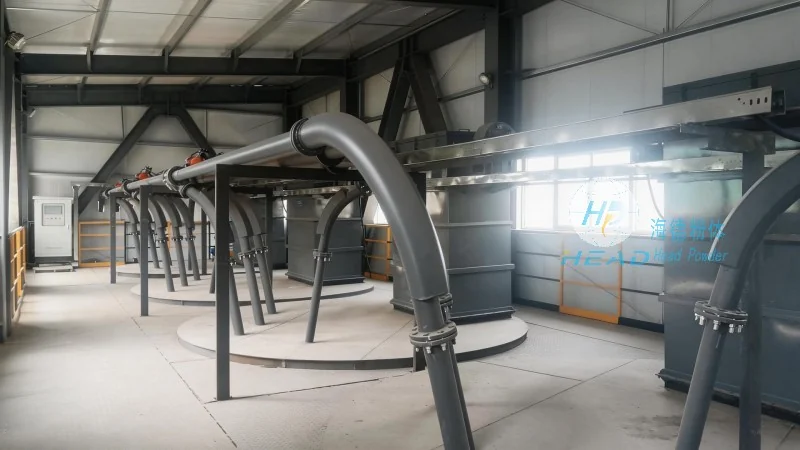
Operational Principles of Dry Sand Pneumatic Conveying
The core principle of dry sand pneumatic conveying is the use of air as a medium to transport dry granular materials. This method is classified as a dilute-phase system, where the material is dispersed in the air stream as individual particles rather than as a dense slurry. The process begins with the material being fed into the system at a controlled rate. The feeder mechanism ensures that the sand is introduced into the air stream at the inlet of the conveying line.
As the air flows through the pipeline, it carries the sand particles along with it. The velocity of the air must be sufficient to overcome the gravitational force acting on the sand particles and to maintain their suspension in the air stream. This velocity is typically higher than the settling velocity of the sand particles, ensuring that they remain airborne and are transported to the discharge point. The system operates under positive pressure, meaning that the air pressure is higher than the ambient atmospheric pressure, which helps to maintain the integrity of the conveying line and prevent dust leakage.
At the discharge end of the system, the air and sand mixture enters a separator, such as a cyclone or a filter. The separator uses centrifugal force to separate the sand particles from the air. The sand is collected in a receiving hopper, while the air is either recirculated back to the compressor or vented to the atmosphere. The separated air may also pass through a filter to remove any residual dust before being returned to the system, ensuring minimal environmental impact and maintaining system efficiency.
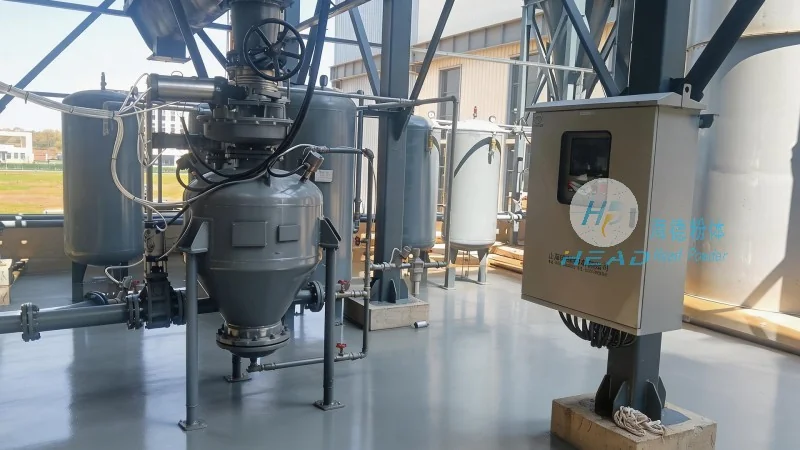
About Shandong HeadPowder Engineering Co., Ltd.
Shandong HeadPowder Engineering Co., Ltd., operating under the brand name headpowder, is a leading manufacturer of pneumatic conveying equipment. The company specializes in the design, development, and production of dry sand pneumatic conveying systems tailored to the needs of various industrial sectors. With a focus on innovation and quality, HeadPowder provides customized solutions that meet the specific requirements of clients, including material characteristics, transport distances, and operational conditions.
HeadPowder's expertise lies in understanding the unique challenges of handling dry granular materials like sand. The company's engineers work closely with clients to analyze their material handling needs and recommend the most suitable pneumatic conveying system. This collaborative approach ensures that the final solution is efficient, reliable, and cost-effective. The company's products are designed to comply with industry standards and are manufactured using high-quality materials and advanced manufacturing techniques, ensuring durability and long service life.
HeadPowder is committed to providing comprehensive support to its clients, from initial consultation and system design to installation, commissioning, and after-sales service. The company's team of experienced professionals offers technical support and maintenance services to ensure that the pneumatic conveying systems operate at optimal performance levels. With a strong presence in the market and a reputation for excellence, HeadPowder continues to be a trusted partner for businesses seeking reliable dry sand handling solutions.




