Efficient and reliable dust collector ash conveying is a critical component in industrial processes that rely on air filtration systems. The proper selection of a conveying method not only ensures the safe and effective removal of collected dust but also minimizes operational downtime and maintenance costs. For facilities operating in sectors such as power generation, cement production, and metal processing, understanding the common methods available for transporting dust collector ash is essential for optimizing their material handling systems.
Introduction to Dust Collector Ash Conveying
Dust collector ash, also known as baghouse dust or filter cake, is the residue that accumulates on the filter media after air purification. This material, often containing fine particulates and potentially hazardous substances, must be removed from the system to maintain filter efficiency and prevent equipment degradation. The choice of conveying method depends on factors like the ash's physical properties (e.g., moisture content, particle size, bulk density), the required conveying distance, and the overall system design. Below are some of the most common methods used for dust collector ash transport, each with its own advantages and applications.
1. Pneumatic Conveying Systems
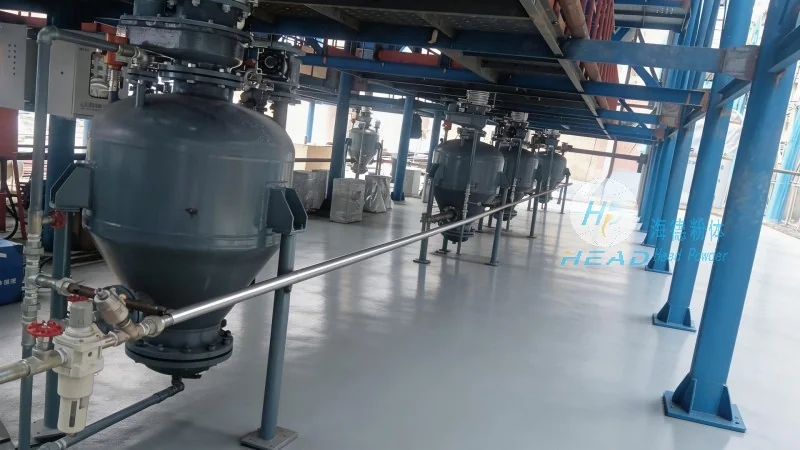
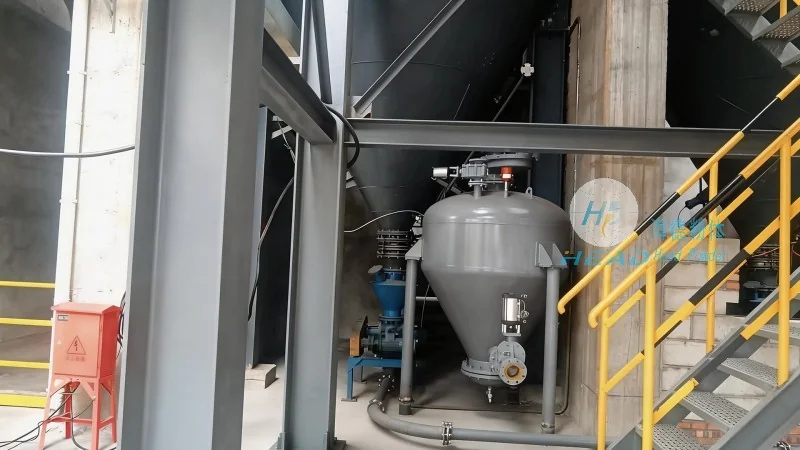
Pneumatic conveying, or air-pneumatic transport, is one of the most widely used methods for dust collector ash conveying. This technology utilizes compressed air to transport the ash through a pipeline network. There are two primary types: dilute-phase and dense-phase pneumatic conveying.
Dilute-phase pneumatic conveying operates at higher air velocities (typically 20-30 m/s) and lower air-to-material ratios, making it suitable for short to medium distances (up to 100 meters) and low to medium ash volumes. The ash is suspended in the air stream and transported through the pipeline. This method is ideal for handling dry, free-flowing ash with low moisture content. However, it may not be suitable for materials with high moisture or sticky properties, as this can lead to pipeline blockages and reduced efficiency.
Dense-phase pneumatic conveying, on the other hand, operates at lower air velocities (5-15 m/s) and higher air-to-material ratios, resulting in a more concentrated ash stream. This method is preferred for longer distances (up to several hundred meters) and for handling materials with higher moisture content or cohesive properties. The slower air velocity helps prevent material degradation and reduces the risk of blockages. Dense-phase systems are often used in applications where the ash needs to be delivered to a storage silo or a processing unit with minimal segregation.
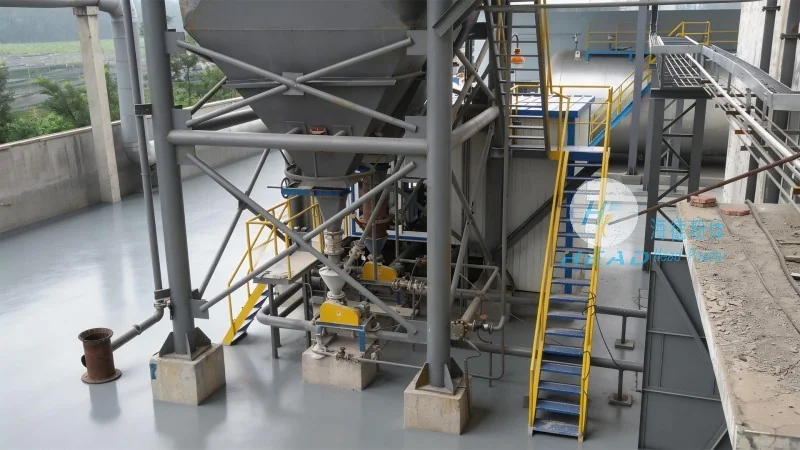
Key advantages of pneumatic conveying include its ability to transport ash in a closed system, reducing dust emissions and environmental impact. It also allows for flexible routing of the conveying line, enabling the ash to be directed to different storage or processing locations. However, pneumatic systems require significant energy input due to the need for compressed air, and they may be less efficient for very fine or highly abrasive ash particles.
2. Screw Conveyors
Screw conveyors, also known as auger conveyors, are mechanical devices that use a rotating helical screw to move dust collector ash along a trough or tube. This method is particularly effective for handling dry, free-flowing ash with low to moderate moisture content. Screw conveyors are commonly used in applications where the conveying distance is relatively short (typically up to 30 meters) and the ash is relatively uniform in size.
The screw conveyor consists of a rotating screw (auger) mounted inside a trough or tube. As the screw rotates, it pushes the ash forward, similar to how an auger moves soil. The design of the screw (e.g., pitch, diameter, and material) can be customized to suit the specific characteristics of the ash. For example, a flights with a larger pitch may be used for lighter, more free-flowing ash, while a smaller pitch is suitable for heavier or more cohesive materials.
Advantages of screw conveyors include their simplicity, low maintenance requirements, and ability to operate in a vertical or inclined position. They are also relatively inexpensive compared to pneumatic systems and can handle a wide range of ash types. However, screw conveyors are not suitable for highly abrasive or sticky ash, as this can cause wear and tear on the screw and trough. Additionally, they may not be effective for very fine ash particles, which can lead to blockages or reduced conveying efficiency.
3. Belt Conveyors
Belt conveyors are another common method for dust collector ash conveying, especially in applications where the ash needs to be transported over longer distances or at higher capacities. This method uses a continuous belt that moves over rollers or pulleys to transport the ash from the dust collector to a storage silo or processing unit.
The belt conveyor system typically consists of a drive unit, a belt, idlers, and a tail or head pulley. The ash is loaded onto the moving belt at the inlet and is carried to the outlet, where it is discharged. The speed of the belt and the angle of inclination can be adjusted to control the conveying rate and distance. Belt conveyors are particularly effective for handling large volumes of ash and can be designed to operate in horizontal, inclined, or even vertical configurations.
Advantages of belt conveyors include their high capacity, ability to transport ash over long distances (up to several hundred meters), and low energy consumption compared to pneumatic systems. They are also relatively simple to install and maintain, and can handle a wide range of ash types, including those with high moisture content or sticky properties. However, belt conveyors require regular maintenance to prevent belt wear and tear, and they may not be suitable for very fine ash particles, which can cause the belt to slip or become damaged.
4. Hydraulic Conveying
Hydraulic conveying, also known as slurry transport, is a method that uses water or other liquids to transport dust collector ash as a slurry. This technique is particularly useful for handling ash with high moisture content or cohesive properties, as the liquid helps to keep the material in suspension and prevent blockages.
The hydraulic conveying system typically consists of a pump, a pipeline, and a storage or processing unit. The ash is mixed with water to form a slurry, which is then pumped through the pipeline to the desired location. The slurry can be stored in a silo or processed further, depending on the application. Hydraulic conveying is often used in applications where the ash needs to be transported over long distances (up to several kilometers) and where the material has high moisture content or is difficult to handle by other methods.
Advantages of hydraulic conveying include its ability to handle high volumes of ash with high moisture content, its low energy consumption compared to pneumatic systems, and its ability to transport ash over long distances. However, hydraulic systems require regular maintenance to prevent clogging and corrosion, and they may not be suitable for materials with high abrasive properties, as this can cause wear and tear on the pump and pipeline.
5. Vacuum Conveying
Vacuum conveying, also known as suction conveying, is a method that uses a vacuum to draw dust collector ash into a collection container or pipeline. This technique is particularly effective for handling ash with low to moderate moisture content and is often used in applications where the ash needs to be collected from multiple sources and transported to a central location.
The vacuum conveying system typically consists of a vacuum pump, a collection hopper, and a conveying line. The ash is drawn into the collection hopper by the vacuum, and then transported through the line to the storage or processing unit. The vacuum pressure can be adjusted to control the conveying rate and distance. Vacuum conveying is often used in applications where the ash is generated in multiple locations and needs to be consolidated into a single storage area.
Advantages of vacuum conveying include its ability to collect ash from multiple sources and transport it to a central location, its low noise level compared to pneumatic systems, and its ability to handle fine ash particles. However, vacuum systems require significant energy input due to the need for a vacuum pump, and they may not be suitable for materials with high moisture content or sticky properties, as this can lead to blockages and reduced efficiency.




