High-pressure dense-phase material handling systems represent a sophisticated approach to transporting bulk materials with precision and efficiency. These systems are designed to handle a wide range of materials, from powders and granules to fine particles, ensuring minimal product degradation and optimal process control. The operation process and working principle of such systems are critical to understanding their effectiveness in industrial applications.
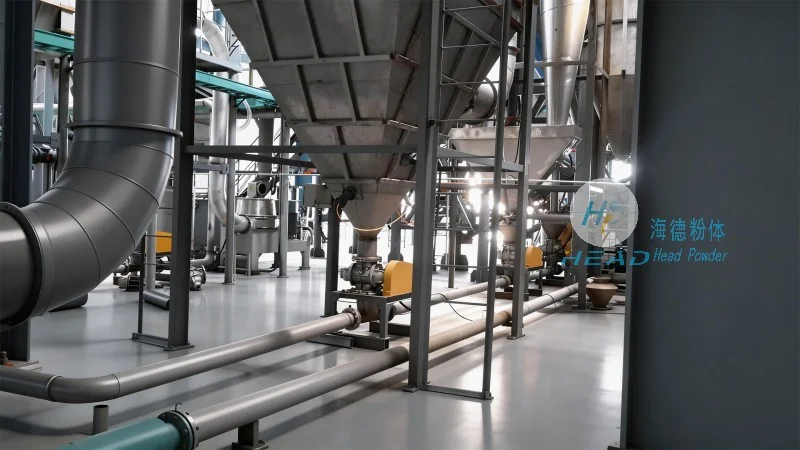
Overview of High-Pressure Dense-Phase Material Handling Systems
At the core of high-pressure dense-phase material handling systems is the principle of creating a dense, slurry-like flow of material within a pipeline. This is achieved by injecting air or gas into the material stream under high pressure, which reduces the velocity of the material and increases its density. The result is a more stable and controlled flow that minimizes segregation and agglomeration, making it ideal for sensitive materials like pharmaceuticals, food products, and chemicals.
Key Components and Their Roles
The operation of a high-pressure dense-phase system involves several key components, each playing a crucial role in the overall process. These components include a positive displacement pump, a pressure vessel or hopper, a control valve, and a pipeline system. The positive displacement pump is responsible for delivering the material at a consistent pressure, while the pressure vessel or hopper stores the material and regulates the flow rate. The control valve adjusts the pressure and flow rate as needed, ensuring that the system operates within safe and efficient parameters.
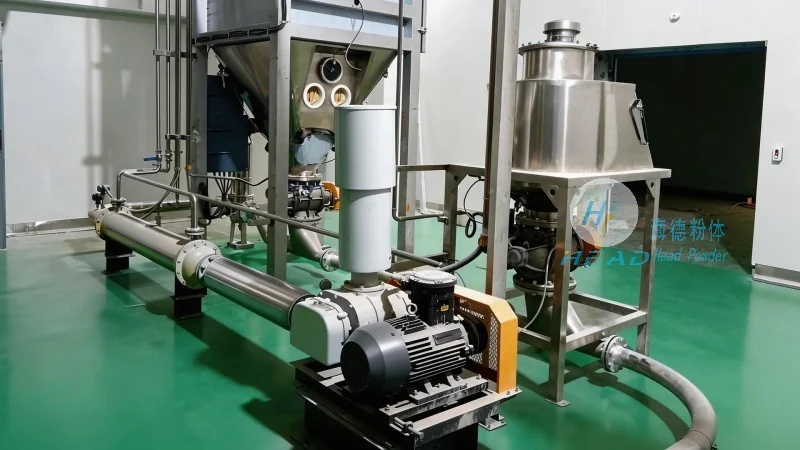
Operation Process: Step-by-Step
The operation process of a high-pressure dense-phase material handling system typically follows a sequence of steps. First, the material is loaded into the pressure vessel or hopper. Then, the pump is activated, and the material is pressurized and transported through the pipeline. The control valve monitors the pressure and flow, adjusting the system as required to maintain optimal conditions. The material is then discharged at the destination, where it can be further processed or stored. This process is repeated continuously, allowing for a steady and reliable supply of material.
Working Principle: The Science Behind the System
The working principle of high-pressure dense-phase material handling systems is based on the physics of fluid dynamics and material behavior. By increasing the pressure and reducing the velocity of the material, the system creates a dense phase where the particles are in close contact with each other and the pipeline walls. This reduces the risk of particle separation and ensures that the material flows uniformly. The use of air or gas as a carrier medium also helps to lubricate the pipeline and reduce friction, further enhancing the efficiency of the system.
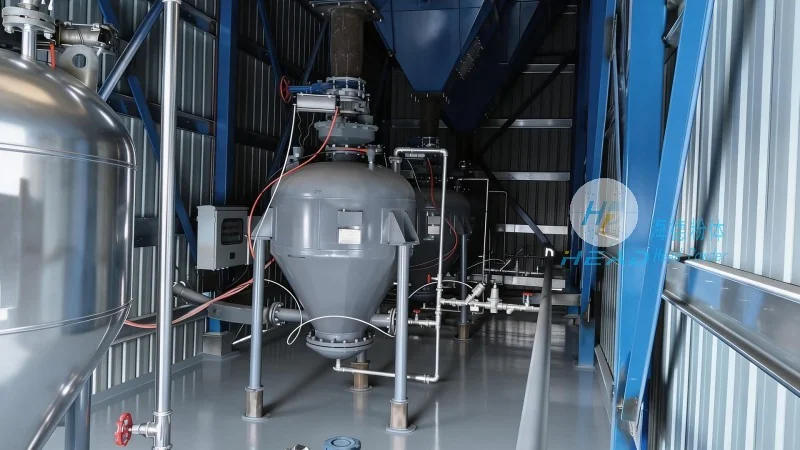
Applications and Benefits
High-pressure dense-phase material handling systems are widely used in various industries due to their numerous benefits. These include improved product quality, reduced material degradation, enhanced process control, and increased safety. The systems are particularly suitable for handling sensitive materials that require gentle handling, as well as for applications where minimal segregation and agglomeration are critical. Additionally, the systems offer high efficiency and reliability, making them a preferred choice for industrial material handling needs.
About Shandong HeadPowder Engineering Co., Ltd.
Shandong HeadPowder Engineering Co., Ltd., commonly known as HeadPowder, is a leading provider of high-quality material handling solutions. With a focus on innovation and customer satisfaction, HeadPowder specializes in designing and manufacturing advanced material handling systems, including high-pressure dense-phase systems. The company is committed to delivering reliable and efficient solutions that meet the specific needs of its clients. HeadPowder's headquarters is located in Shandong, China, where the company operates its research and development facilities, manufacturing plants, and customer support centers.




