HeadPowder, a leading engineering company based in Shandong, China, specializes in the design, manufacturing, and integration of advanced pneumatic conveying systems tailored for the handling of lithium-ion battery positive electrode powder materials. This article provides a detailed overview of the operation process and working principle of such systems, highlighting their efficiency and reliability in material transport within the battery manufacturing industry.
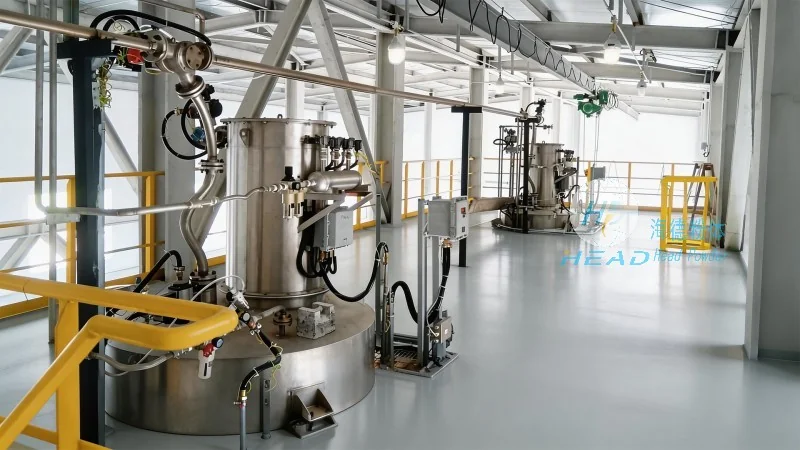
Introduction to Pneumatic Conveying Systems for Lithium-Ion Battery Materials
Pneumatic conveying systems are critical components in the production lines of lithium-ion batteries, responsible for the safe and efficient transport of fine powders, such as positive electrode active materials. These systems utilize compressed air to move materials from one location to another, eliminating the need for mechanical components like belts or buckets that may cause contamination or material degradation. The systems are designed to handle materials with high purity requirements, ensuring that the quality of the battery components is maintained throughout the transport process.
Working Principle of the Pneumatic Conveying System
The core working principle of a pneumatic conveying system for lithium-ion battery positive electrode powders involves the use of a pressure or vacuum source to generate airflow that propels the powder particles through a pipeline. The system typically consists of several key components, including a material hopper, a feeder, a conveying line, and a receiver. The material is first loaded into the hopper, where it is then fed into the conveying line via a controlled feeder. Compressed air is introduced into the line, creating a flow that carries the powder particles along the pipeline to the receiving hopper or processing unit.
The system operates by creating a pressure differential between the inlet and outlet of the conveying line. In a pressure system, air is blown into the line at a high velocity, generating a positive pressure that pushes the powder forward. In a vacuum system, a vacuum is created at the receiving end, drawing the powder and air mixture through the line. The choice between pressure and vacuum systems depends on factors such as the distance to be covered, the material characteristics, and the required flow rate. For lithium-ion battery materials, pressure systems are commonly used due to their ability to handle fine powders without causing excessive particle breakage.
Operation Process of the System
The operation process of the pneumatic conveying system for lithium-ion battery positive electrode materials begins with the loading of the powder into the material hopper. The hopper is equipped with a level sensor to monitor the material level, ensuring that the feeder can operate efficiently without interruptions. The feeder, often a rotary valve or a screw feeder, controls the flow rate of the powder into the conveying line. The compressed air is supplied by an air compressor, which maintains a consistent pressure to ensure stable material transport.
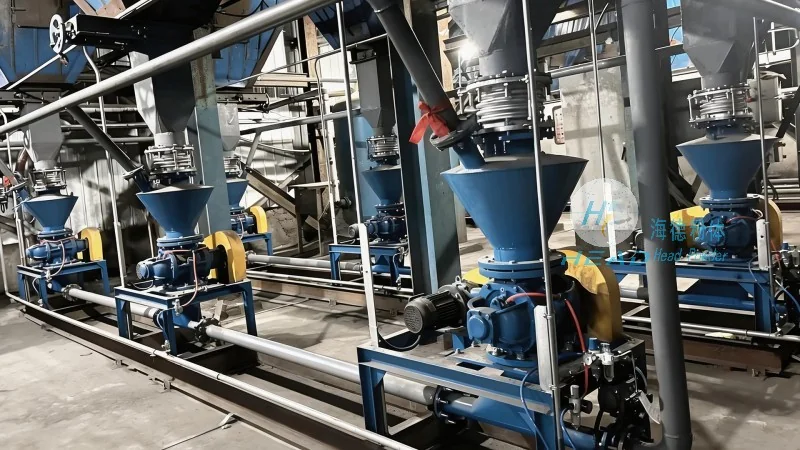
Once the powder is fed into the conveying line, the compressed air creates a high-velocity flow that entrains the powder particles. The air and powder mixture travels through the pipeline, which may include bends, elbows, and expansion joints designed to minimize pressure loss and prevent material deposition. The receiving hopper at the end of the line collects the transported powder, where it is then transferred to the next stage of the battery manufacturing process, such as mixing or coating.
The system continuously monitors key parameters, including air pressure, flow rate, and material level, to ensure optimal performance. Any deviations in these parameters are detected by sensors and adjusted by the control system to maintain consistent operation. This closed-loop control system enhances the reliability of the material transport process, reducing downtime and improving overall production efficiency.
Key Features and Advantages of the System
The pneumatic conveying system for lithium-ion battery positive electrode powders offers several advantages over traditional mechanical conveying methods. Firstly, it provides a dust-free and contamination-free environment, which is crucial for maintaining the high purity of battery materials. The enclosed pipeline system prevents exposure to air and moisture, reducing the risk of material degradation or oxidation. Secondly, the system is highly flexible and can be easily integrated into existing production lines, allowing for modifications and expansions as production needs change.
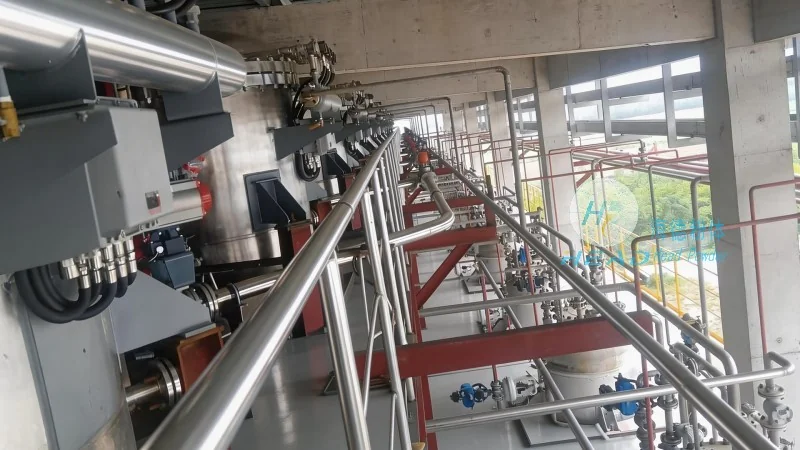
Additionally, the system offers high transport efficiency, with the ability to handle large volumes of fine powders over long distances. The use of compressed air allows for precise control over the flow rate, ensuring that the material is transported at the optimal speed to prevent particle breakage or agglomeration. This is particularly important for lithium-ion battery materials, where particle size and morphology directly impact the performance of the final battery.
Application in Lithium-Ion Battery Manufacturing
In the context of lithium-ion battery manufacturing, the pneumatic conveying system plays a vital role in the supply chain of positive electrode materials. These materials are typically produced in large quantities and need to be transported from storage areas to the mixing and coating lines without any loss of quality. The system ensures that the materials are handled gently, preserving their particle size distribution and surface properties, which are critical for achieving high energy density and cycle life in the final battery.
The system's ability to handle fine powders with high precision makes it an essential component in the production of advanced battery technologies. By maintaining the integrity of the material during transport, the system contributes to the overall quality and performance of the lithium-ion batteries produced by HeadPowder's clients.
Conclusion
HeadPowder's pneumatic conveying systems for lithium-ion battery positive electrode powder materials exemplify the company's commitment to providing innovative and reliable solutions for the battery manufacturing industry. Through a thorough understanding of the material properties and the operational requirements of the industry, the company has developed systems that enhance efficiency, maintain material quality, and ensure safe and effective transport. As the demand for lithium-ion batteries continues to grow, such advanced conveying systems will remain a critical component in the production process, supporting the development of next-generation battery technologies.




