Dry gravel pneumatic conveying is a technology that utilizes compressed air or gas as a driving force to transport dry granular materials, such as gravel, sand, and other particulate substances, from one location to another. This method is widely used in industrial fields, particularly in construction, mining, and material processing, for efficient and clean material handling. This article delves into the core concepts and design principles of dry gravel pneumatic conveying, helping readers gain a comprehensive understanding of this technology.
What is Dry Gravel Pneumatic Conveying?
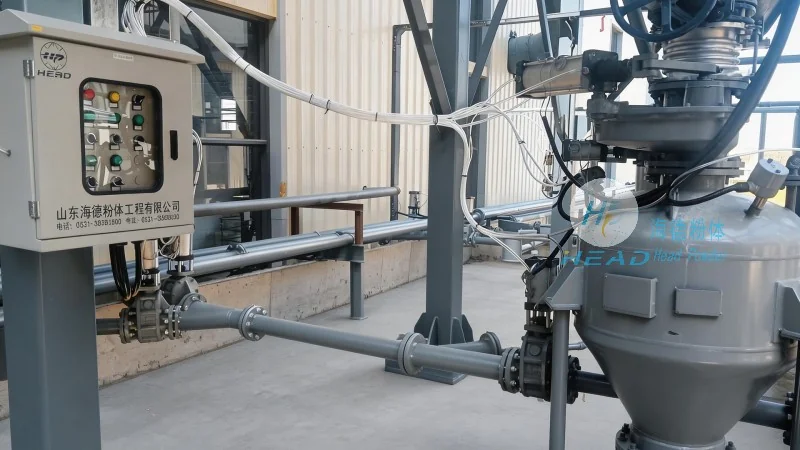
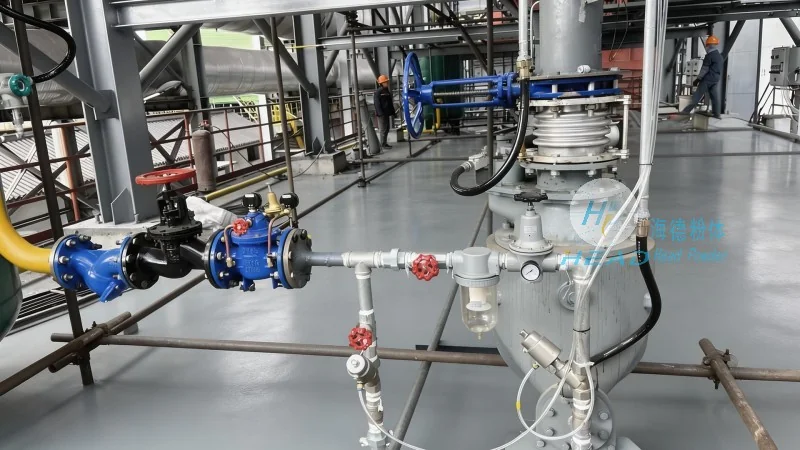
Dry gravel pneumatic conveying systems are non-contact material handling technologies that rely on the formation of a gas-solid two-phase flow within the conveying pipelines. By using the kinetic energy of the gas, particles are carried and transported to the destination. Compared to traditional mechanical conveying equipment like belt conveyors and screw conveyors, pneumatic conveying offers advantages such as no mechanical wear, long-distance transport capability, flexible path adjustment, and the ability to handle fragile or sensitive materials. As a typical granular material, dry gravel's density, particle size, and shape significantly impact the design of the pneumatic conveying system. The system typically includes key components like feeders, conveying pipelines, air source equipment, separators, and control systems. The feeder is responsible for uniformly delivering dry gravel into the conveying pipeline, while the air source equipment provides sufficient compressed air or gas to form a stable gas-solid flow. The layout and dimensions of the conveying pipelines must be optimized based on parameters such as the transport distance, material properties, and system pressure. The separator is used to separate the gas from the particles upon arrival at the destination, recovering the gas and processing the particles. The control system regulates the working states of each component to ensure stable operation. For example, when the pressure within the pipeline decreases, the control system increases the output of the air source equipment to maintain a stable transport speed; when the material flow rate increases, the control system adjusts the feeder's feed rate to prevent pipeline blockage or excessive pressure.
Design Principles of Dry Gravel Pneumatic Conveying
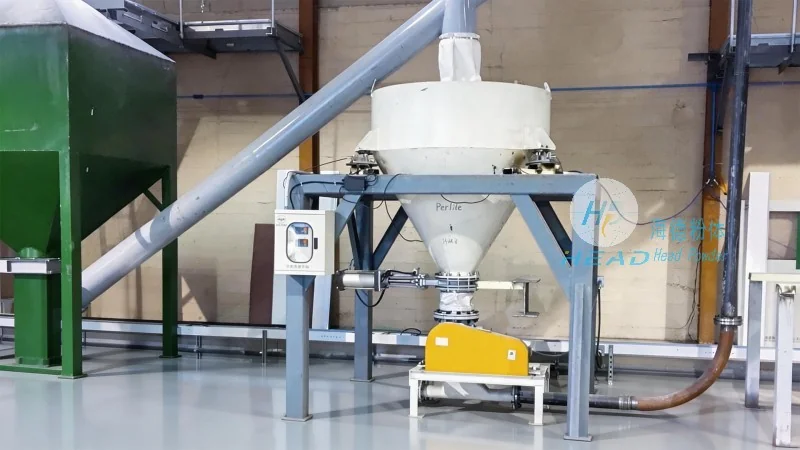
The design principles of dry gravel pneumatic conveying are primarily based on fluid mechanics and particle mechanics. First, the physical properties of the material, such as density, particle size distribution, bulk density, and angle of repose, need to be determined. These parameters directly affect the pressure loss, gas-solid ratio (the amount of gas required per unit mass of material), and transport velocity in the system. During design, the gas-solid flow velocity within the pipeline must be calculated to ensure the particles are effectively carried without deposition. The gas-solid ratio is a critical design parameter, as it determines the system's energy consumption and efficiency. A higher gas-solid ratio means more gas is needed, which reduces the risk of particle deposition and increases transport speed. However, an excessively high ratio leads to increased energy consumption, so a balance between efficiency and cost must be found. The diameter and length of the conveying pipelines also need to be optimized based on the transport distance and material characteristics. For long-distance transport, a larger pipeline diameter may be used to reduce pressure loss, or a multi-stage conveying system may be employed to enhance efficiency. The selection of the air source equipment is also crucial, typically including roots blowers, centrifugal fans, or compressors, whose pressure and flow must match the system's requirements. The design of the separator is equally important, with common types including cyclone separators, bag filters, and wet-type filters, chosen based on the material's characteristics and environmental requirements. The control system monitors parameters like pressure, flow rate, and material flow rate in real-time, automatically adjusting the output of the air source equipment and the feed rate of the feeder to ensure stable operation. For instance, when the pipeline pressure drops, the control system increases the air source output to maintain transport speed; when the material flow rate rises, the control system adjusts the feeder's feed speed to avoid blockage or high pressure.
HeadPowder Engineering's Solutions for Dry Gravel Pneumatic Conveying
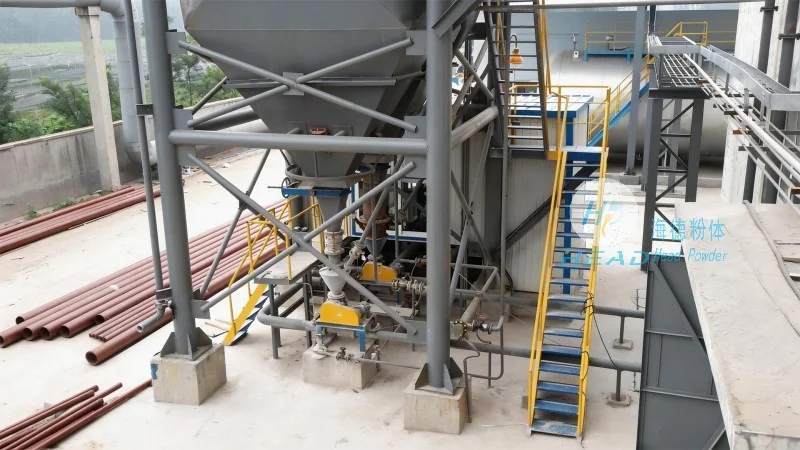
Shandong HeadPowder Engineering Co., Ltd., commonly known as HeadPowder, is a professional company specializing in the design and manufacturing of granular material conveying systems, headquartered in Shandong, China. The company, with its deep technical expertise and extensive industry experience, provides comprehensive design, manufacturing, and installation services for dry gravel pneumatic conveying systems. HeadPowder's design team consists of fluid mechanics experts, mechanical engineers, and process control specialists who combine advanced computational fluid dynamics (CFD) simulations with practical engineering experience to offer customized solutions for different operational conditions. The company utilizes international advanced materials and technologies to ensure the durability and reliability of the conveying systems. For example, conveying pipelines are typically made of wear-resistant materials like plastic or metal to resist the abrasion and friction from dry gravel; air source equipment uses energy-efficient models to reduce operating costs. HeadPowder also provides installation and commissioning services to ensure smooth operation of the dry gravel pneumatic conveying systems for clients. The company emphasizes communication with clients, understanding their specific needs, including transport distance, material properties, production capacity, and environmental requirements, to design the most suitable system. For example, for clients requiring long-distance transport of dry gravel, HeadPowder may suggest a multi-stage conveying system with intermediate pressure stations to improve efficiency; for clients handling fragile materials, the company optimizes the design of separators and feeders to minimize material breakage. HeadPowder also offers maintenance and service for the systems, with a professional technical team that can promptly respond to maintenance needs, providing necessary spare parts and repair services. Through these services, HeadPowder helps clients enhance production efficiency, reduce operating costs, and meet environmental requirements. The company remains customer-focused, committed to providing high-quality solutions for dry gravel pneumatic conveying to assist clients in optimizing their production processes and upgrading their operations.




