

Working Principle and Features of Aluminum Nitride Pneumatic Conveying Equipment
Aluminum nitride (AlN) is a critical material in modern industrial applications, widely used in electronics, optics, and high-temperature ceramics due to its excellent thermal conductivity, dielectric strength, and chemical stability. The efficient handling and transportation of AlN powder are essential for maintaining product quality and operational efficiency. Pneumatic conveying systems offer a reliable solution for this purpose, and understanding their working principles and key features is vital for optimizing material processing workflows.
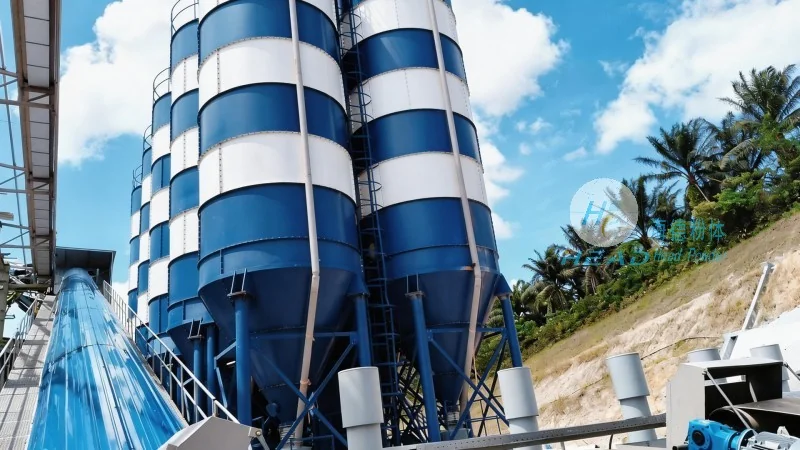
Working Principle of Aluminum Nitride Pneumatic Conveying Equipment
The core mechanism of aluminum nitride pneumatic conveying equipment involves the use of compressed air to transport dry powder materials through a pipeline system. The process typically begins with the material being fed into a hopper or feeder, where it is then introduced into the conveying line. Compressed air, often generated by a blower or compressor, is introduced at one end of the pipeline, creating a pressure differential that propels the powder particles forward. The air velocity and pressure are carefully controlled to ensure that the powder is carried as a dilute phase (where particles are suspended in the air) or a dense phase (where particles are more closely packed), depending on the specific system design and material characteristics.
In the case of aluminum nitride, which is a fine powder with a relatively high density and low moisture content, a dilute phase conveying system is commonly employed. This approach minimizes particle agglomeration and ensures uniform flow, as the high air velocity keeps the particles suspended and prevents clogging. The system includes components such as a feeder, a venturi or eductor (for creating the air-powder mixture), a pipeline network, and a receiver or discharge unit. The compressed air is introduced at the venturi, where it accelerates and draws the AlN powder into the pipeline, forming a stable air-powder stream that travels to the destination point.
Key Features of Aluminum Nitride Pneumatic Conveying Equipment
Several key features distinguish high-quality aluminum nitride pneumatic conveying systems, particularly those manufactured by Shandong HeadPowder Engineering Co., Ltd. (commonly known as headpowder). These features are designed to address the unique challenges of handling AlN powder, including its fine particle size, high thermal stability, and sensitivity to moisture. First, the equipment is constructed from materials that are compatible with AlN and resistant to corrosion, ensuring long-term durability and minimal contamination. Stainless steel or specialized alloys are often used for the hopper, feeder, and pipeline components to prevent chemical reactions with the powder.
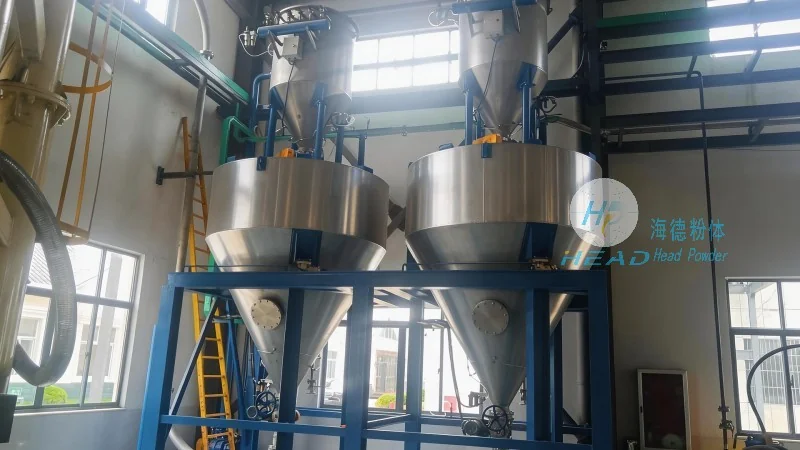
Second, the system incorporates advanced control technologies to optimize air flow and pressure, maintaining consistent conveying rates and preventing overloading or underloading. This is crucial for maintaining the quality of the AlN powder, as inconsistent flow can lead to particle degradation or agglomeration. The control system may include sensors to monitor air pressure, flow rate, and material level, providing real-time feedback to adjust the operation as needed.
Third, the design of the conveying line is tailored to minimize pressure drop and energy consumption. This is achieved through the use of smooth, low-friction pipelines and appropriate venturi designs that reduce turbulence and energy loss. For long-distance or high-capacity applications, multi-stage conveying systems may be employed, where the material is transferred through a series of intermediate receivers and booster units to maintain sufficient air pressure and velocity.
Fourth, the equipment is equipped with features to ensure safety and operational reliability. This includes explosion-proof components for handling potentially flammable or reactive materials (though AlN is generally stable), dust collection systems to prevent airborne particulate release, and emergency shut-off valves to stop the system in case of malfunctions. These safety measures are essential for maintaining a safe working environment and complying with industrial regulations.
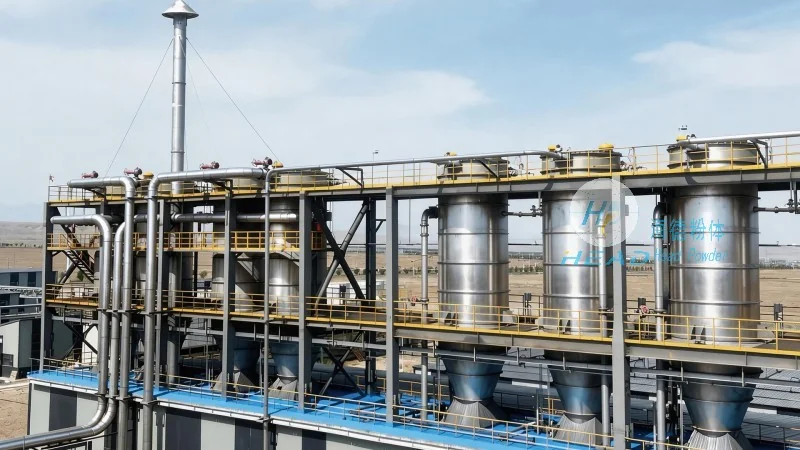
Benefits of Using Aluminum Nitride Pneumatic Conveying Equipment
Implementing aluminum nitride pneumatic conveying equipment offers several significant benefits for industrial operations. The primary advantage is the ability to transport AlN powder in a closed system, which prevents contamination from external sources and minimizes dust exposure for operators. This is particularly important in applications where the powder is used in high-purity processes, such as semiconductor manufacturing or optical component production. Additionally, the closed system reduces the risk of material loss and improves overall material recovery rates.
Another key benefit is the improved efficiency and flexibility of material handling. Pneumatic conveying allows for the transport of AlN powder over long distances and between different processing stages without the need for manual handling or mechanical conveyors. This reduces labor costs, minimizes the risk of human error, and enables faster production cycles. The system can also be easily integrated with other equipment, such as mixers, dryers, or reactors, creating a seamless material flow from raw material to finished product.
Furthermore, the use of pneumatic conveying systems can enhance product quality by maintaining consistent particle size distribution and preventing agglomeration. The controlled air flow ensures that the powder particles remain in a uniform state, which is critical for applications where the properties of AlN (such as thermal conductivity or dielectric strength) are sensitive to particle size and morphology. This consistency leads to more reliable and predictable performance of the final products.