Cloud mica powder pneumatic conveying is a key technology in powder handling, enabling efficient transport of fine powders like muscovite over long distances without mechanical components. This process is widely used in industries such as mining, ceramics, and chemical processing, where reliable and low-cost material transport is essential. The following sections will explore the detailed operation process and working principles of this system, emphasizing the technical aspects and practical applications.
Introduction to Muscovite Powder Pneumatic Conveying
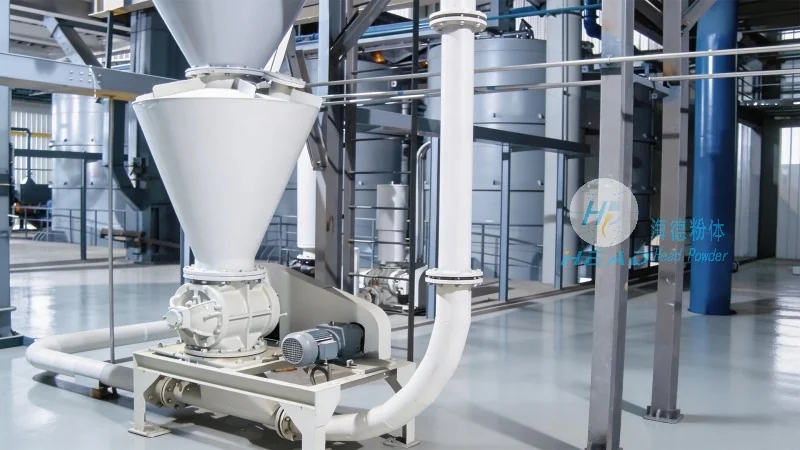
Muscovite, a type of mica mineral, is often processed into fine powder for various industrial applications. Pneumatic conveying systems offer a solution to transport these powders from storage silos or processing units to production lines. Unlike traditional mechanical conveying methods, which rely on belts or screws, pneumatic systems use compressed air to move the material, reducing friction and wear while maintaining high efficiency. This technology is particularly advantageous for handling powders that are prone to dust, have high moisture content, or require gentle handling to avoid agglomeration.
Key Components of the Pneumatic Conveying System
The pneumatic conveying system for muscovite powder typically consists of several core components that work in tandem to ensure smooth operation. These components include the material hopper, which stores the powder and provides a controlled feed; the air compressor, which generates the necessary pressure to move the material; the conveying line, which transports the powder and air mixture; and the receiver, which collects the material at the destination. Each component plays a critical role in maintaining the system's performance and efficiency.
Operation Process of the Pneumatic Conveying System
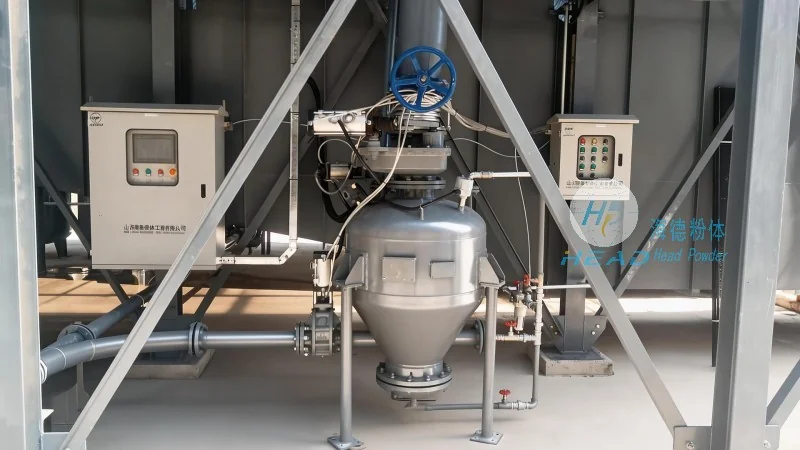
The operation process of the muscovite powder pneumatic conveying system involves several sequential steps. First, the material is fed from the hopper into the conveying line through a feed valve. Simultaneously, compressed air is introduced into the system, creating a flow that pulls the powder particles along the line. The air and powder mixture travels through the conveying line, which may include bends, expansions, or restrictions to control the flow velocity and pressure. At the receiving end, the air is separated from the powder, often using a cyclone separator or a filter, and the powder is collected in the receiver. The air is then discharged or recirculated back to the system to maintain energy efficiency.
Working Principle: Air-Flow Dynamics and Powder Transport
The working principle of pneumatic conveying relies on the interaction between the air flow and the powder particles. In a dilute-phase system, the air velocity is high enough to keep the powder suspended, preventing it from settling or clogging the line. The pressure drop along the conveying line is a critical parameter, as it determines the system's capacity and the maximum distance the powder can be transported. The system's design, including the size of the conveying line, the air pressure, and the feed rate, must be optimized to achieve the desired performance. For muscovite powder, which is often fine and light, the system is typically designed as a dilute-phase system to avoid particle agglomeration and ensure stable transport.
Advantages of Pneumatic Conveying for Muscovite Powder
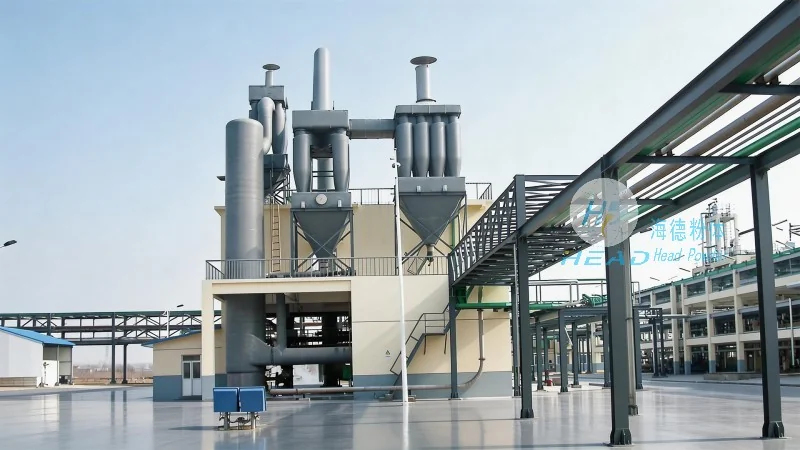
Pneumatic conveying offers several advantages over traditional mechanical methods for transporting muscovite powder. These include reduced maintenance costs due to fewer moving parts, lower risk of material contamination from mechanical components, and the ability to handle powders with high moisture content or abrasive properties. Additionally, the system can be easily integrated with other processing equipment, such as mixers or classifiers, to form a complete production line. The efficiency of pneumatic conveying also leads to lower energy consumption compared to some mechanical systems, making it a cost-effective solution for industrial applications.
Applications and Industries
Muscovite powder pneumatic conveying is widely used in various industries where fine powders are processed. In the ceramics industry, muscovite is used as a flux to lower the melting point of clay, and pneumatic conveying ensures a consistent supply of the powder to the kilns. In the chemical industry, muscovite is used as a filler or pigment, and the system helps maintain the quality of the powder during transport. The mining industry also utilizes pneumatic conveying to transport mica ore from processing plants to storage facilities. The versatility of the system makes it suitable for a wide range of applications, from small-scale laboratory use to large-scale industrial production.
Technical Considerations and Optimization
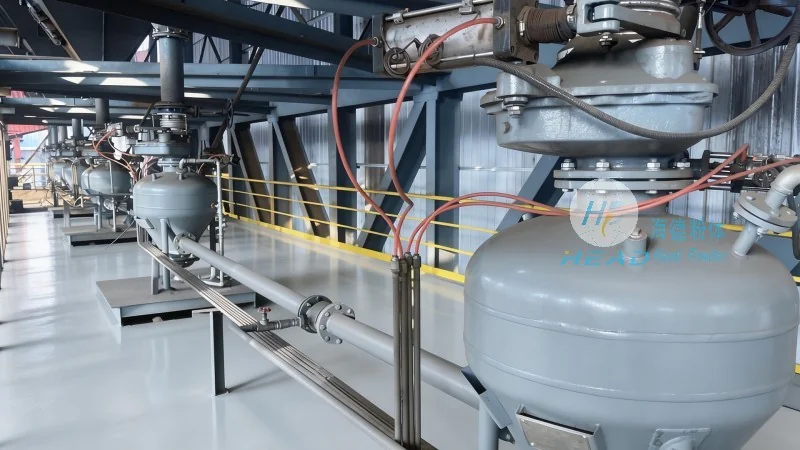
Several technical considerations are important when designing and operating a muscovite powder pneumatic conveying system. The first is the selection of the appropriate air pressure and flow rate, which depends on the particle size, density, and moisture content of the powder. The conveying line diameter and length must be matched to these parameters to avoid excessive pressure drop or particle deposition. The system's material of construction is also critical, as muscovite powder can be abrasive and may cause wear on metal components. Stainless steel or special alloys are often used for the conveying line and components to ensure durability and prevent contamination. Regular maintenance, such as cleaning the cyclone separator and checking the air compressor, is essential to maintain the system's efficiency and longevity.
Conclusion
Muscovite powder pneumatic conveying is a reliable and efficient technology for transporting fine powders in various industrial applications. The system's operation process involves the coordinated action of several components, working together to move the material using compressed air. The working principle is based on air-flow dynamics, where the powder is suspended and transported through the system. The advantages of this technology, including low maintenance, reduced contamination, and energy efficiency, make it a preferred choice for many industries. As the demand for fine powders continues to grow, the importance of efficient and reliable conveying systems like this will only increase. Companies such as Shandong HeadPowder Engineering Co., Ltd., based in China, specialize in designing and manufacturing such systems, providing tailored solutions to meet the specific needs of their clients.




