Headpowder, a leading engineering company based in Shandong, China, specializes in the design, calculation, and equipment selection for air-driven lime handling systems. This article provides a comprehensive overview of the key considerations and methodologies involved in optimizing such systems for industrial applications.
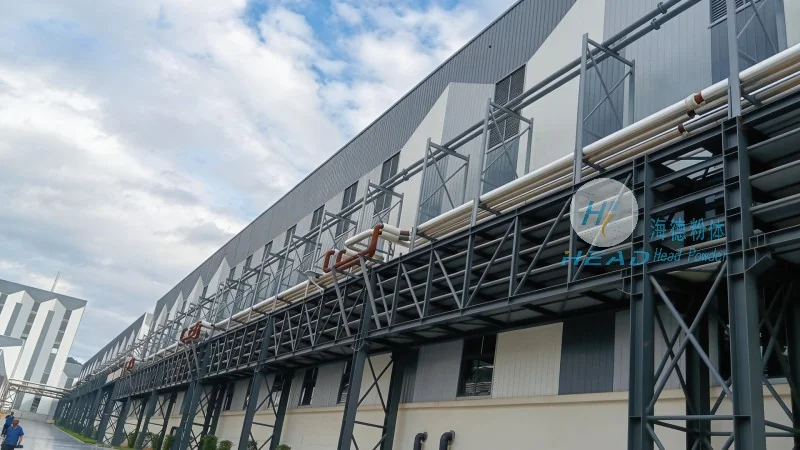
Introduction to Air-Driven Lime Handling Systems
Quicklime, or calcium oxide, is a critical material in various industrial processes, including steel production, chemical manufacturing, and environmental treatment. Efficient and reliable handling of quicklime is essential to ensure process continuity and operational efficiency. Air-driven (pneumatic) conveying systems offer a versatile solution for transporting quicklime from storage to processing units, minimizing material handling risks and enhancing safety.
Design Calculation Fundamentals for Air-Driven Lime Conveying
The successful implementation of an air-driven lime handling system begins with accurate design calculations. These calculations are crucial for determining the appropriate air flow rates, pressure requirements, and equipment specifications to achieve optimal performance. Key parameters include material properties (such as bulk density, particle size distribution, and flowability), system layout (including horizontal and vertical distances), and operational conditions (like ambient temperature and humidity).
First, the required conveying capacity is determined based on the production rate and material flow requirements. This is typically expressed in terms of mass flow rate (kg/h or ton/h). Subsequently, the air flow rate is calculated by considering the material's specific conveying air ratio, which is the ratio of air volume to material mass. The air ratio is influenced by factors like particle size, material density, and the type of conveying system (e.g., dilute-phase or dense-phase).
Pressure Drop Analysis and System Sizing
Pressure drop is a critical factor in air-driven conveying systems, as it directly impacts energy consumption and equipment selection. The total pressure drop in the system consists of several components, including friction losses in the pipeline, acceleration losses at bends and fittings, and elevation losses due to vertical lifts. Accurate estimation of these losses is essential to ensure the system operates within the capabilities of the blower or compressor.
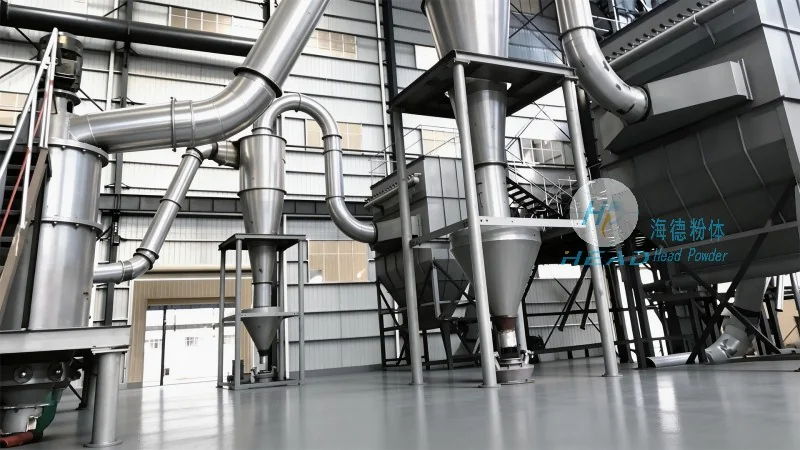
Friction losses are calculated using the Darcy-Weisbach equation, which accounts for the pipe diameter, length, material roughness, and fluid velocity. Acceleration losses occur when the air velocity changes due to changes in the system geometry, such as entering or exiting a pipe, or passing through a valve. Elevation losses are determined by the vertical height of the material transport and the specific gravity of the material.
Equipment Selection for Air-Driven Lime Handling
Proper equipment selection is vital to ensure the long-term reliability and efficiency of the air-driven lime handling system. The main components include the material feeder, air compressor or blower, conveying pipeline, and material receiver. Each component must be matched to the system's design parameters to avoid underperformance or excessive energy consumption.
The material feeder is responsible for feeding the quicklime into the conveying line at a consistent rate. Common types include rotary valves, star feeders, and screw feeders. The choice depends on the material's flowability and the required feeding rate. For quicklime, which can be dusty and abrasive, a rotary valve or star feeder is often preferred to minimize material degradation and ensure smooth feeding.
The air compressor or blower provides the necessary air pressure and flow rate. Centrifugal blowers are commonly used for dilute-phase conveying due to their high airflow capacity and relatively low cost. Positive displacement blowers, such as rotary lobe or vane-type, are suitable for dense-phase conveying, which requires higher pressure and lower air-to-material ratios.
The conveying pipeline is typically made of stainless steel or PVC to resist corrosion from the lime dust. The pipe diameter is selected based on the required air velocity and material flow rate. The velocity must be high enough to keep the material in suspension but low enough to prevent excessive wear on the pipe and fittings.
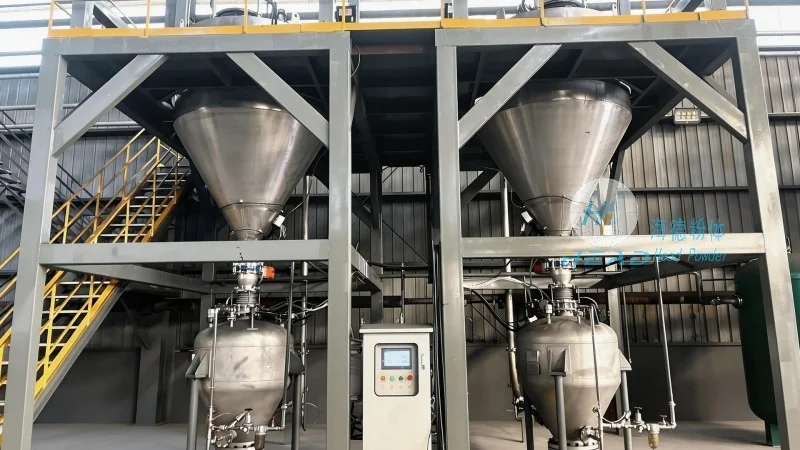
The material receiver is designed to collect the conveyed quicklime and transfer it to the processing unit. It should be equipped with dust collection systems to prevent environmental contamination and ensure compliance with regulations. The receiver's design also considers the material's bulk density and flowability to avoid material buildup or bridging.
System Integration and Operational Considerations
Integrating the air-driven lime handling system with the overall industrial process requires careful planning to ensure seamless operation. This includes coordinating with other equipment, such as storage silos, processing units, and dust collection systems. Proper maintenance of the system components is also essential to maintain performance and extend equipment life.
Regular inspection of the pipeline for blockages or wear, maintenance of the air compressor or blower, and cleaning of the material feeder and receiver are all critical operational considerations. Additionally, monitoring system performance parameters, such as pressure drop and air flow rate, helps identify potential issues early and prevent system downtime.
Conclusion
Designing and selecting the appropriate equipment for air-driven lime handling systems is a complex but essential process. By following the methodologies outlined in this article, including accurate calculation of conveying parameters, thorough analysis of pressure drop, and careful selection of system components, industrial facilities can achieve efficient, reliable, and cost-effective handling of quicklime. Headpowder, with its expertise in engineering and material handling, offers comprehensive solutions tailored to meet the specific needs of clients in the industrial sector.




