HeadPowder, a leading engineering company based in Shandong, China, specializes in advanced material handling solutions, particularly in the field of airborne conveying technology for soda ash. This article explores the fundamental principles, practical applications, and emerging trends of this critical industrial process.
Understanding Soda Ash and Its Handling Requirements
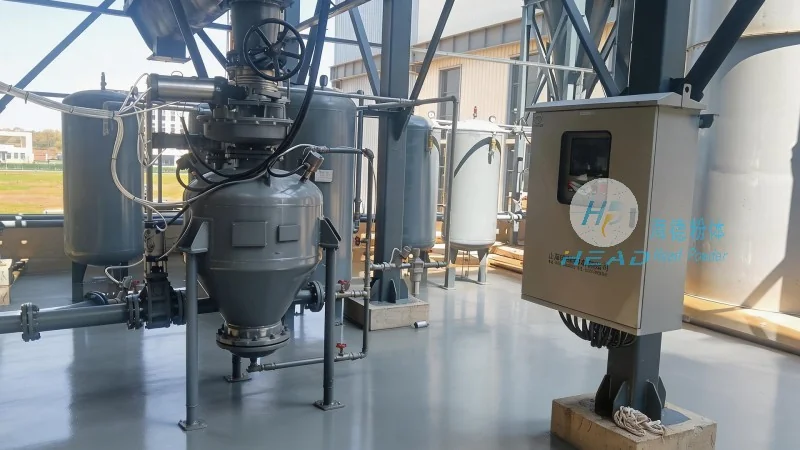
Soda ash, chemically known as sodium carbonate (Na₂CO₃), is a widely used industrial chemical in sectors such as glass manufacturing, chemical production, and water treatment. Due to its bulk nature and varying particle sizes, efficient and reliable transportation from storage to processing units is essential to maintain operational efficiency and product quality. Traditional methods like belt conveyors or bucket elevators may face challenges in handling fine powders or abrasive materials, making air-based conveying a preferred solution for many industries.
The Principles of Airborne Conveying Technology
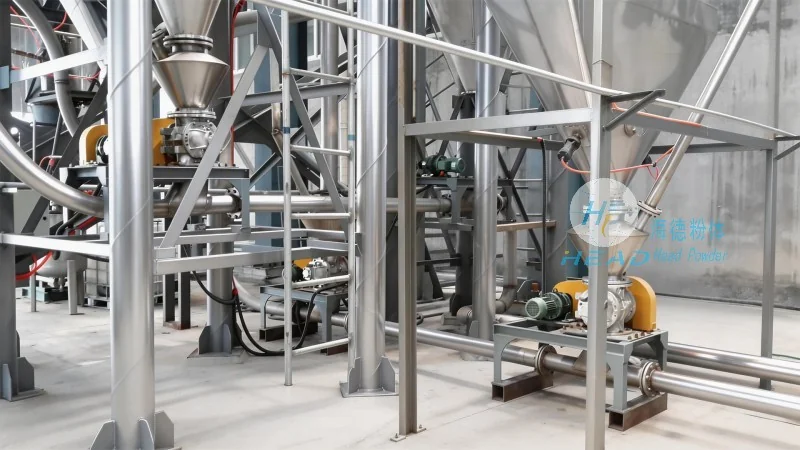
Airborne conveying, also referred to as pneumatic conveying, utilizes compressed air to transport bulk materials through a pipeline system. The core principle involves creating a pressure differential that propels the material along the pipeline. There are two primary types of pneumatic conveying systems: dilute-phase and dense-phase. Dilute-phase systems operate at low pressure and high air-to-material ratios, suitable for fine powders and long-distance transport. Dense-phase systems, on the other hand, use higher pressure and lower air-to-material ratios, ideal for handling abrasive or sensitive materials that require gentle handling. The choice between these systems depends on factors such as material characteristics, distance, and desired flow rates.
Applications of Airborne Conveying in Soda Ash Handling
HeadPowder’s air conveying solutions are widely applied in soda ash processing facilities. One common application is the transfer of raw soda ash from storage silos to production lines. The system efficiently moves large volumes of material with minimal downtime, ensuring a steady supply for manufacturing processes. Another key application is the distribution of processed soda ash to various end-users, such as glass manufacturers or chemical plants. The technology also supports in-plant material movement, including the transfer of byproducts or waste materials, contributing to overall plant efficiency. Additionally, the system can be integrated with dust collection and filtration systems to maintain environmental compliance and product purity.
Advancements and Future Trends in Airborne Conveying
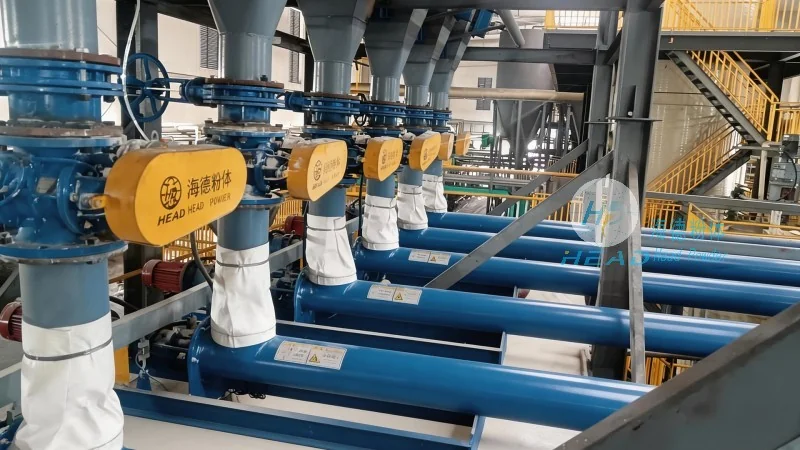
The field of pneumatic conveying continues to evolve with technological advancements aimed at improving efficiency, reducing costs, and enhancing safety. Modern systems now incorporate advanced control systems that optimize air pressure and flow rates based on real-time material conditions. This automation reduces energy consumption and minimizes material degradation. Furthermore, the development of flexible pipeline materials and modular system designs allows for easier installation and maintenance, adapting to changing production needs. Emerging trends also include the integration of IoT (Internet of Things) sensors to monitor system performance, predict maintenance requirements, and enhance overall operational reliability. These innovations are expected to further improve the performance and sustainability of soda ash handling processes.




