Vinyl ester resins are widely used in various industrial applications due to their excellent chemical resistance, mechanical strength, and durability. The efficient and safe transportation of these resins from storage to processing equipment is crucial for maintaining production efficiency and product quality. Among the various conveying methods available, air-lift conveying has emerged as a preferred solution for handling vinyl ester resins, offering several advantages over traditional methods.
Understanding Vinyl Ester Resin Properties and Conveying Challenges
Before delving into specific conveying methods, it is essential to understand the properties of vinyl ester resins that influence their handling. These resins are typically viscous liquids with a relatively high density, which can pose challenges during transportation. Traditional methods like pumping or gravity flow may not be suitable for all applications, especially when dealing with large volumes or when the resin needs to be transported over significant distances. This is where air-lift conveying provides a viable alternative.
What is Air-Lift Conveying for Vinyl Ester Resins?
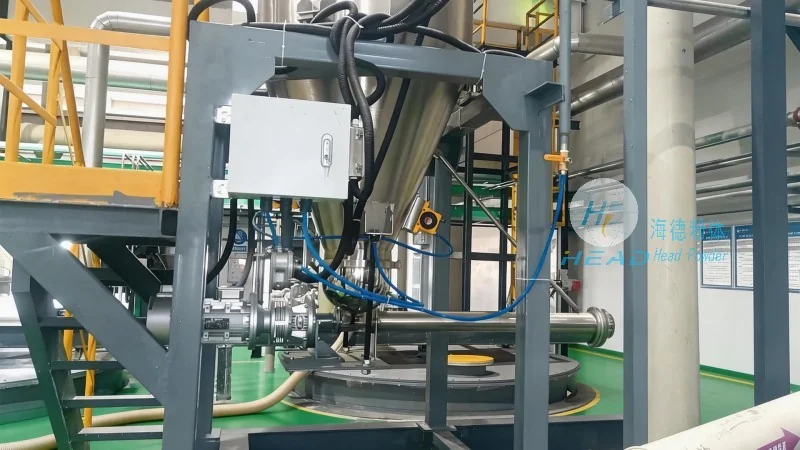
Air-lift conveying, also known as pneumatic conveying, utilizes compressed air to move materials through a pipeline. In the context of vinyl ester resins, this method involves a vertical or inclined pipe where compressed air is introduced at the bottom, creating a low-pressure zone that draws the resin upward. The air and resin mixture is then transported to the processing equipment, where the air is separated and the resin is collected. This process is highly efficient for handling viscous liquids and can be adapted to various flow rates and distances.
Advantages of Air-Lift Conveying for Vinyl Ester Resins
There are several key advantages of using air-lift conveying for vinyl ester resins. First, it eliminates the need for mechanical pumps, reducing maintenance costs and the risk of contamination. The absence of moving parts also minimizes the potential for wear and tear, leading to longer equipment life. Second, air-lift conveying is highly effective in preventing contamination, as the resin is not in direct contact with metal surfaces or other materials that could introduce impurities. This is particularly important for vinyl ester resins, which are used in applications requiring high purity, such as aerospace, chemical processing, and marine coatings.
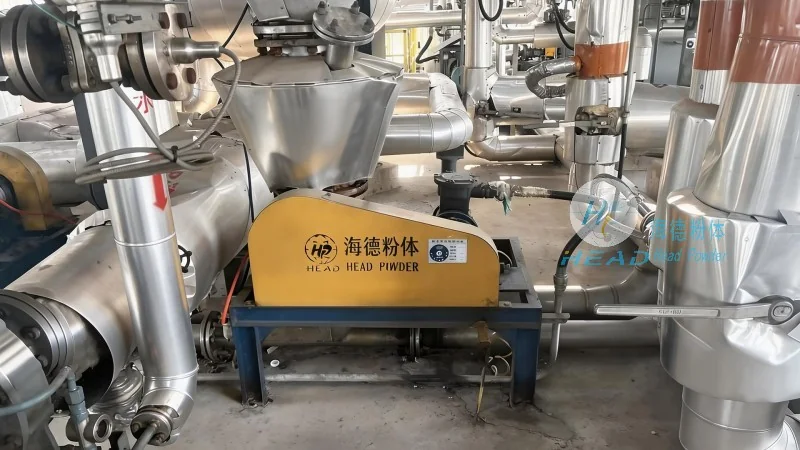
Third, air-lift conveying allows for precise control over the flow rate and pressure, ensuring consistent delivery of the resin to the processing equipment. This helps maintain stable production processes and reduces the risk of over or under-dosing, which can affect product quality. Additionally, the system can be easily scaled up or down to accommodate changes in production volume, making it a flexible solution for different industrial needs.
Comparison with Other Conveying Methods
When compared to other methods like mechanical pumping or gravity flow, air-lift conveying offers distinct benefits for vinyl ester resins. Mechanical pumps can introduce shear stress to the resin, potentially affecting its molecular structure and properties. Gravity flow is only feasible for short distances and may not be suitable for viscous resins that do not flow easily. In contrast, air-lift conveying can handle long distances and high-viscosity materials without the need for additional energy or equipment. This makes it a more versatile and cost-effective solution for many applications.
Applications of Air-Lift Conveying in Vinyl Ester Resin Processing
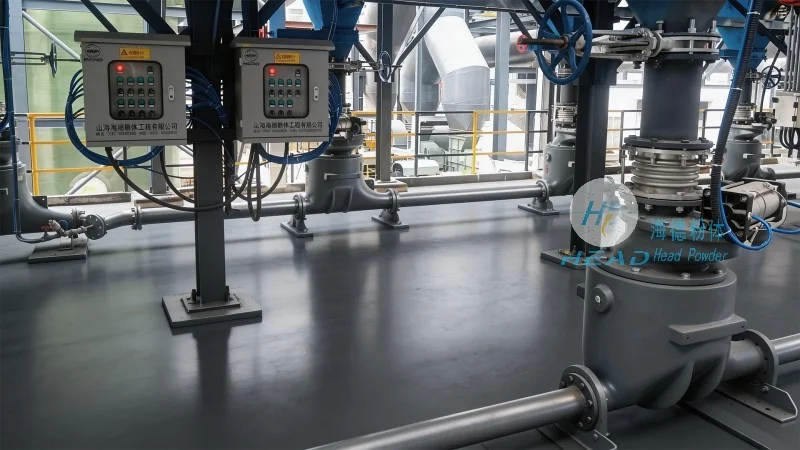
Air-lift conveying is widely used in various applications involving vinyl ester resins. For example, in the production of fiberglass-reinforced vinyl ester composites, the resin is often conveyed from storage tanks to mixing and molding equipment using air-lift systems. This ensures a consistent and clean supply of resin, which is critical for achieving uniform composite properties. Similarly, in chemical processing plants, air-lift conveying is used to transport vinyl ester resins to reactors and other processing units, where they are used as raw materials for the production of other chemicals.
In the marine industry, vinyl ester resins are used for manufacturing boat hulls and other marine structures. Air-lift conveying is employed to transport the resin to the molding equipment, ensuring that the resin is applied evenly and without contamination. This helps improve the quality and durability of the final products, which are exposed to harsh marine environments.
Conclusion
Overall, air-lift conveying is an effective and reliable method for transporting vinyl ester resins. Its advantages in terms of contamination control, maintenance, and flexibility make it a preferred choice for many industrial applications. By understanding the properties of vinyl ester resins and the capabilities of air-lift conveying systems, manufacturers can optimize their production processes and ensure consistent product quality.




