Operation Process and Working Principle of Glass Fiber Powder Conveying System
Release time:2026-09-20 16:01:37
name of the company:Shandong Headpowder Engineering Co., Ltd.
telephone:156-6277-7102
contacts:Zhang manager
For industrial applications involving the handling of glass fiber powders, efficient and reliable conveying systems are essential. The operation of such systems involves a series of steps designed to ensure smooth material transport from source to destination. This article provides a detailed overview of the operation process and working principles of a typical glass fiber powder conveying system, highlighting key components and their functions. Developed by Shandong HeadPowder Engineering Co., Ltd. (headpowder), these systems are engineered to meet the demanding requirements of modern industrial processes, ensuring high performance and durability.
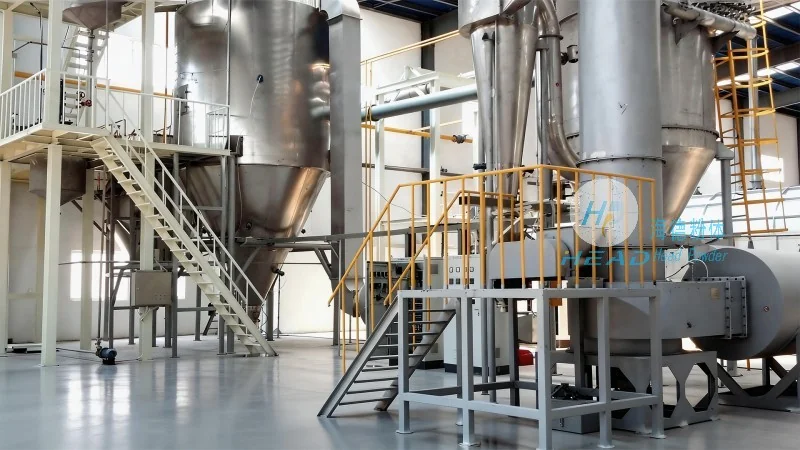
Key Components of the Conveying System
The glass fiber powder conveying system typically consists of several critical components that work in tandem to achieve effective material transport. These include the hopper or storage silo, which serves as the primary container for the glass fiber powder; the feeding mechanism, such as a rotary valve or screw feeder, responsible for controlling the flow of material from the hopper; the conveying pipeline, which may be made of materials like stainless steel or special polymers to prevent material buildup and contamination; and the drive system, which provides the necessary power to move the material through the pipeline. Additionally, the system may incorporate dust collection and filtration equipment to maintain air quality and comply with environmental regulations.
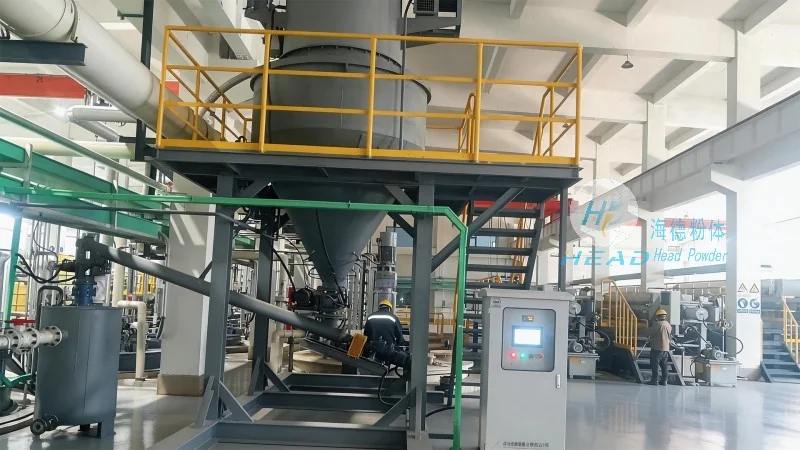
Operation Process of the Conveying System
The operation process of a glass fiber powder conveying system begins with the loading of the glass fiber powder into the hopper or storage silo. The hopper is designed to hold a sufficient quantity of material to ensure continuous operation, minimizing downtime caused by frequent refills. Once the hopper is filled, the feeding mechanism is activated to control the flow rate of the glass fiber powder into the conveying pipeline. The rotary valve or screw feeder regulates the amount of material entering the pipeline, ensuring a consistent and controlled flow. The drive system then initiates the movement of the material through the pipeline, using either positive displacement or pneumatic methods depending on the system design. The material travels through the pipeline under pressure or with the assistance of air, reaching the destination point such as a processing unit or storage tank. Throughout the process, sensors and monitoring devices track the flow rate, pressure, and other parameters to ensure optimal performance and detect any potential issues.
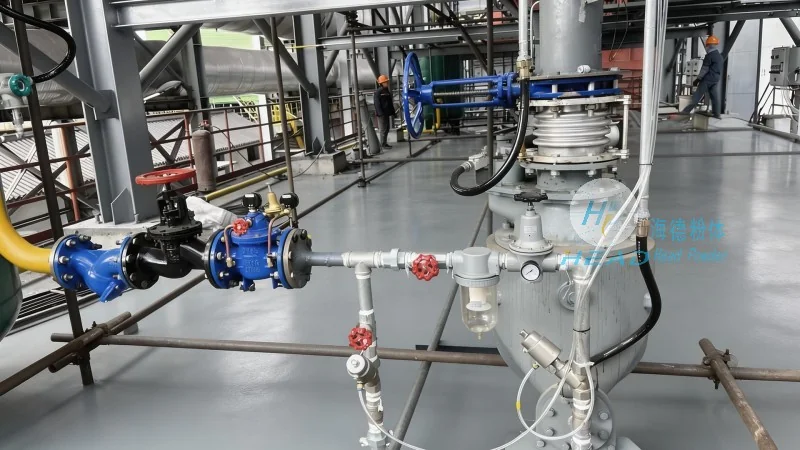
Working Principle of the Conveying System
The working principle of a glass fiber powder conveying system is based on the principles of fluid dynamics and mechanical transport. For systems using positive displacement, the material is pushed through the pipeline by a rotating screw or piston, creating a continuous flow. This method is particularly effective for materials with low flowability or those that tend to settle. In pneumatic conveying systems, the glass fiber powder is mixed with air and transported through the pipeline under pressure. The air acts as a carrier, moving the powder particles through the system. The system may use either dilute phase or dense phase conveying, depending on the material characteristics and required transport efficiency. Dilute phase conveying involves low material concentration in the air stream, while dense phase conveying uses higher material concentration, which can improve efficiency and reduce energy consumption. The choice of conveying method depends on factors such as the material's properties, the distance to be transported, and the required flow rate.




