Operation Process and Working Principle of Gray Calcium Powder Material Conveying Line
Release time:2026-09-21 02:01:40
name of the company:Shandong Headpowder Engineering Co., Ltd.
telephone:156-6277-7102
contacts:Zhang manager
Gray calcium powder, a key raw material in various industrial applications, requires efficient and reliable material handling solutions to ensure smooth production processes. The material conveying line for gray calcium powder is a specialized system designed to transport this fine powder from storage to processing units with precision and minimal loss. This article provides an in-depth look at the operation process and working principle of such a system, highlighting the key components, operational procedures, and technical aspects that contribute to its effectiveness.

Company Overview: Shandong HeadPowder Engineering Co., Ltd.
As a leading provider of industrial material handling solutions, Shandong HeadPowder Engineering Co., Ltd. specializes in designing and manufacturing advanced conveying systems tailored to the needs of the calcium powder industry. With a strong commitment to quality and innovation, the company has established itself as a trusted partner for businesses seeking efficient and durable material transport solutions. HeadPowder's expertise in engineering and manufacturing ensures that their conveying lines are built to withstand the demands of high-volume production environments, offering reliability and performance that meet or exceed industry standards.
Key Components of the Gray Calcium Powder Conveying Line
The gray calcium powder material conveying line typically consists of several critical components that work in tandem to achieve efficient material transport. These components include:
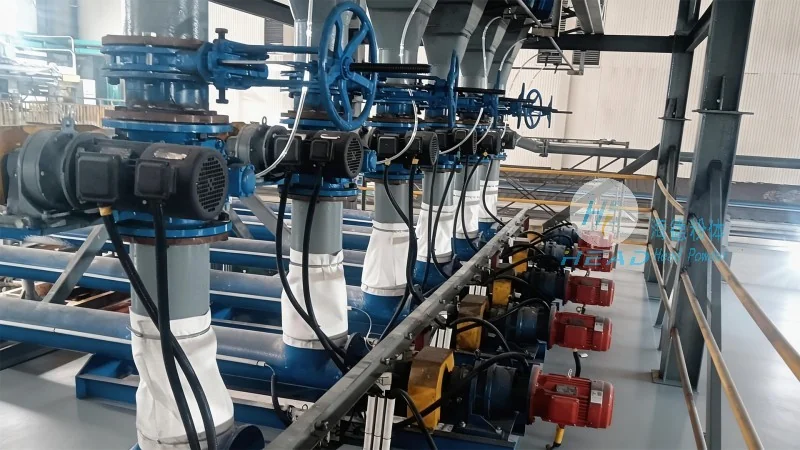
- Storage Silo: A large, airtight storage silo is used to store the raw gray calcium powder, ensuring it remains dry and free from contamination. The silo is equipped with a discharge valve that allows controlled release of the material.
- Pneumatic Conveying System: This is the core of the conveying line, utilizing air pressure to transport the fine powder through a network of pipes. The system includes a blower or compressor that generates the necessary air pressure, and a series of ducts that guide the material from the storage silo to the processing unit.
- Feeder and Metering Device: A feeder, often a rotary valve or a screw feeder, is used to regulate the flow of powder from the storage silo into the conveying system. This component ensures a consistent and controlled feed rate, preventing overloading or underloading of the system.
- Control System: An automated control system monitors and controls the operation of the conveying line, including the blower speed, feeder settings, and material flow rate. This system ensures optimal performance and helps prevent issues such as blockages or air leaks.
- Receiving Hopper: At the processing end, a receiving hopper collects the conveyed powder, providing a buffer to stabilize the flow before it is fed into the next stage of production.
Operation Process of the Conveying Line
The operation of the gray calcium powder material conveying line follows a systematic process that ensures efficient and continuous material transport. The steps involved are as follows:
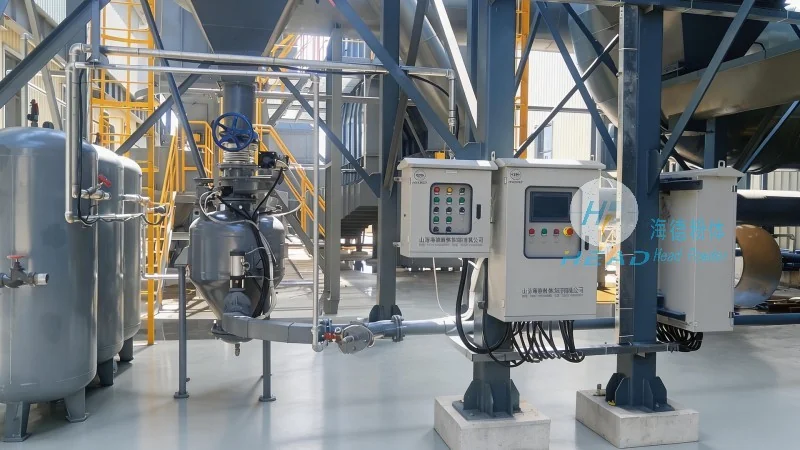
- Material Loading: The gray calcium powder is loaded into the storage silo from a bulk delivery truck or other storage containers. The silo is then sealed to maintain the material's quality.
- System Preparation: The pneumatic conveying system is started, and the blower is activated to generate the required air pressure. The control system is set to the appropriate parameters for the material being conveyed.
- Material Transfer: The feeder device opens, allowing the gray calcium powder to be drawn into the conveying system by the air flow. The powder is then transported through the ducts to the receiving hopper at the processing unit.
- Control and Monitoring: The control system continuously monitors the pressure, flow rate, and other parameters to ensure the system is operating within optimal conditions. Any deviations are automatically adjusted to maintain consistent performance.
- Material Discharge: The powder is discharged from the receiving hopper into the processing equipment, such as a mixer or a reactor, where it is used in the production process.
Working Principle of the Conveying Line
The working principle of the gray calcium powder material conveying line is based on the principles of pneumatic conveying, which uses air as the medium to transport fine powders. The system operates by creating a pressure differential between the storage silo and the receiving hopper. The blower generates a high-pressure air stream that pulls the powder particles into the ducts, where they are suspended and transported as a dilute phase flow. The key to efficient operation is maintaining the correct air-to-powder ratio, which ensures that the powder is fully suspended and moves smoothly through the system without causing blockages or excessive wear on the equipment.
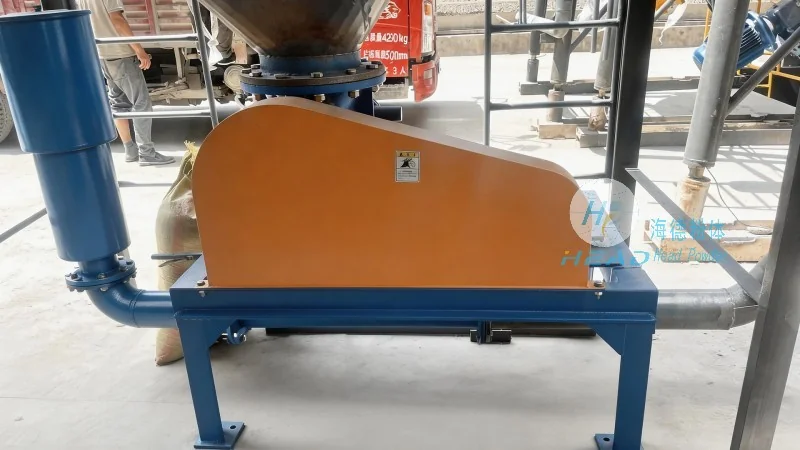
The feeder device plays a crucial role in maintaining the air-to-powder ratio by controlling the flow rate of the powder into the conveying system. If the powder flow is too high or too low, it can lead to instability in the system, causing issues such as surging or clogging. The control system continuously adjusts the blower speed and feeder settings to maintain the optimal ratio, ensuring consistent and reliable material transport.
Benefits and Advantages of the Conveying Line
The gray calcium powder material conveying line offers several benefits that make it an ideal solution for industrial applications. These include:




