Shandong HeadPowder Engineering Co., Ltd., a leading manufacturer based in Shandong, China, specializes in the design, production, and supply of advanced pneumatic conveying systems tailored for starch materials. With a strong commitment to technological innovation and quality assurance, the company has established itself as a trusted partner in the material handling industry, particularly for applications involving the efficient and reliable transport of starch-based products.
Overview of Pneumatic Conveying Systems for Starch Materials
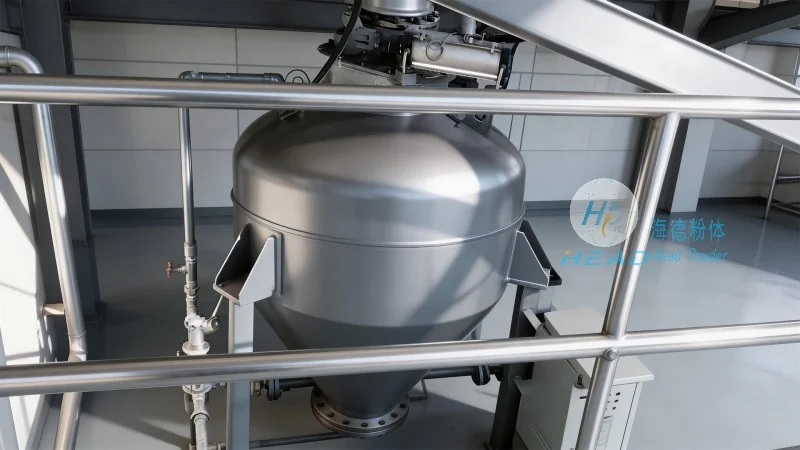
Pneumatic conveying, also known as pneumatic transport, is a method of moving bulk materials like starch through a pipeline using air or other gas as the conveying medium. This technology offers several advantages over traditional mechanical conveying methods, including reduced equipment wear, lower maintenance costs, and the ability to handle materials that are sensitive to mechanical stress or contamination. For starch materials, which are often used in food, pharmaceutical, and industrial applications, the precision and cleanliness of pneumatic conveying systems are critical.
Key Components of a Starch Material Pneumatic Conveying System
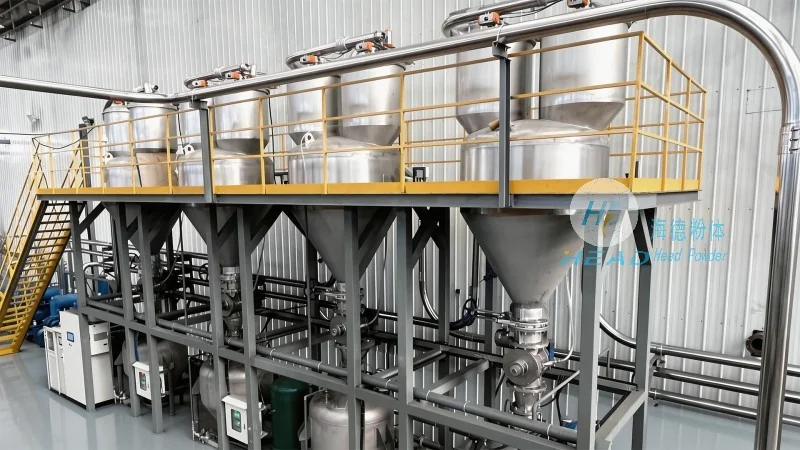
The core components of a pneumatic conveying system for starch materials typically include a hopper for material storage, a feeder to control the flow rate, a conveying line (often with multiple sections), a pressure or vacuum source, and a receiver for the discharged material. Each component plays a vital role in ensuring the system operates efficiently and safely. The hopper is designed to hold a sufficient quantity of starch, preventing material bridging or caking, which can impede the conveying process. The feeder, usually a rotary valve or a screw feeder, regulates the material flow into the conveying line, maintaining a consistent pressure or vacuum level. The conveying line itself is made of materials resistant to starch and moisture, such as stainless steel or special plastics, to prevent material degradation and equipment corrosion. The pressure or vacuum source, which can be a blower, fan, or vacuum pump, provides the necessary force to move the starch through the pipeline. Finally, the receiver collects the conveyed starch, often equipped with a discharge valve to control the material release.
Working Principle of Pneumatic Conveying for Starch Materials
The operation of a starch material pneumatic conveying system involves a sequence of steps that ensure the material is transported from the source to the destination. The process typically begins with the starch being fed from the hopper into the conveying line. The feeder then regulates the flow rate, ensuring a steady supply of material. The pressure source (in pressure conveying) or vacuum source (in vacuum conveying) creates a pressure differential that propels the starch particles through the pipeline. As the starch moves, it is suspended in the air stream, which prevents particle-to-particle and particle-to-pipe contact, minimizing friction and wear. The conveying line may include sections with different diameters or bends, which are designed to optimize the flow and reduce pressure loss. The receiver at the end of the line collects the starch, and the air is either filtered and recirculated or vented to the atmosphere, depending on the system design. This continuous cycle allows for the efficient and continuous transport of starch materials over long distances or between different processing stages.
Operation Process of a Starch Material Pneumatic Conveying System
The operation process of a starch material pneumatic conveying system can be broken down into several key stages, each requiring precise control to maintain system efficiency and material quality. The first stage is the preparation phase, where the starch is loaded into the hopper and the system is checked for proper functioning. This includes verifying that the feeder is calibrated correctly, the conveying line is clear of obstructions, and the pressure or vacuum source is operating within the specified parameters. Once the system is ready, the second stage is the start-up process. The feeder is activated to begin feeding the starch into the conveying line, and the pressure or vacuum source is turned on to create the necessary flow. The system then enters the main conveying phase, where the starch is continuously transported from the source to the receiver. During this phase, operators monitor the system for any signs of pressure drop, material blockage, or abnormal noise, which may indicate a problem that needs to be addressed. The third stage is the shutdown process, where the feeder is stopped, and the pressure or vacuum source is turned off to allow the system to return to a safe state. The receiver is then opened to discharge the remaining starch, and the system is cleaned if necessary to prevent material buildup or contamination.
Advantages of Using Pneumatic Conveying for Starch Materials
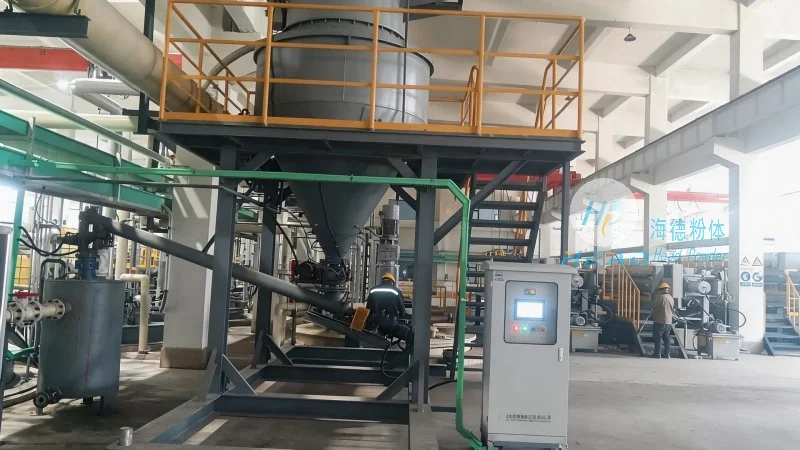
There are several key advantages to using pneumatic conveying systems for starch materials. First, the technology offers high efficiency in terms of material transport, as it can move large quantities of starch over long distances with minimal energy consumption compared to other methods. Second, the system provides excellent material handling capabilities, as it can handle fine or powdery starch without causing segregation or degradation. Third, pneumatic conveying is highly flexible, as it can be easily integrated into existing processing lines or modified to accommodate different starch types or flow rates. Fourth, the system is clean and hygienic, which is crucial for starch applications in the food and pharmaceutical industries, as it minimizes the risk of contamination and ensures compliance with regulatory standards. Finally, the system is relatively low maintenance, as it has fewer moving parts compared to mechanical conveying systems, reducing downtime and operational costs.
Applications of Starch Material Pneumatic Conveying Systems
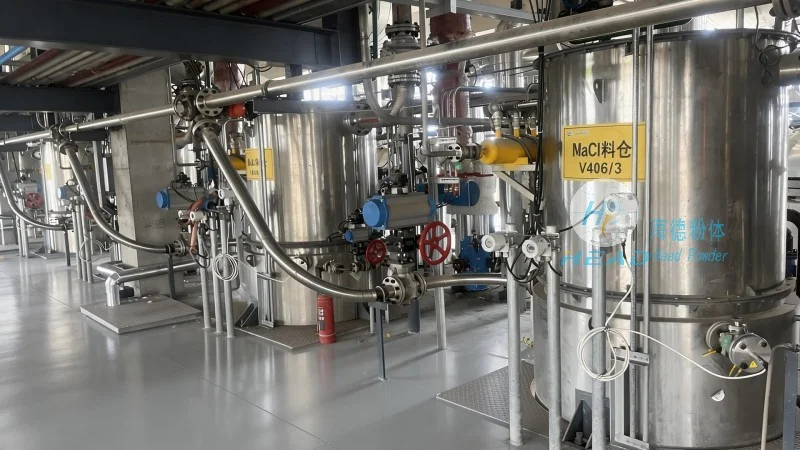
Pneumatic conveying systems for starch materials are widely used in various industries, including food processing, pharmaceutical manufacturing, and industrial chemical production. In the food industry, these systems are used to transport starch from storage silos to processing lines, such as for the production of starch-based foods, beverages, or snacks. In the pharmaceutical industry, the systems are employed to handle starch used as a filler or binder in drug formulations, ensuring that the material is delivered in a clean and controlled manner. In industrial applications, starch is used as a raw material in the production of adhesives, coatings, and other products, and pneumatic conveying systems help to efficiently move the material between processing stages. The versatility of these systems makes them suitable for a wide range of starch applications, from small-scale laboratory use to large-scale industrial production.
Conclusion
Shandong HeadPowder Engineering Co., Ltd. provides advanced pneumatic conveying systems for starch materials that combine efficiency, reliability, and flexibility. By understanding the operation process and working principle of these systems, users can optimize their material handling processes, reduce costs, and improve product quality. The company's commitment to quality and innovation ensures that its systems meet the highest standards in the industry, making them a preferred choice for businesses seeking reliable and effective starch material transport solutions.




