

Working Principle and Features of Epoxy Resin Pneumatic Conveying Systems
Epoxy resin is a widely used industrial material in various sectors, including construction, electronics, and manufacturing. The efficient and reliable transportation of epoxy resin powders or granules is crucial for maintaining production efficiency and product quality. Pneumatic conveying systems have emerged as a preferred method for handling epoxy resin due to their ability to transport materials in a closed, controlled environment. This article explores the working principle and key features of epoxy resin pneumatic conveying systems, highlighting how they enhance operational performance and safety in industrial applications.
Working Principle of Epoxy Resin Pneumatic Conveying Systems
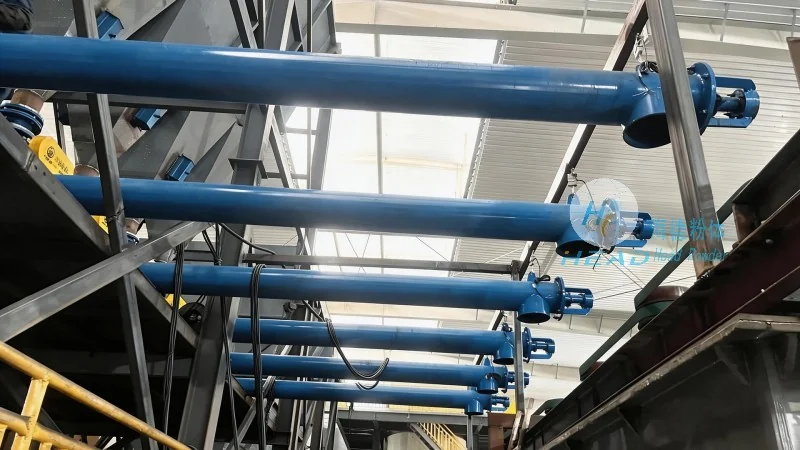
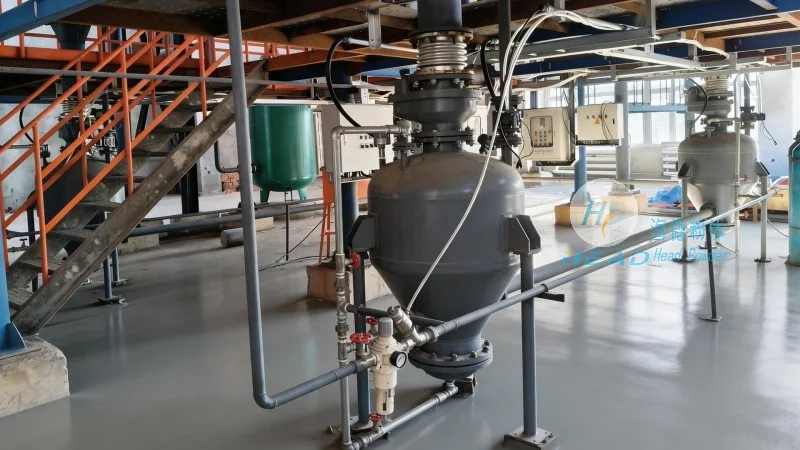
The core of an epoxy resin pneumatic conveying system lies in its ability to use compressed air or other gases to move solid particles through a pipeline. The system typically operates on one of two fundamental principles: suction (or vacuum) conveying or pressure (or positive) conveying. In suction conveying, a vacuum is created at the material inlet to draw the epoxy resin particles into the system. This method is ideal for short to medium-distance transport and is commonly used when the material is light and requires gentle handling. Conversely, pressure conveying uses compressed air to push the material through the pipeline, making it suitable for longer distances and higher material loads. The system consists of several critical components, including a material feeder (such as a rotary valve or a screw feeder) to control the flow of epoxy resin, a compressor or air source to generate the necessary pressure or vacuum, a conveying line (usually made of stainless steel or other corrosion-resistant materials to prevent contamination), a separation unit (like a cyclone or bag filter) to separate the material from the air, and a receiving hopper or storage tank. The process begins when the epoxy resin is fed into the feeder, which then releases the material into the conveying line. The compressed air or vacuum then propels the particles forward, maintaining a consistent flow rate. At the receiving end, the separation unit captures the resin particles while allowing the air to be recirculated or vented. This closed-loop system ensures minimal material loss and prevents dust contamination, which is particularly important for epoxy resin, as it can be sensitive to moisture and other environmental factors.
Key Features of Epoxy Resin Pneumatic Conveying Systems
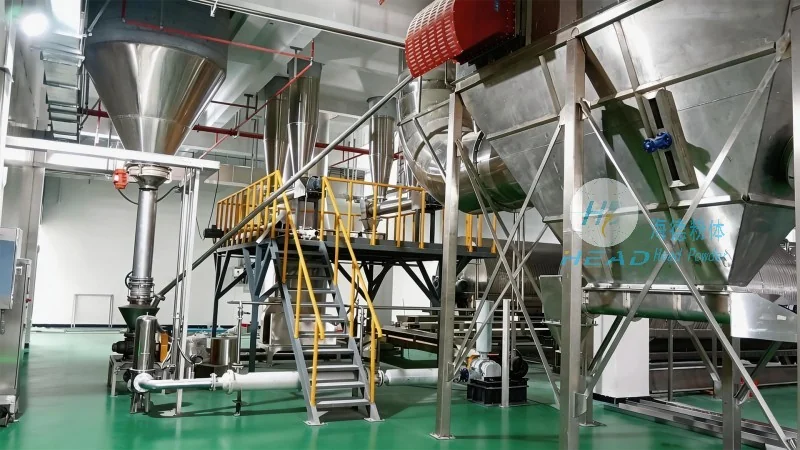
Epoxy resin pneumatic conveying systems offer several advantages that make them indispensable in modern industrial settings. One of the most significant features is the ability to perform contactless transport. Unlike mechanical systems that involve direct contact between the material and equipment, pneumatic conveying keeps the epoxy resin isolated from surfaces, reducing the risk of contamination and cross-contamination. This is especially beneficial in applications where product purity is paramount, such as in the electronics or pharmaceutical industries. Additionally, the systems are designed to handle sensitive or delicate materials without causing damage. Epoxy resin particles can be prone to agglomeration or breakage, but the gentle airflow in a pneumatic system minimizes these issues, ensuring the material remains in its desired form. Another key feature is the closed system design. By enclosing the entire conveying process, the system prevents dust from escaping into the environment, improving workplace safety and compliance with environmental regulations. This also helps maintain a clean and hygienic working environment, which is critical for industries that require strict quality control. Flexibility is another notable characteristic. Pneumatic conveying systems can be easily configured to adapt to different production layouts and requirements. They can be integrated with existing equipment or customized to fit specific space constraints, making them suitable for both new installations and retrofitting in existing facilities. Furthermore, these systems are highly efficient in terms of energy consumption and material utilization. The use of compressed air is optimized to minimize waste, and the closed-loop design reduces material loss, leading to cost savings over time. Maintenance is also relatively straightforward, as the components are designed for easy access and replacement. The system's robust construction, often made from stainless steel or other durable materials, ensures long-term reliability and reduces downtime. Finally, the adaptability of pneumatic conveying systems allows them to handle a wide range of epoxy resin types, from fine powders to larger granules, making them versatile solutions for various applications.
Customization and Application Considerations
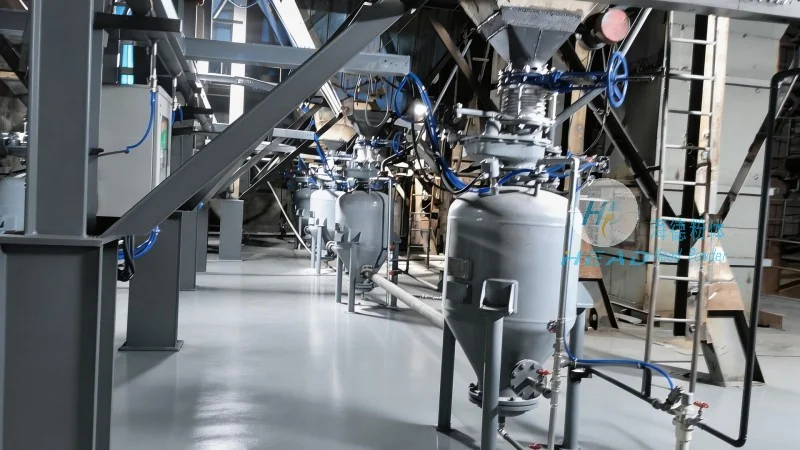
Shandong HeadPowder Engineering Co., Ltd., a leading manufacturer specializing in material handling solutions, offers customized epoxy resin pneumatic conveying systems tailored to specific industrial needs. Based in China, the company leverages advanced engineering and manufacturing capabilities to design systems that meet the unique requirements of clients across different industries. The company's expertise in material flow dynamics and system integration ensures that the epoxy resin is handled efficiently and safely. The systems are designed with considerations for the physical properties of epoxy resin, such as its density, particle size, and moisture content, to optimize performance. For instance, the choice between suction and pressure conveying depends on the distance and the material's characteristics. Shorter distances and lighter materials may benefit from suction systems, while longer distances and heavier loads may require pressure systems. The company also considers factors like the required flow rate, the need for dust control, and the available space when designing the system. By working closely with clients, Shandong HeadPowder Engineering Co., Ltd. develops solutions that enhance productivity, reduce operational costs, and improve overall safety. The company's commitment to quality and innovation has made it a trusted partner for businesses seeking reliable and efficient material handling solutions. Whether for new construction or upgrading existing facilities, their epoxy resin pneumatic conveying systems provide a robust and adaptable approach to material transport, ensuring that epoxy resin is handled with precision and care.