Wood fiber powder pneumatic conveying lines are critical systems in the processing and handling of wood fiber materials, playing a vital role in industries such as papermaking, fiberboard production, and biomass energy. These systems efficiently transport wood fiber powders from storage to processing units, ensuring smooth material flow and operational efficiency. The design and functionality of these lines are tailored to the unique properties of wood fiber, including their particle size, moisture content, and flow characteristics.
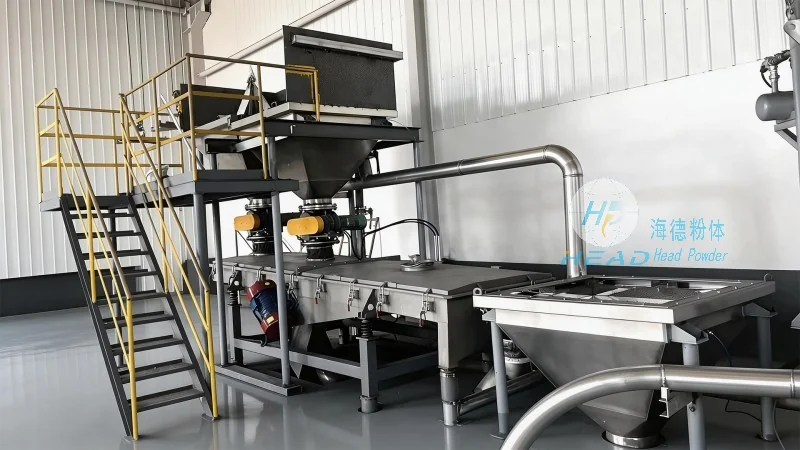
Principle of Pneumatic Conveying for Wood Fiber Powders
The core principle of wood fiber powder pneumatic conveying lines is the use of air as the conveying medium to transport solid particles. There are two primary types of pneumatic conveying systems: positive pressure and negative pressure. Positive pressure systems generate air pressure at the material inlet, pushing the fiber particles through the pipeline. Negative pressure systems, on the other hand, create a vacuum at the outlet, drawing the material into the pipeline. For wood fiber powders, positive pressure systems are often preferred due to their ability to handle larger particle sizes and higher material loads without causing blockages. The system typically consists of a material hopper, a feeder, a blower or compressor, a pipeline network, and a discharge device. The feeder controls the flow rate of wood fiber into the pipeline, while the blower provides the necessary air pressure to move the particles. The pipeline is designed with appropriate diameters and bends to minimize pressure loss and prevent particle segregation or agglomeration. The discharge device, such as a rotary valve or a venturi, ensures the material is released at the processing unit without clogging.
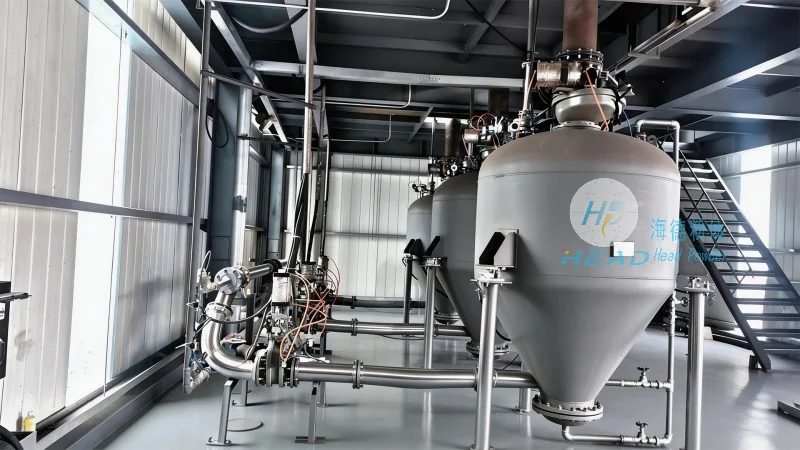
Working Scene Characteristics of Wood Fiber Powder Pneumatic Conveying Lines
The working scene characteristics of wood fiber powder pneumatic conveying lines vary based on the specific application and industry. In papermaking, for example, these systems are used to transport wood chips to the pulping stage, where they are converted into pulp. The conveying lines must handle large volumes of wood chips with varying moisture content, requiring robust and efficient systems to maintain consistent material flow. In fiberboard production, the lines transport wood fibers to the board-forming machine, where they are compressed and bonded to form the final product. Here, the system must ensure uniform fiber distribution and low moisture content to achieve high-quality board production. Another key application is in biomass energy plants, where wood fiber powders are conveyed to biomass boilers for energy generation. The systems in this sector must be capable of handling high-temperature and high-pressure conditions while maintaining material integrity and efficiency. Additionally, in research and development facilities, these lines are used for testing and analyzing wood fiber properties, requiring precise control over material flow and particle size distribution. The working scene characteristics also include considerations for environmental factors, such as dust control and air filtration, to comply with industrial regulations and ensure worker safety. The flexibility of pneumatic conveying lines allows them to adapt to different production scales, from small-scale laboratory applications to large-scale industrial operations. This adaptability makes them suitable for various working environments, including indoor processing facilities and outdoor storage areas connected to processing units.
Technical Advantages and Performance in Wood Fiber Processing
Wood fiber powder pneumatic conveying lines offer several technical advantages that make them ideal for handling wood fiber materials. One of the primary benefits is their ability to transport materials without the need for mechanical components like belts or screws, reducing maintenance costs and minimizing the risk of material contamination. The systems are also highly efficient in terms of energy consumption, as they use air pressure to move materials over long distances with minimal energy loss. This efficiency is particularly important in large-scale industrial operations where energy costs are a significant factor. Another advantage is the ability to handle a wide range of wood fiber particle sizes and moisture contents, making the systems versatile for different processing requirements. The positive pressure systems, in particular, are effective in preventing material segregation, ensuring that the fiber particles remain well-mixed throughout the conveying process. This uniformity is crucial for consistent product quality in applications like papermaking and fiberboard production. The systems also provide better control over material flow compared to traditional methods, allowing for precise regulation of the fiber feed rate to the processing unit. This control helps maintain stable production rates and reduces the risk of overloading or underloading the processing equipment. Furthermore, the pneumatic conveying lines are designed to be compact and space-efficient, which is beneficial in industrial settings where floor space is limited. The modular design of these systems allows for easy installation and expansion, making them suitable for growing production needs. The use of high-quality materials and components ensures the durability and longevity of the equipment, reducing the need for frequent replacements and maintenance. Overall, the technical advantages of wood fiber powder pneumatic conveying lines contribute to improved operational efficiency, reduced costs, and higher product quality in wood fiber processing industries.
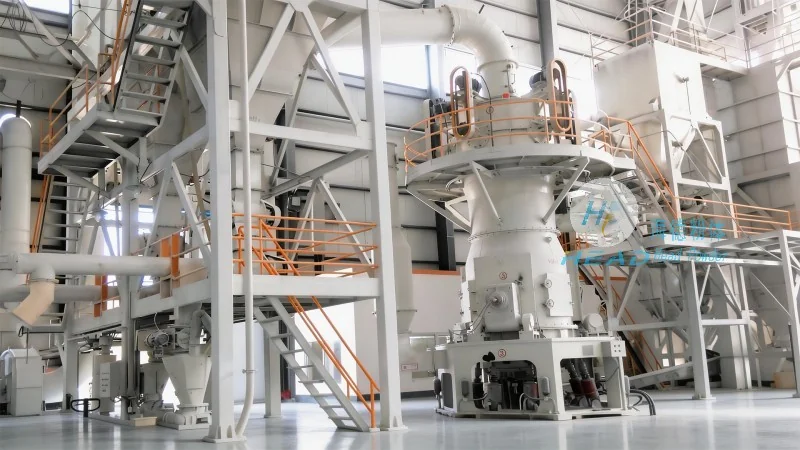
About Shandong HeadPowder Engineering Co., Ltd.
Shandong HeadPowder Engineering Co., Ltd., commonly known as headpowder, is a leading manufacturer and supplier of pneumatic conveying systems and related equipment for wood fiber processing industries. With its headquarters in Shandong, China, the company specializes in designing, manufacturing, and installing customized wood fiber powder pneumatic conveying lines tailored to the specific needs of its clients. HeadPowder has extensive experience in the wood fiber industry, working with clients from various sectors including papermaking, fiberboard production, and biomass energy. The company's team of engineers and technicians is dedicated to providing innovative solutions that enhance the efficiency and reliability of wood fiber processing operations. HeadPowder's commitment to quality and customer satisfaction has earned it a reputation as a trusted partner in the industry. The company adheres to international standards and uses advanced manufacturing techniques to ensure the durability and performance of its products. HeadPowder's facilities in Shandong, China, are equipped with state-of-the-art equipment and technology, enabling the company to produce high-quality pneumatic conveying systems that meet the demanding requirements of modern wood fiber processing. The company's focus on research and development ensures that its products remain at the forefront of industry technology, providing clients with competitive advantages in their respective markets. HeadPowder's dedication to customer support and after-sales service ensures that clients receive comprehensive assistance throughout the lifecycle of their pneumatic conveying systems. By leveraging its expertise and experience, HeadPowder continues to be a key player in the wood fiber processing industry, helping clients optimize their operations and achieve their business goals.




