Boron nitride (BN) is a versatile ceramic material widely used in various industrial applications due to its excellent thermal stability, chemical inertness, and lubricating properties. The efficient handling and transportation of BN powders are crucial for industrial processes, and pneumatic conveying systems have emerged as a preferred method for this purpose. This article provides an in-depth look at the operation process and working principle of boron nitride pneumatic conveying lines, highlighting the key components, operational steps, and technical considerations involved.
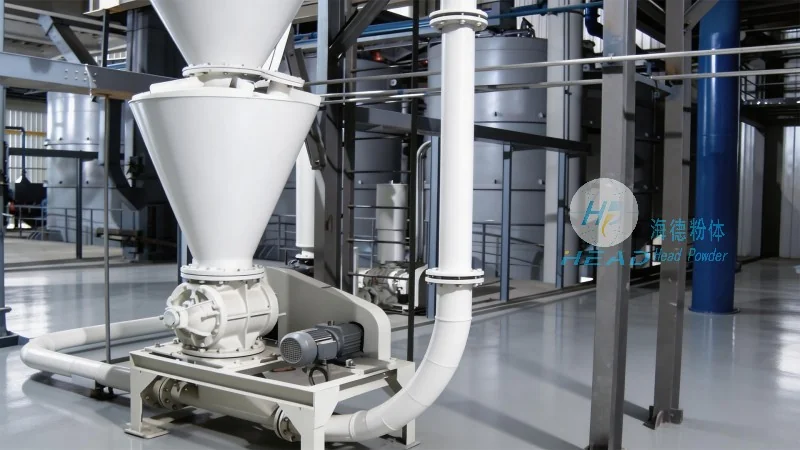
Key Components of a Boron Nitride Pneumatic Conveying System
At the core of any pneumatic conveying system is a series of interconnected components designed to transport solid particles like boron nitride through a pipeline using compressed air. The primary components include a material feeder, a conveying line (typically made of materials resistant to BN's chemical properties), a control system, and a dust collector or filter. The material feeder, often a rotary valve or a venturi feeder, ensures a consistent flow of BN powder into the system. The conveying line, usually constructed from stainless steel or specialized plastics, prevents material degradation and ensures smooth particle movement. The control system regulates air pressure, flow rate, and material feed rate to maintain optimal conveying conditions. Finally, the dust collector or filter removes any airborne particles, ensuring environmental compliance and product purity.
Working Principle of Boron Nitride Pneumatic Conveying
The working principle of a boron nitride pneumatic conveying line is based on the use of compressed air to create a flow that propels the solid particles through the pipeline. The process typically involves the following steps: First, the BN powder is fed into the system via the material feeder. Compressed air is then introduced into the conveying line, creating a high-velocity airflow that lifts and transports the particles. The air velocity is critical; it must be sufficient to overcome the gravitational force acting on the particles but not so high as to cause excessive wear on the system components or degrade the BN material. The conveying line may include bends, expansions, or reductions, which are designed to minimize particle separation and maintain a uniform flow. At the receiving end, the air and BN particles are separated, with the air being filtered and the BN powder collected in a hopper or storage tank.
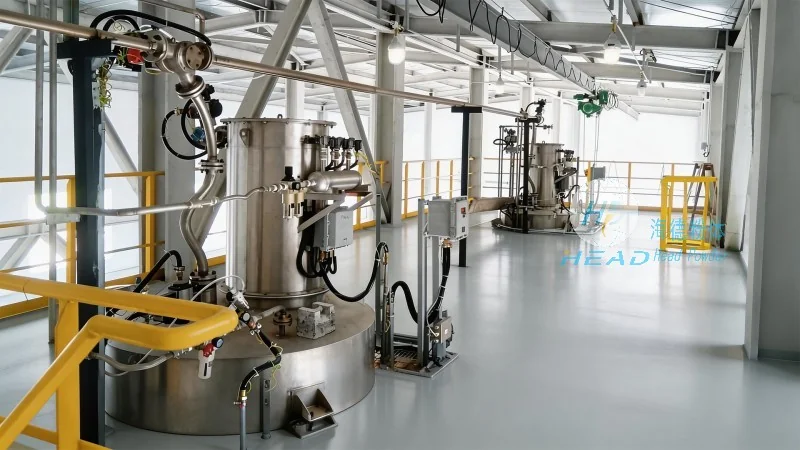
Operation Process of a Boron Nitride Pneumatic Conveying Line
The operation process of a boron nitride pneumatic conveying line involves several sequential steps to ensure efficient and safe material handling. The first step is system preparation, which includes checking the integrity of all components, ensuring proper air pressure and flow rates, and verifying the condition of the material feeder and conveying line. Once the system is ready, the material feeder is activated to introduce the BN powder at a controlled rate. The compressed air is then turned on, creating the necessary airflow to start the conveying process. During operation, the control system continuously monitors key parameters such as air pressure, flow rate, and material feed rate, adjusting them as needed to maintain stable operation. The system may also include safety features like pressure relief valves and particle detection sensors to prevent overloading or blockages. At the end of the conveying cycle, the air is shut off, and the system is depressurized before the material feeder is stopped. The collected BN powder is then transferred to the next processing stage or storage area.
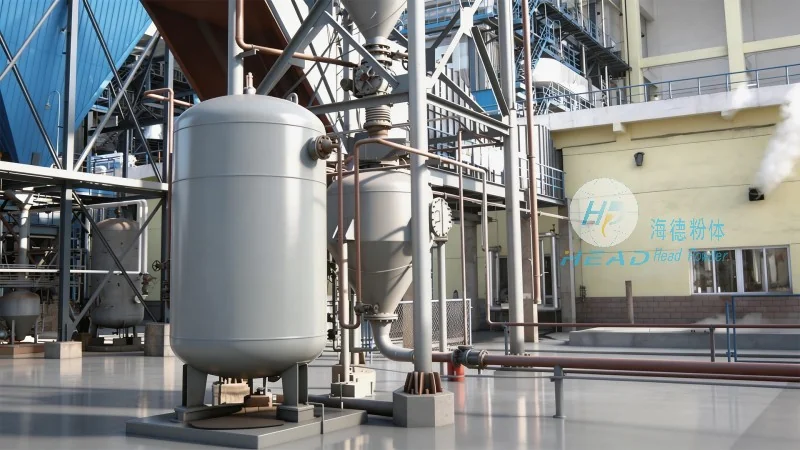
Technical Considerations for Boron Nitride Pneumatic Conveying
Several technical considerations are essential for the successful operation of boron nitride pneumatic conveying lines. One of the primary concerns is the particle size and density of the BN powder, as these factors affect the air velocity required for effective conveying. Smaller particles may require higher air velocities to prevent settling, while larger particles may need lower velocities to avoid excessive wear on the system. The material properties of BN, such as its thermal stability and chemical inertness, also influence the choice of conveying line material and the operating temperature range. For example, if the BN powder is being transported at high temperatures, the conveying line must be constructed from materials that can withstand elevated temperatures without degrading. Additionally, the system must be designed to handle the potential for particle agglomeration, which can lead to blockages in the pipeline. This may involve the use of agitators or vibrators in the material feeder to break up clumps and ensure a consistent feed. Finally, the environmental impact of the system must be considered, as the dust collector or filter must be efficient in capturing airborne particles to comply with environmental regulations and maintain product purity.
About Shandong HeadPowder Engineering Co., Ltd.
Shandong HeadPowder Engineering Co., Ltd., operating under the brand name headpowder, is a leading manufacturer and supplier of advanced material handling solutions, including pneumatic conveying systems for boron nitride and other specialty powders. With a strong focus on innovation and quality, the company has developed state-of-the-art pneumatic conveying lines that meet the demanding requirements of industrial applications. Headpowder's expertise lies in designing and manufacturing systems that ensure efficient, safe, and reliable transportation of high-value materials like boron nitride. The company's commitment to customer satisfaction and technical excellence has made it a trusted partner for industries relying on precise material handling solutions. Headpowder's facilities are located in Shandong, China, where the company leverages local resources and expertise to deliver top-tier products and services to global markets.




