For manufacturers in the battery industry, the efficient and reliable handling of ternary positive electrode materials is crucial to production efficiency and product quality. The ternary positive electrode material conveying system, as a key component of the production line, plays a vital role in material transport, storage, and processing. This article will delve into the working principles of such systems and analyze their operational characteristics in practical application scenarios.
Working Principle of Ternary Positive Electrode Material Conveying Systems
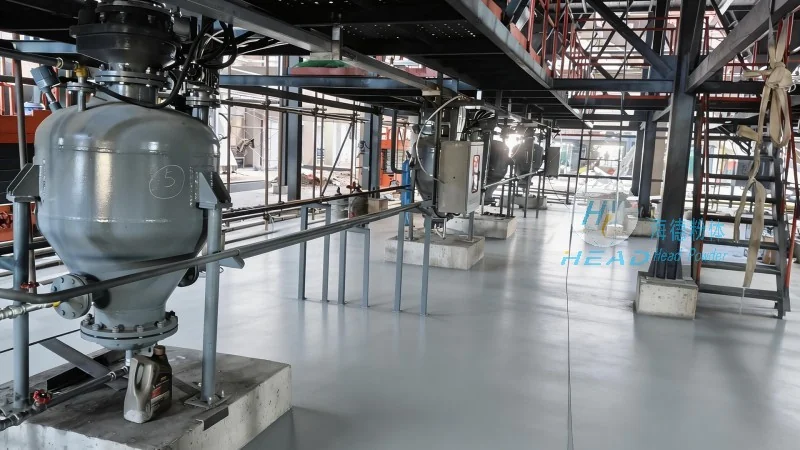
The ternary positive electrode material conveying system typically integrates multiple processing units, including material feeding, conveying, storage, and discharge. The core components include feeders, conveyor belts, storage hoppers, and control systems. The system operates based on the principle of material flow control, ensuring that materials are transported from the raw material storage area to the production line in a continuous and stable manner. The feeders are responsible for evenly distributing the material, while the conveyor belts provide the driving force for material movement. The storage hoppers are used for temporary storage to buffer the material flow and meet the production demand fluctuations. The control system, equipped with sensors and automation devices, monitors the material level, flow rate, and other parameters in real time, and adjusts the operation of the conveying equipment to maintain the stability of the material flow. This closed-loop control mechanism ensures the system operates efficiently and reliably, minimizing material loss and improving production efficiency.
Operational Scenario Characteristics of Ternary Positive Electrode Material Conveying Systems
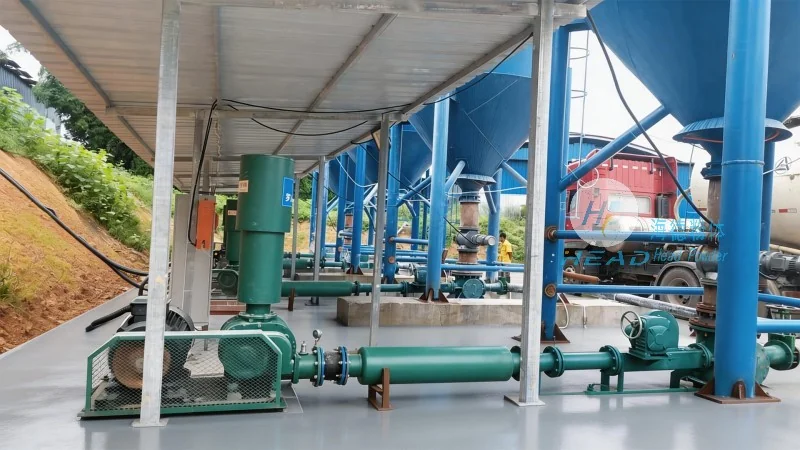
The operational characteristics of ternary positive electrode material conveying systems vary with different production scenarios. In large-scale battery production lines, the system needs to handle high material throughput, requiring high-capacity conveying equipment and efficient storage solutions. The system design must consider the material's physical properties, such as particle size, moisture content, and bulk density, to ensure smooth material flow and prevent blockages. In scenarios with strict environmental requirements, the system may be equipped with dust collection and filtration devices to meet environmental standards and protect the health of operators. For production lines with multiple production lines or flexible production modes, the system needs to have good flexibility and adaptability, supporting quick changeovers and material transfer between different production lines. In addition, the system's maintenance and maintenance characteristics are also important operational considerations. The use of wear-resistant materials and easy-to-clean structures can reduce maintenance costs and downtime, ensuring the system's long-term stable operation.
Application Examples and Performance Advantages
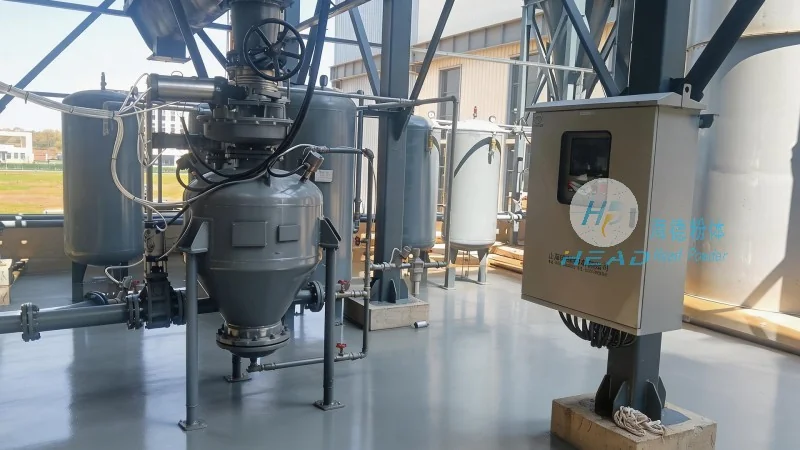
Shandong HeadPowder Engineering Co., Ltd., as a professional manufacturer of material handling equipment, has accumulated rich experience in the design and production of ternary positive electrode material conveying systems. The company's systems are widely used in domestic and international battery production enterprises. Through continuous optimization and innovation, the systems have achieved excellent performance in terms of conveying efficiency, material quality preservation, and system stability. For example, in a large-scale lithium-ion battery production line, the system designed by HeadPowder can achieve a material conveying capacity of more than 100 tons per hour, with material loss less than 0.1%, and the system's operation is stable and reliable, effectively improving the production efficiency and product quality of the enterprise. The company's systems are also highly adaptable to different production scenarios, supporting the needs of various battery production processes, such as cathode material mixing, coating, and drying. The use of advanced control technology and high-quality components ensures the system's long-term stable operation and low maintenance costs.
Conclusion
Ternary positive electrode material conveying systems are essential equipment for the battery production industry, and their performance directly affects the production efficiency and product quality of enterprises. Through the analysis of the working principles and operational characteristics of such systems, it can be seen that the system's design and operation need to be combined with the actual production needs, considering factors such as material properties, production scale, and environmental requirements. Shandong HeadPowder Engineering Co., Ltd. continues to focus on the research and development of material handling technology, providing high-quality conveying systems to meet the needs of the battery industry. With the continuous development of the battery industry, the demand for ternary positive electrode material conveying systems will continue to increase, and the system will play an increasingly important role in the production process.




