When it comes to handling nickel powder, selecting the right conveying method is crucial for ensuring efficiency, safety, and product integrity. Shandong HeadPowder Engineering Co., Ltd., a leading manufacturer based in Shandong, China, specializes in providing solutions for various powder handling applications. This article explores the common nickel powder conveying methods, analyzing their advantages and disadvantages to help industries make informed decisions.
Introduction to Nickel Powder Conveying
Nickel powder, a critical material in industries such as aerospace, electronics, and metallurgy, requires specialized handling due to its fine particle size and potential for dust explosion risks. Conveying systems must balance efficiency, cost, and safety. The choice of method depends on factors like the powder's properties, production scale, and operational environment. Shandong HeadPowder Engineering Co., Ltd. offers tailored solutions to meet these diverse needs, ensuring that each system is optimized for the specific characteristics of nickel powder.
Screw Conveyors: Traditional and Reliable
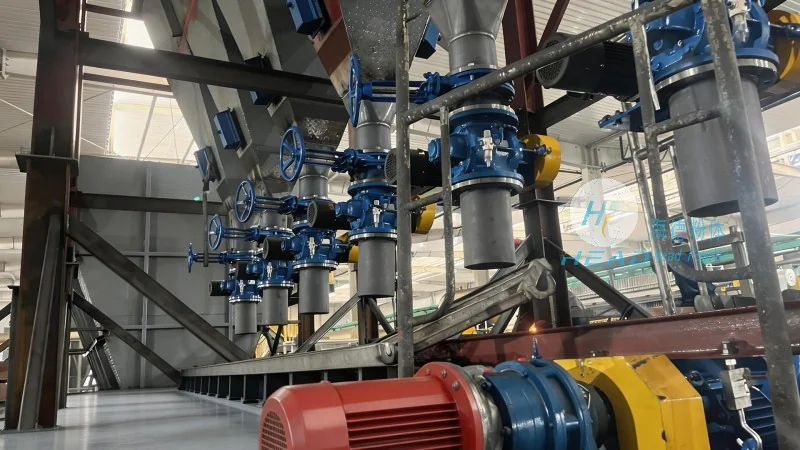
Screw conveyors, also known as auger conveyors, are among the most common methods for transporting nickel powder. These systems use a rotating helical screw to move material along a tube or trough. The primary advantage of screw conveyors is their simplicity and low maintenance requirements. They are ideal for horizontal or slightly inclined applications, making them suitable for short to medium distances, typically up to 30 meters. However, their effectiveness diminishes with vertical lifts or when dealing with highly abrasive or sticky powders, as the screw and trough can experience significant wear. Shandong HeadPowder Engineering Co., Ltd. designs screw conveyors with robust materials such as stainless steel or high-grade alloys to withstand the demands of nickel powder handling, ensuring long-term reliability.
Air-Lift or Pneumatic Conveying: High-Volume and Flexible
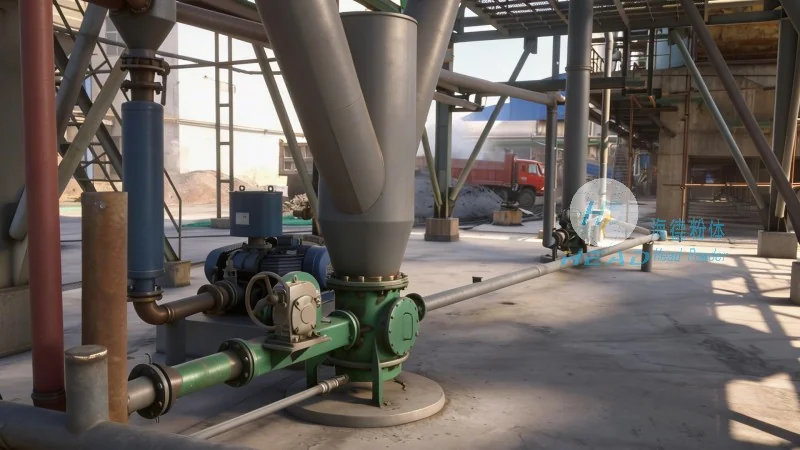
Pneumatic conveying systems use air or other gases to transport nickel powder through pipes. These systems are highly effective for high-volume applications and can handle both horizontal and vertical movements, making them suitable for long-distance transport, often up to several hundred meters. The main advantage is their ability to transport powders over extended distances with minimal maintenance and the flexibility to integrate with existing systems. However, they require higher energy consumption compared to mechanical systems and may not be suitable for very fine or cohesive powders, as they can lead to blockages or increased pressure drops. Shandong HeadPowder Engineering Co., Ltd. offers advanced pneumatic solutions with optimized air flow and particle separation mechanisms, such as cyclone separators, to ensure reliable operation and prevent material buildup.
Vibrating Conveyors: Gentle and Efficient
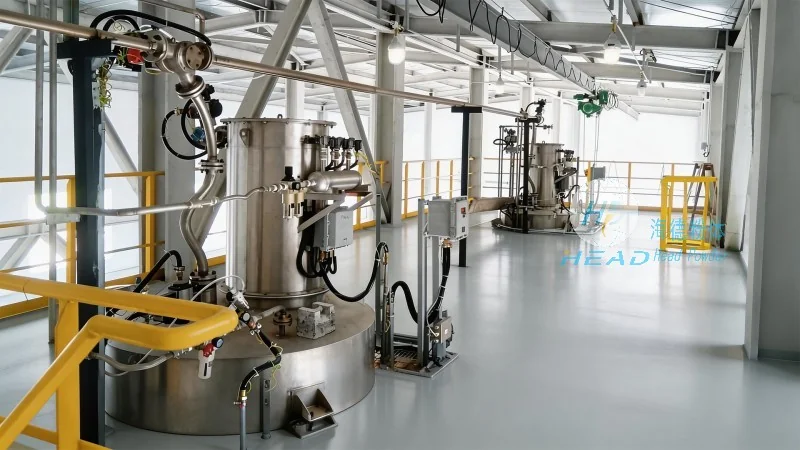
Vibrating conveyors utilize vibrations to move nickel powder along a trough. This method is particularly effective for handling delicate or abrasive powders, as it minimizes particle breakage and wear. The advantage lies in its gentle handling, which preserves the powder's quality and prevents agglomeration. However, vibrating conveyors are generally limited to horizontal or shallow incline applications and may not be suitable for high-volume or long-distance transport due to lower throughput compared to other methods. Shandong HeadPowder Engineering Co., Ltd. provides custom vibrating conveyor designs with adjustable vibration frequencies and amplitudes to suit specific nickel powder characteristics, ensuring optimal flow and minimal product degradation.
Comparison Summary
Each conveying method has its strengths and limitations. Screw conveyors excel in simplicity and cost-effectiveness for short distances, making them a popular choice for small-scale operations. Pneumatic systems are ideal for high-volume and long-distance transport, particularly in industries where speed and flexibility are critical. Vibrating conveyors offer gentle handling for delicate powders, which is essential in applications where particle integrity is paramount. Shandong HeadPowder Engineering Co., Ltd. recommends evaluating the specific requirements of the nickel powder application, including particle size, flowability, and operational distance, to select the most appropriate conveying method. By understanding these factors, industries can optimize their powder handling processes, enhance overall productivity, and ensure compliance with safety regulations. The choice of conveying system directly impacts the efficiency and safety of nickel powder handling, making it a critical decision for manufacturers and processors.




