Pneumatic conveying is a widely used method for transporting bulk materials, including powders and granules, through a pipeline using air or gas as the conveying medium. In the context of PVC resin powder, this technology plays a crucial role in industrial processes, ensuring efficient and reliable material handling. The process involves the movement of the resin powder from a storage hopper or silo to processing equipment such as mixers, extruders, or reactors. Understanding the operation process and working principle of this system is essential for optimizing performance, minimizing downtime, and maintaining product quality.
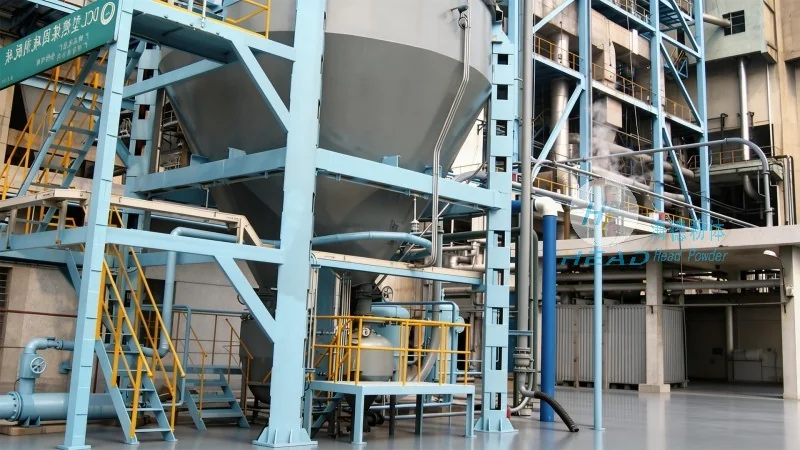
Key Components of the Pneumatic Conveying System
The pneumatic conveying system for PVC resin powder typically consists of several key components that work in tandem to achieve effective material transport. These components include a material feed hopper, a conveying line (usually made of stainless steel or other corrosion-resistant materials to handle the chemical properties of PVC), a blower or air compressor, a control system, and a discharge device. Each component is designed to handle the specific characteristics of PVC resin powder, such as its fine particle size, low bulk density, and potential for static charge accumulation. The feed hopper ensures a consistent supply of material, while the conveying line provides the path for the powder to travel. The blower generates the necessary air pressure to move the material, and the control system monitors and adjusts the flow rate and pressure to maintain optimal operation. The discharge device, often a rotary valve or a venturi, regulates the release of the material at the destination point.
Working Principle of Pneumatic Conveying for PVC Resin Powder
The working principle of pneumatic conveying for PVC resin powder is based on the principle of fluidization and suspension. When air is introduced into the conveying line at a sufficient velocity, it creates a flow that lifts and transports the powder particles. The air velocity must be high enough to overcome the gravitational force acting on the particles and to keep them suspended in the air stream. This is often referred to as the "inertial" or "dense phase" conveying mode, where the particles are carried in a dense cloud of powder and air. The process begins with the material being drawn from the hopper by the suction created by the blower. The air and powder mixture then travels through the pipeline, with the air providing the kinetic energy to move the particles. At the discharge point, the air velocity decreases, allowing the powder to settle out and be collected in the receiving equipment. The control system continuously adjusts the air flow and pressure to maintain a stable conveying rate, ensuring that the material is transported without clogging or loss.
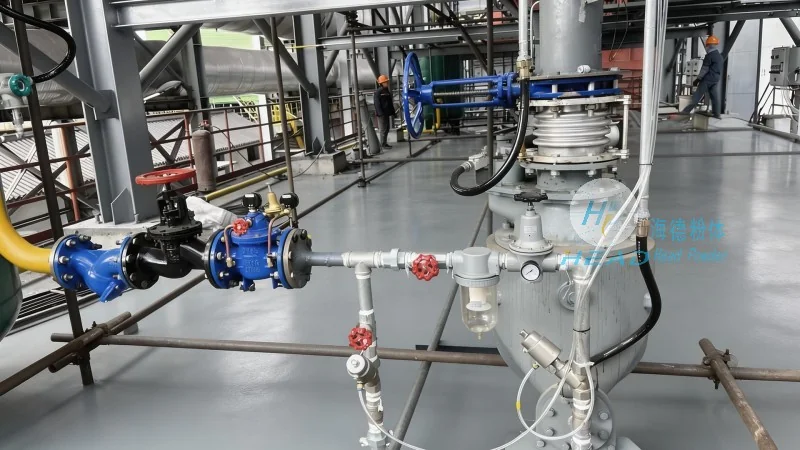
Operation Process of the Pneumatic Conveying System
The operation process of the pneumatic conveying system for PVC resin powder involves several steps that are carefully coordinated to ensure smooth and efficient material handling. The process starts with the preparation of the material, where the PVC resin powder is stored in a hopper and prepared for feeding. The hopper is equipped with a feeder, such as a rotary valve or a screw feeder, which controls the flow rate of the material into the conveying line. The blower is then started, and the air flow is adjusted to the appropriate pressure and velocity. As the material is fed into the line, it is mixed with the air and begins to move through the pipeline. The control system monitors the pressure and flow rate, making adjustments as needed to maintain a consistent conveying rate. The material is then discharged at the destination point, where it is collected and transferred to the next stage of the production process. The entire process is automated, with the control system ensuring that the operation is continuous and reliable. Regular maintenance of the system, including cleaning the conveying line and checking the blower performance, is essential to prevent clogging and ensure long-term operation.
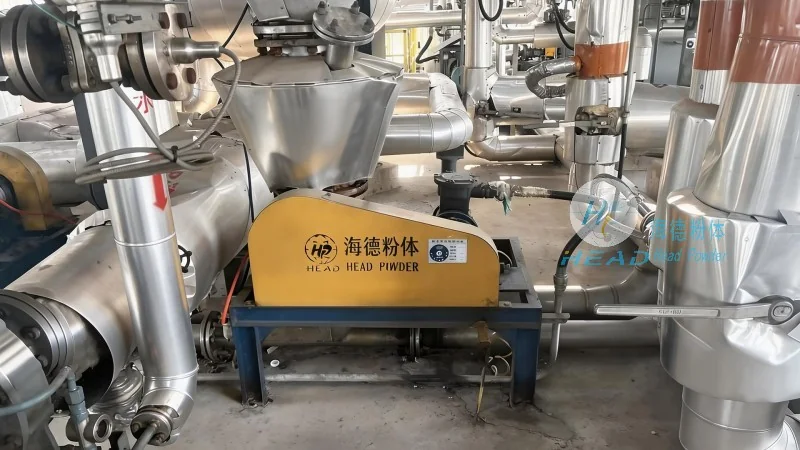
Advantages of Pneumatic Conveying for PVC Resin Powder
Pneumatic conveying offers several advantages when used for transporting PVC resin powder. One of the key benefits is the ability to handle fine and cohesive powders without the need for mechanical components that can cause wear or contamination. The system is also relatively compact and can be integrated into existing production lines, reducing the need for additional space. Another advantage is the ability to transport materials over long distances without the need for multiple transfer points, which can improve efficiency and reduce the risk of material loss. Additionally, the system can be easily controlled and monitored, allowing for precise adjustment of the conveying rate and pressure. This level of control is particularly important for PVC resin powder, as variations in flow rate can affect the quality of the final product. The use of corrosion-resistant materials in the conveying line also ensures that the system can handle the chemical properties of PVC without degradation over time.
Application Examples and Case Studies
Companies such as Shandong HeadPowder Engineering Co., Ltd. utilize pneumatic conveying systems for PVC resin powder in various industrial applications. For example, in the production of PVC pipes and profiles, the resin powder is conveyed from storage silos to extrusion machines. The system ensures a consistent supply of material, which is critical for maintaining the quality and consistency of the final products. In another application, the resin powder is conveyed to a mixing plant where it is combined with other additives before being processed. The efficiency of the pneumatic conveying system in these applications has led to improved production rates and reduced downtime. These case studies demonstrate the effectiveness of the system in handling PVC resin powder and the importance of proper system design and operation.




