Ammonium chloride, a widely used chemical compound in various industrial applications, often requires efficient and reliable material handling solutions for its transportation. Pneumatic conveying systems offer a robust method to transport ammonium chloride from one location to another, ensuring safety, efficiency, and minimal product degradation. This article delves into the operation process and working principle of such systems, highlighting the key components and the systematic approach to handling ammonium chloride.
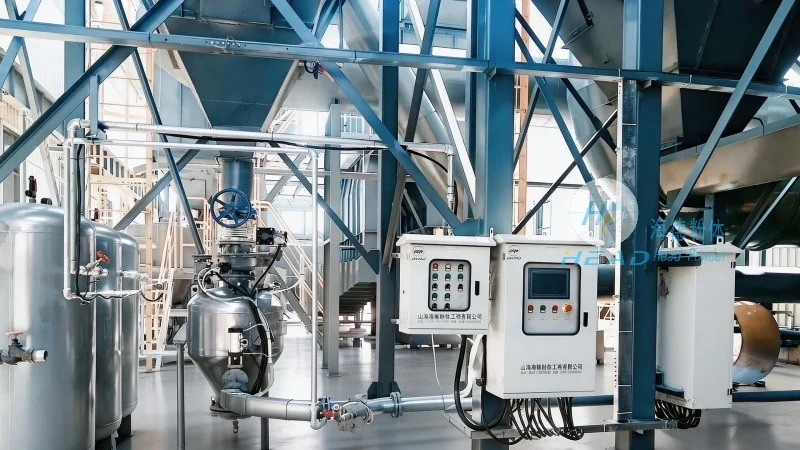
Key Components of the Pneumatic Conveying System
The pneumatic conveying system for ammonium chloride typically consists of several essential components that work in tandem to achieve effective material transport. These components include a hopper for material storage, a feeder to control the flow rate, a conveying pipeline, a venturi or eductor for air induction, a filter system to capture fine particles, and a receiver for the discharged material. Each component plays a critical role in maintaining the system's performance and ensuring the safe handling of ammonium chloride.
Operation Process of the System
The operation process of the ammonium chloride pneumatic conveying system begins with the loading of the material into the hopper. The hopper is designed to hold a sufficient quantity of ammonium chloride, ensuring a continuous supply to the feeder. The feeder, often a rotary valve or a screw feeder, regulates the flow rate of the material into the conveying pipeline. Simultaneously, compressed air is introduced into the system through the venturi or eductor. As the air flows through the pipeline, it creates a low-pressure zone that draws the ammonium chloride particles into the air stream. The mixture of air and material travels through the pipeline to the receiver, where the material is deposited. The air, now filtered to remove any residual particles, is then released back into the environment or recycled back into the system.
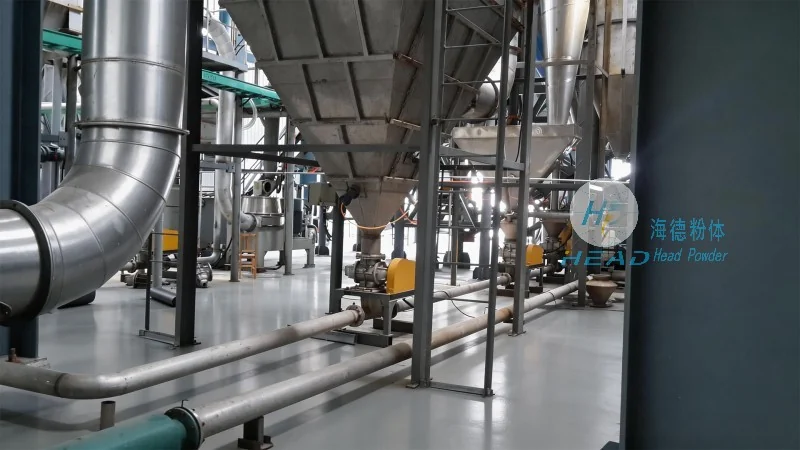
Working Principle of the Pneumatic Conveying System
The working principle of the pneumatic conveying system relies on the fundamental principles of fluid dynamics and particle transport. The system operates by using compressed air to create a pressure differential that propels the ammonium chloride particles through the pipeline. The venturi or eductor component is crucial as it converts the pressure energy of the compressed air into kinetic energy, generating the necessary airflow to entrain the material. The design of the pipeline, including its diameter and length, is optimized to minimize pressure drop and ensure smooth material flow. The filter system is essential to prevent the accumulation of fine particles in the system, which could lead to blockages or equipment damage. Overall, the system efficiently transports ammonium chloride by leveraging the power of compressed air to move the material over long distances with minimal human intervention.
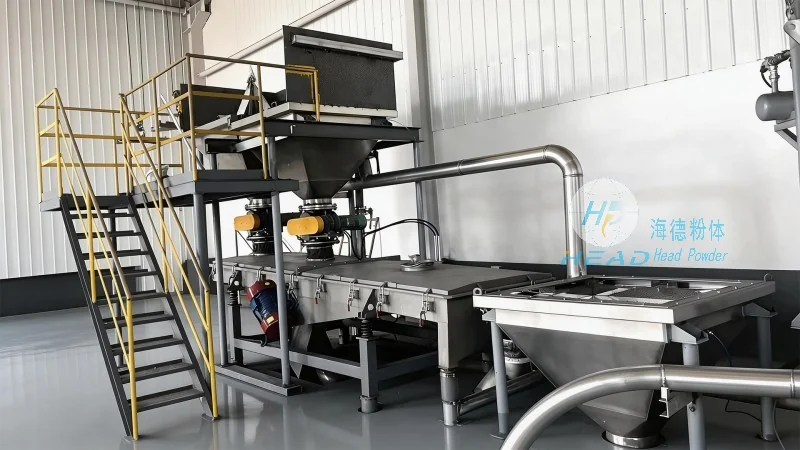
Advantages of Using Pneumatic Conveying for Ammonium Chloride
Implementing a pneumatic conveying system for ammonium chloride offers several advantages over traditional methods such as belt conveyors or bucket elevators. One of the primary benefits is the ability to handle the material in a closed system, which reduces dust exposure and improves workplace safety. The system also provides a more hygienic environment, which is particularly important for ammonium chloride used in food or pharmaceutical applications. Additionally, pneumatic conveying systems can transport the material over longer distances with fewer intermediate points, reducing the need for multiple transfer stations and improving overall operational efficiency. The system's flexibility allows for easy integration with existing production lines, making it a cost-effective solution for many industrial applications.
Conclusion
In conclusion, the operation process and working principle of an ammonium chloride pneumatic conveying system are designed to provide an efficient, safe, and reliable method for material handling. By understanding the key components and the systematic approach to operation, industries can effectively utilize these systems to transport ammonium chloride while maintaining product quality and operational safety. The system's advantages, including reduced dust exposure, improved hygiene, and enhanced efficiency, make it a preferred choice for many applications. As a leading provider in this field, Shandong HeadPowder Engineering Co., Ltd. specializes in designing and manufacturing such systems, ensuring that clients receive tailored solutions that meet their specific operational needs.




