HeadPowder, a leading provider of industrial material handling solutions, specializes in the design, manufacturing, and installation of advanced pneumatic conveying systems. This article provides an overview of the process for transporting calcium carbonate powder using pneumatic conveying technology, along with a detailed explanation of how such systems operate to ensure efficient material transfer.
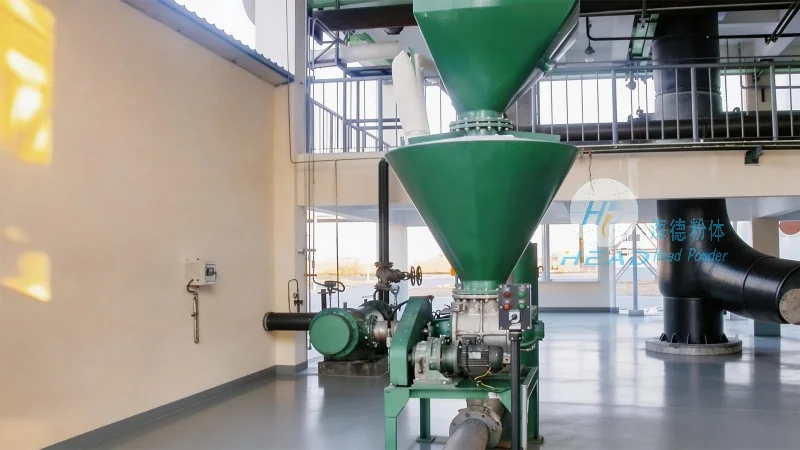
Calcium carbonate (CaCO₃) is a widely used industrial material, often found in applications ranging from construction materials to food and pharmaceuticals. Its fine powder form requires specialized handling methods to maintain product integrity and ensure safe, efficient transport. Pneumatic conveying offers a solution by utilizing air or gas to move the powder through a pipeline system, eliminating the need for mechanical components like belts or buckets that might cause contamination or degradation.
HeadPowder Engineering Co., Ltd., based in Shandong, China, has extensive experience in developing customized pneumatic conveying solutions tailored to the unique needs of calcium carbonate powder handling. The company’s expertise lies in understanding the physical properties of calcium carbonate, such as its particle size, moisture content, and flow characteristics, which are critical factors in designing an effective conveying system.
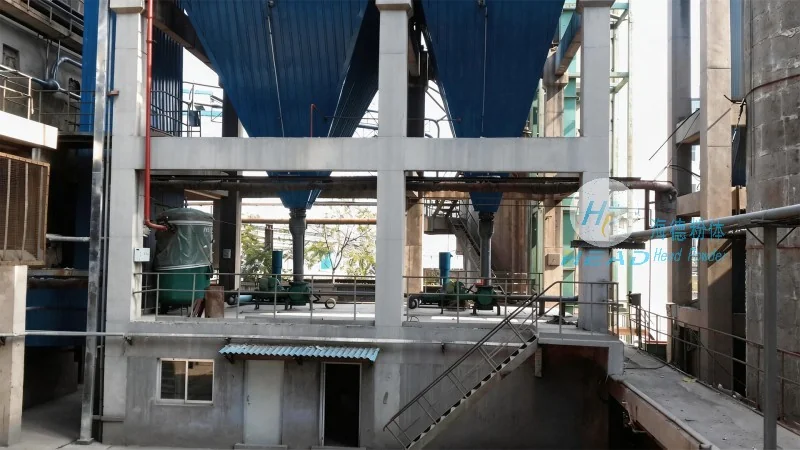
The core principle of pneumatic conveying is the use of a fluid (usually air or a mixture of air and other gases) to transport solid particles. In a typical system, the calcium carbonate powder is introduced into a hopper or feeder, where it is then drawn into a pipeline by a vacuum or pressure source. The air flow creates a suspension of the powder, allowing it to travel through the system with minimal loss of product quality. This method is particularly advantageous for calcium carbonate powder due to its fine particle size, which can be easily entrained by the air stream and transported over long distances without clogging or degradation.
There are two primary types of pneumatic conveying systems: vacuum and pressure. Vacuum systems use a vacuum pump to draw material from the source, making them suitable for applications where the material needs to be transported from a lower elevation or over short distances. Pressure systems, on the other hand, use a blower or compressor to push the material through the pipeline, ideal for longer distances or when the material must be elevated to a higher level. HeadPowder engineers carefully select the appropriate system type based on the specific requirements of the calcium carbonate powder handling process, ensuring optimal performance and efficiency.
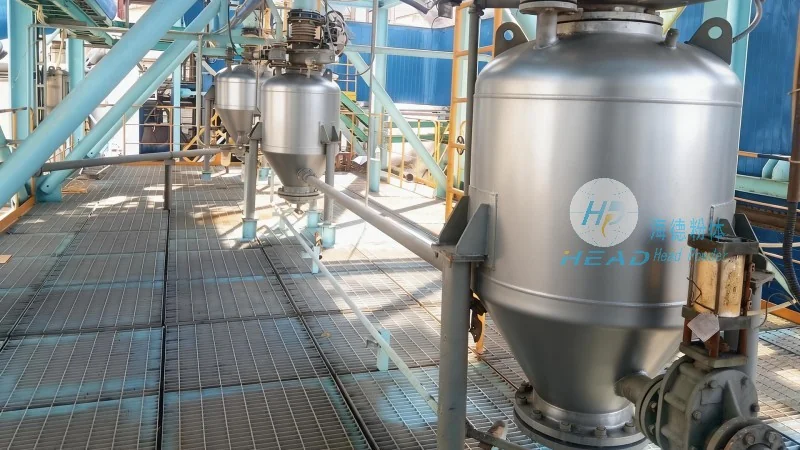
Key components of a pneumatic conveying system for calcium carbonate powder include the feeder, which controls the flow rate of the powder; the pipeline, which transports the material; the filter or cyclone separator, which removes the powder from the air stream and returns it to the process; and the air handling unit, which regulates the air flow and pressure. Each component plays a critical role in maintaining the integrity of the calcium carbonate powder and ensuring the system operates smoothly.
One of the main advantages of pneumatic conveying for calcium carbonate powder is its ability to handle fine powders without the need for additional equipment like conveyors or elevators. This reduces the risk of product contamination and damage, which is essential for applications where the powder’s purity is critical. Additionally, pneumatic systems can be designed to operate in a closed loop, minimizing dust emissions and improving workplace safety.
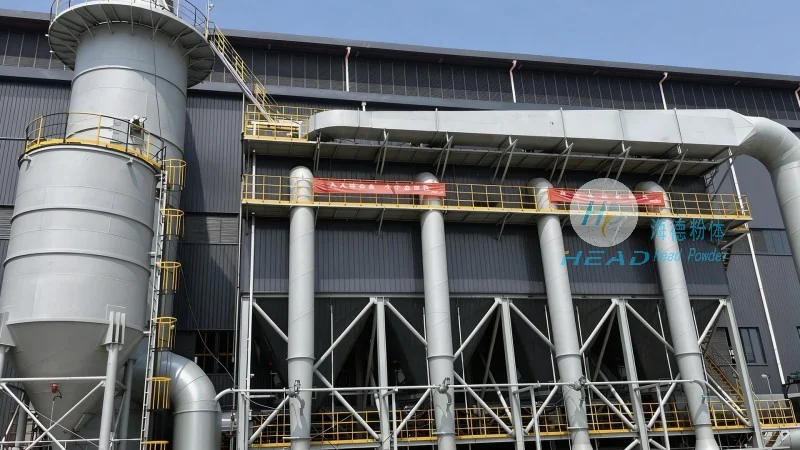
HeadPowder Engineering Co., Ltd. offers comprehensive services, including system design, installation, and maintenance, to ensure that clients can fully leverage the benefits of pneumatic conveying for their calcium carbonate powder handling needs. The company’s team of experts works closely with clients to understand their specific requirements, from material properties to operational constraints, and develops customized solutions that meet or exceed industry standards.
By leveraging advanced pneumatic conveying technology, HeadPowder helps clients improve the efficiency and reliability of their calcium carbonate powder handling processes. The company’s commitment to quality and innovation ensures that its systems are not only effective but also durable and cost-effective over the long term. Whether for small-scale or large-scale applications, HeadPowder provides the expertise and solutions needed to optimize material transport and enhance overall operational performance.




