Working Principle and Features of Silicomanganese Material Pneumatic Conveying Line
Release time:2026-09-18 11:01:28
name of the company:Shandong Headpowder Engineering Co., Ltd.
telephone:156-6277-7102
contacts:Zhang manager
Silicomanganese is a vital raw material in the steel industry and other metallurgical processes, and its efficient handling is crucial for maintaining production efficiency and product quality. Pneumatic conveying systems provide an effective solution for transporting silicomanganese powders or granules, especially when dealing with fine or abrasive materials. This article delves into the working principle and key features of a silicomanganese material pneumatic conveying line, illustrating how such systems enhance operational performance and reliability in industrial settings. The discussion is centered around the technology developed by Shandong HeadPowder Engineering Co., Ltd., a leading manufacturer in the field.
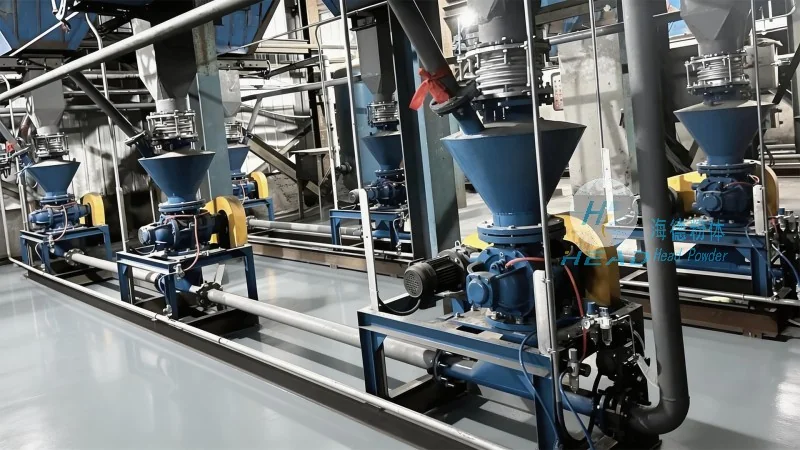
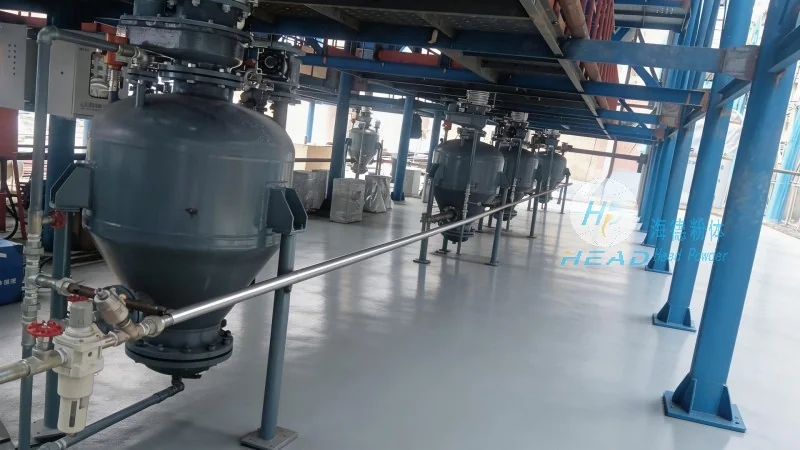
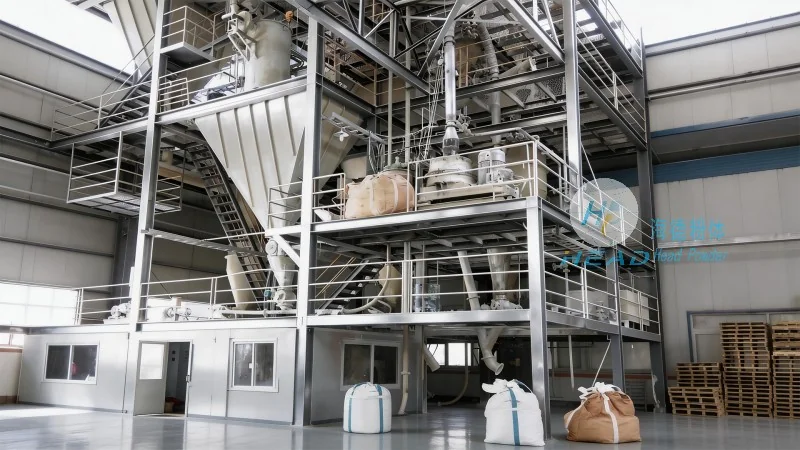
Working Principle of the Silicomanganese Pneumatic Conveying Line
The working principle of a silicomanganese material pneumatic conveying line is based on the fundamental physics of fluid dynamics and material transport. The system operates by creating a pressurized or vacuum environment within a pipeline to move the material. In a typical positive pressure system, a blower or compressor generates high-pressure air that is introduced into the conveying line at the inlet. The silicomanganese material is fed into the system via a hopper or rotary valve, where it is then entrained by the high-velocity air stream. The air and material mixture travels through the pipeline to the discharge point, where a cyclone separator or filter separates the material from the air. The material is collected in a hopper or storage bin, while the air is either recirculated or vented to the atmosphere. In a negative pressure system, a vacuum pump creates a low-pressure environment, drawing the material into the pipeline as the air is pulled through. Both systems rely on maintaining the correct air velocity to ensure that the material particles are fully suspended and transported without settling or clogging the pipeline. The design of the system, including the size of the pipeline, the air velocity, and the material feed rate, is critical to achieving optimal performance and preventing issues such as material degradation or system blockages. The system may also include features like pulse jets or rotary airlocks to control the flow and prevent material buildup, further enhancing its reliability and efficiency.




