Cellulose Pneumatic Conveying: An Overview of Its Structure and Working Principles
Release time:2026-09-21 18:01:43
name of the company:Shandong Headpowder Engineering Co., Ltd.
telephone:156-6277-7102
contacts:Zhang manager
Cellulose, a fundamental organic polymer, is widely used in various industries including papermaking, textiles, and food processing. The efficient handling of cellulose materials is crucial for industrial operations, and pneumatic conveying has emerged as a reliable method for transporting these materials. This article provides an overview of cellulose pneumatic conveying, focusing on its structural design and operational principles.
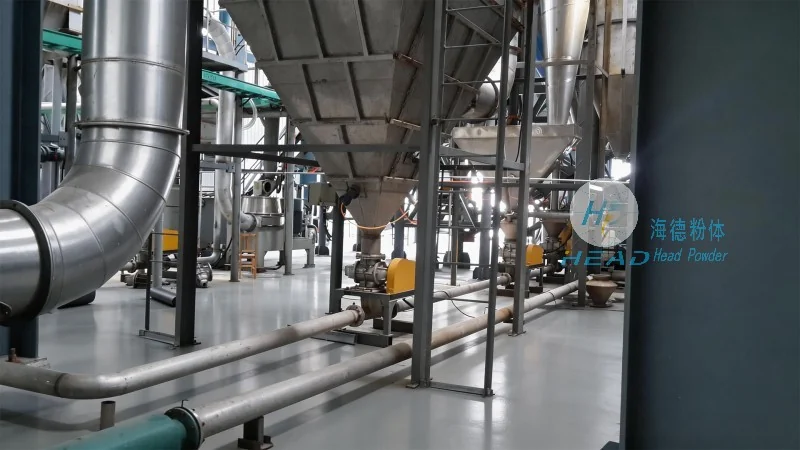
Structural Components of the Pneumatic Conveying System
A typical cellulose pneumatic conveying system consists of several key components that work in tandem to ensure smooth material transport. The primary components include:
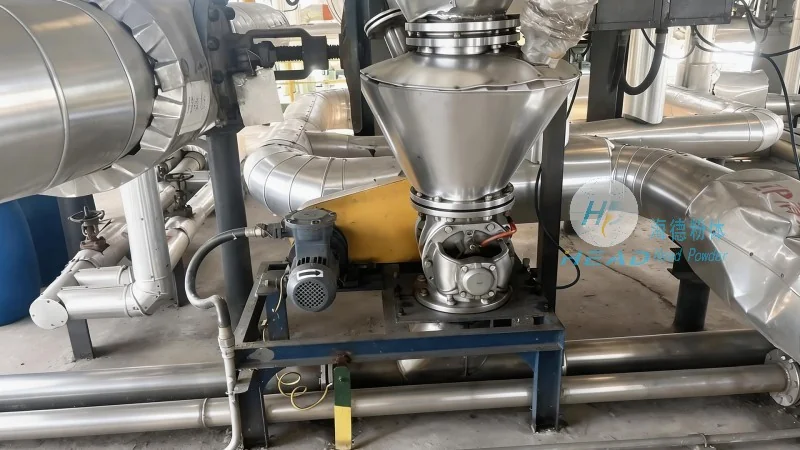
- Feeding Unit: This component is responsible for introducing cellulose material into the system. It may involve hoppers, rotary valves, or screw feeders, depending on the material characteristics and flow rate requirements.
- Air Supply System: Compressors or blowers generate the necessary air pressure to create the conveying airflow. The air supply system is critical for maintaining the required velocity and pressure within the pipeline.
- Conveying Pipeline: The pipeline, often made of stainless steel or other corrosion-resistant materials, forms the main pathway for the cellulose particles and air mixture. The design of the pipeline, including bends and transitions, is optimized to minimize pressure loss and prevent material deposition.
- Separation and Collection Equipment: At the end of the conveying line, a separator (such as a cyclone or bag filter) separates the cellulose particles from the air stream. The collected material is then transferred to a storage or processing unit. The air, now filtered, is either recirculated or discharged.
Working Principle of the System
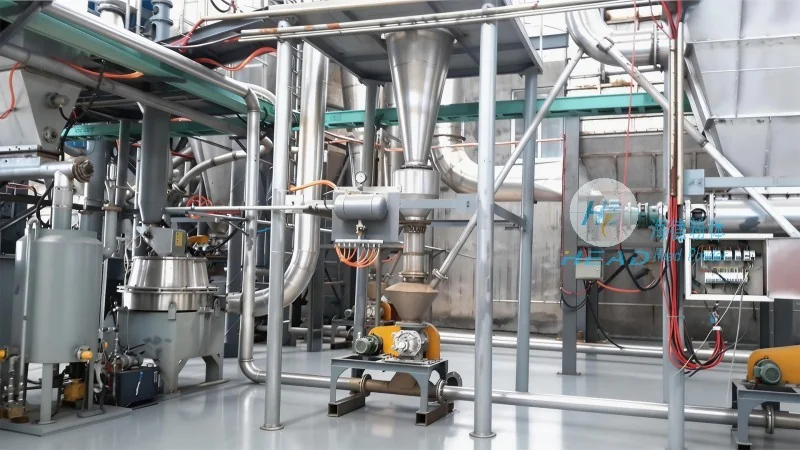
The operation of a cellulose pneumatic conveying system is based on the principle of air flow. The feeding unit introduces cellulose particles into the pipeline, and the air supply system generates a high-velocity airflow. This airflow lifts and transports the particles through the pipeline by creating a drag force on the particles. The velocity of the air must be sufficient to overcome the gravitational force acting on the particles and maintain their suspension. The system typically operates under either positive pressure (where air is forced through the pipeline) or negative pressure (where air is drawn out of the pipeline). The choice of pressure type depends on factors such as the material's dustiness, the distance to be conveyed, and the need for environmental control.
Advantages of Cellulose Pneumatic Conveying
Compared to traditional mechanical conveying methods, cellulose pneumatic conveying offers several advantages:
- Low Maintenance: The absence of moving parts in the pipeline reduces the risk of wear and tear, leading to lower maintenance costs and longer equipment life.
- Reduced Material Damage: The gentle handling of particles by the air flow minimizes breakage or degradation of the cellulose material, preserving its quality and integrity.
- Versatility: Pneumatic conveying systems can handle a wide range of cellulose materials, including powders, flakes, and fibers, with varying moisture content and particle sizes.
- Space Efficiency: The system can be installed in confined spaces, as the pipeline can be routed vertically or horizontally to suit the layout of the facility.
- Environmental Control: The enclosed system prevents dust emissions, making it suitable for applications where dust control is essential, such as in food processing or pharmaceutical industries.
Application Scenarios
Cellulose pneumatic conveying is widely applied in various industrial sectors due to its adaptability and efficiency. Some common applications include:
- Paper Industry: Transporting cellulose pulp from storage to processing units, such as paper machines or bleaching systems.
- Textile Industry: Conveying cellulose-based fibers (e.g., cotton or linen) from raw material storage to spinning or weaving equipment.
- Food and Beverage Industry: Handling cellulose-based ingredients, such as cellulose powder used as a thickener or filler in food products.
- Pharmaceutical Industry: Transporting cellulose-based excipients or active pharmaceutical ingredients (APIs) in a controlled environment to maintain product purity.
About Shandong HeadPowder Engineering Co., Ltd.
Shandong HeadPowder Engineering Co., Ltd., operating under the brand name headpowder, specializes in the design, manufacturing, and installation of pneumatic conveying systems for various industrial applications. With a focus on innovation and quality, the company provides customized solutions tailored to the specific needs of its clients. HeadPowder's expertise in material handling technology ensures that clients receive efficient, reliable, and cost-effective systems for their cellulose material transport requirements. The company is committed to delivering high-performance equipment that meets international standards and enhances operational efficiency.




