For battery manufacturers and material processing professionals, the efficient and reliable transportation of electrode materials is a critical aspect of production efficiency and product quality. Pneumatic conveying systems have become a key technology in this field, offering advantages such as dust-free operation, flexible layout, and high automation. This article focuses on the design calculation principles and equipment selection for pneumatic conveying of electrode materials, providing practical guidance for engineering applications.
Understanding Pneumatic Conveying Systems for Electrode Materials
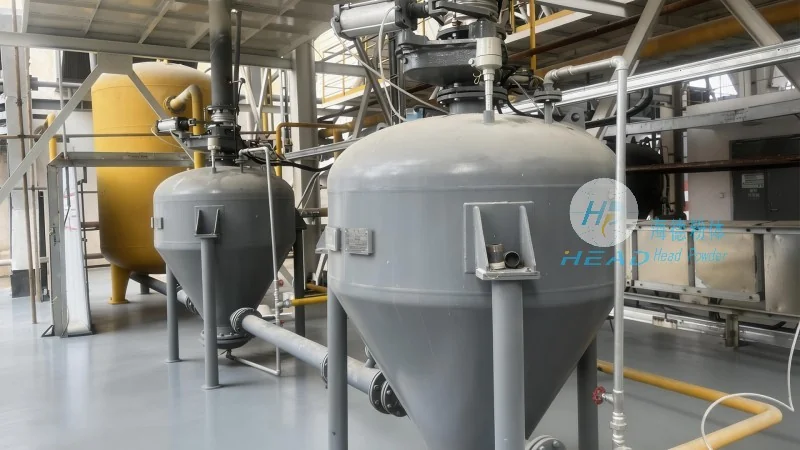
Pneumatic conveying is a method that uses air flow to transport powder or granular materials. In the context of electrode material processing, this technology is particularly suitable for handling materials like lithium iron phosphate, ternary materials, and other fine powders. The core of a pneumatic conveying system includes a material feeding device, a conveying pipeline, a pressure or vacuum source, and a material separation and collection system. The design of such a system must consider factors including material properties (particle size, moisture content, density), conveying distance, required flow rate, and environmental requirements.
Key Design Calculations for Pneumatic Conveying
The design of a pneumatic conveying system involves several critical calculations to ensure optimal performance and energy efficiency. The first step is to determine the appropriate conveying velocity, which is typically 20-30 times the terminal velocity of the material particles. This ensures that the material is fully suspended in the air stream and prevents blockages. The calculation of the required air volume is another key step. It is calculated based on the material flow rate and the conveying velocity, and must account for pressure losses along the pipeline, including friction losses and local losses at bends, valves, and other components.
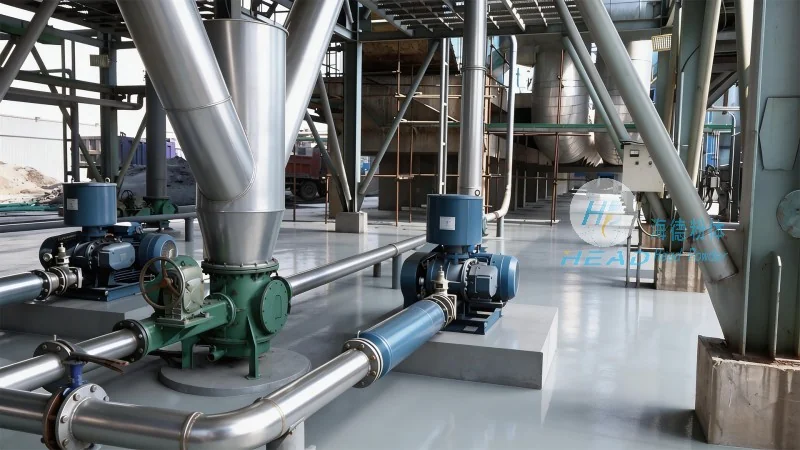
Pressure loss calculations are essential for determining the required power of the air compressor or vacuum pump. The total pressure loss is the sum of frictional pressure loss and local pressure loss. Frictional pressure loss is proportional to the length of the pipeline and the square of the air velocity, while local pressure loss occurs at fittings and changes in pipeline cross-section. Accurate calculation of these losses helps in selecting the appropriate air pressure and flow rate, ensuring the system operates within safe and efficient parameters.
Equipment Selection for Pneumatic Conveying
Equipment selection is a crucial step in the implementation of a pneumatic conveying system. The choice of equipment depends on the specific requirements of the material and the application. For example, in the conveying of fine electrode powders, the selection of a suitable feeding device is important to prevent material bridging and ensure a stable material flow. Common feeding devices include rotary valves, star feeders, and pressure vessels. The selection of the feeding device must consider the material's flowability and the required feeding rate.
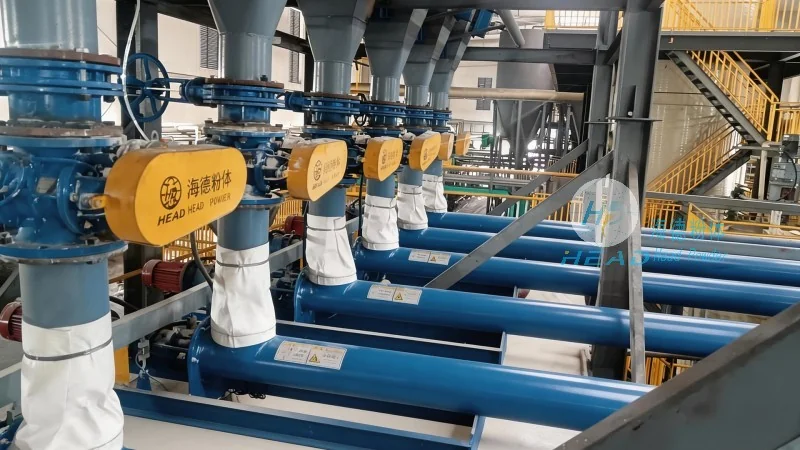
The pipeline system is another critical component. The material of the pipeline, such as stainless steel or plastic, must be selected based on the material's chemical compatibility and the operating environment. The diameter of the pipeline is determined based on the required air velocity and flow rate, and must be sized to minimize pressure losses while ensuring sufficient material suspension. The selection of fittings, such as elbows, tees, and valves, is also important. These components must be designed to minimize local pressure losses and prevent material accumulation.
Case Study: Equipment Selection and Design for a Specific Application
Consider a scenario where a battery manufacturer needs to transport 10 tons per hour of lithium iron phosphate powder over a distance of 50 meters. The material has a particle size of 5-10 μm and a density of 3.5 g/cm³. The design process would involve the following steps:
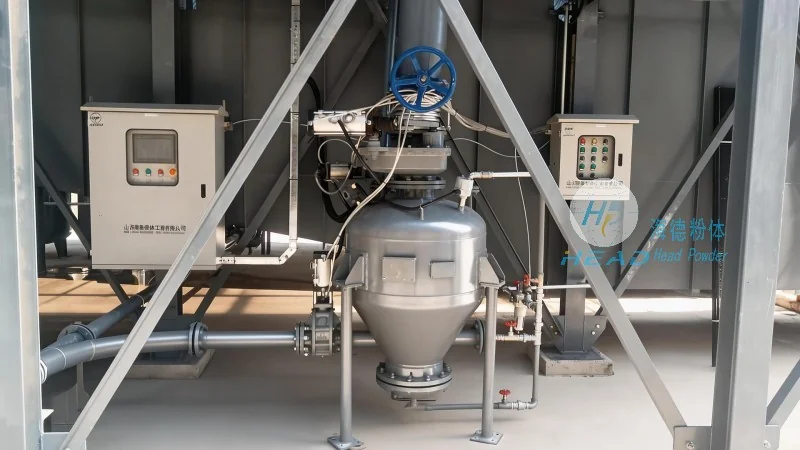
First, calculate the terminal velocity of the material particles using the Carman-Kozeny equation or empirical formulas. Based on the calculated terminal velocity, determine the conveying velocity, which is set to 25 times the terminal velocity to ensure full suspension. Then, calculate the required air volume based on the material flow rate and conveying velocity. The calculation would yield a required air volume of approximately 2,000 m³/h. Next, calculate the pressure loss along the pipeline, considering the length, diameter, and fittings. The total pressure loss is estimated to be around 0.5 bar. Finally, select a suitable air compressor with a capacity of at least 2,000 m³/h and a pressure of at least 0.5 bar. The feeding device would be a rotary valve with a capacity matching the material flow rate, and the pipeline would be made of stainless steel with a diameter of 100 mm to accommodate the required air velocity.
Conclusion and Company Introduction
The design and selection of a pneumatic conveying system for electrode materials require a comprehensive understanding of material properties, system dynamics, and equipment capabilities. By following the principles outlined in this article, manufacturers can develop efficient and reliable conveying systems that meet production requirements and ensure product quality. Shandong HeadPowder Engineering Co., Ltd. specializes in the design, manufacturing, and installation of pneumatic conveying systems for various industrial applications, including electrode material processing. With years of experience and technical expertise, the company provides customized solutions tailored to the specific needs of clients, ensuring optimal performance and long-term reliability of the conveying systems.




