

Principle and Classification Application of RARE Earth Ore Powder Pneumatic Conveying
Rare earth ore powder is a critical material in modern industrial applications, and the efficient handling of this fine powder is essential for maintaining production efficiency and product quality. Pneumatic conveying technology offers a solution to the challenges associated with transporting such materials, particularly in environments where traditional mechanical conveying methods may be less effective or suitable. This article provides an overview of the working principles and various classification applications of pneumatic conveying systems specifically designed for rare earth ore powders.
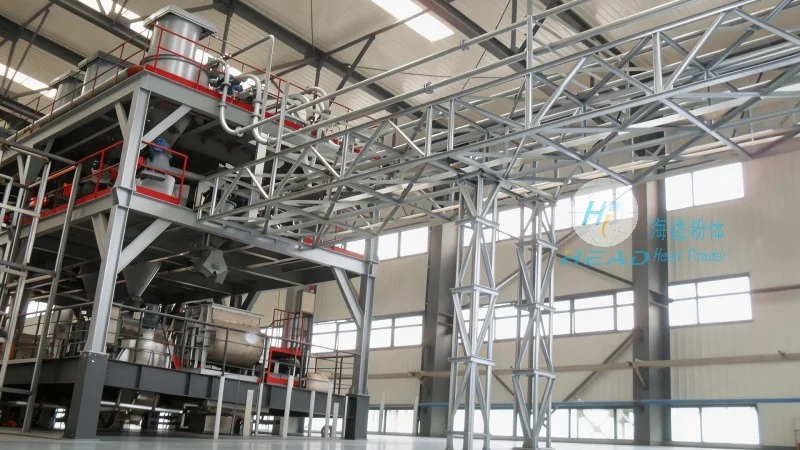
Understanding Pneumatic Conveying Systems
Pneumatic conveying is a method of transporting bulk materials through a pipeline using air or other gas as the conveying medium. Unlike mechanical conveying systems that rely on physical components like belts or buckets, pneumatic systems utilize the force of compressed air to move particles through the system. The process involves creating a pressure differential between the inlet and outlet of the pipeline, which draws the material into the system and propels it to the desired destination. This technology is particularly advantageous for handling fine, dusty, or abrasive materials like rare earth ore powders, as it minimizes material degradation and reduces the risk of contamination.
Key Working Principles of Rare Earth Ore Powder Pneumatic Conveying
The core principles of pneumatic conveying for rare earth ore powders revolve around the interaction between the material particles and the conveying air. The primary working principle is the creation of a flow of air that can entrain the powder particles, moving them through the pipeline. This is achieved by either positive pressure (where air is forced into the system) or negative pressure (where air is drawn out of the system). For rare earth ore powders, which often have specific particle size distributions and flow characteristics, the design of the conveying system must consider factors such as particle size, density, and moisture content to ensure optimal performance. The system typically includes components like a hopper for material storage, a feeder to control the flow rate, a conveying line, and a receiver to collect the material at the destination. Each component plays a crucial role in maintaining the efficiency and reliability of the process.
Classification of Pneumatic Conveying Systems for Rare Earth Ore Powder
Pneumatic conveying systems for rare earth ore powders can be classified into several types based on their operating principles and application requirements. The most common classifications include dilute phase and dense phase systems.
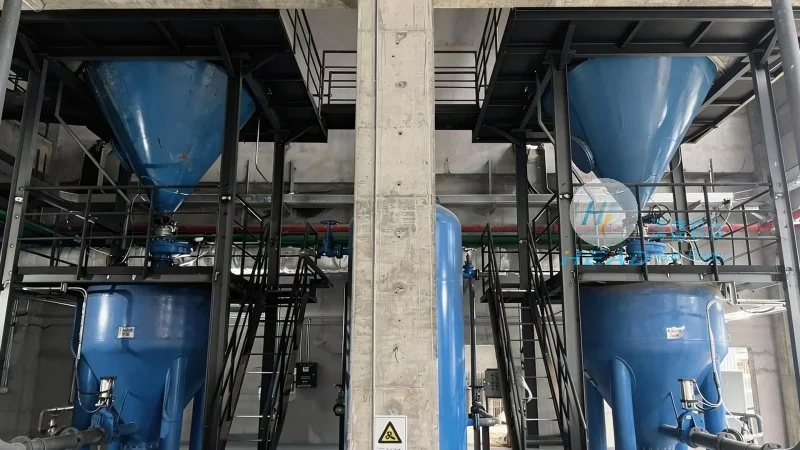
Dilute phase pneumatic conveying systems operate at relatively low material concentrations, typically with a material-to-air ratio of less than 0.1. These systems are suitable for transporting materials over long distances and at high speeds. They are often used in applications where the material is relatively light and free-flowing, such as in the initial stages of material handling or for short-distance transport. The key advantage of dilute phase systems is their ability to handle large volumes of material with minimal pressure drop, making them efficient for long-distance conveying.
Dense phase pneumatic conveying systems, on the other hand, operate at higher material concentrations, typically with a material-to-air ratio of 0.1 to 0.5. These systems are designed to transport materials more slowly and with higher pressure, which helps to minimize material degradation and prevent clogging. Dense phase systems are particularly useful for handling abrasive or sensitive materials like rare earth ore powders, as the higher pressure and controlled flow reduce the risk of particle breakage or agglomeration. They are commonly used in applications where the material needs to be transported over shorter distances or where the material is more viscous or has a higher density.
Another classification is the use of vacuum or pressure systems. Vacuum systems use negative pressure to draw material into the pipeline, which is ideal for applications where the material source is at a lower elevation or where the material is to be collected from a remote location. Pressure systems, conversely, use positive pressure to push material through the pipeline, which is suitable for applications where the material source is at a higher elevation or where the material needs to be transported to a higher destination. The choice between vacuum and pressure systems depends on the specific requirements of the application, including the distance, elevation changes, and material characteristics.
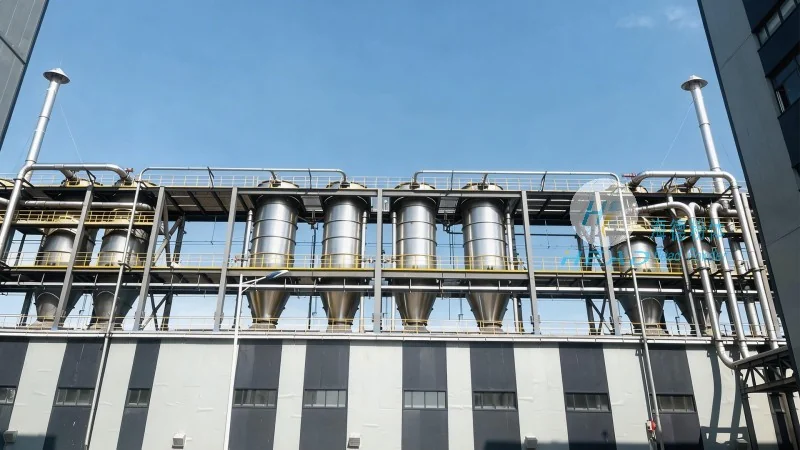
Application Scenarios for Rare Earth Ore Powder Pneumatic Conveying
The classification of pneumatic conveying systems allows for their application in various industrial scenarios tailored to the specific needs of rare earth ore powder handling. In the rare earth mining and processing industry, pneumatic conveying is used to transport raw ore from mining sites to processing facilities, as well as to move processed powders between different stages of the production line. This includes transporting ore from crushers and grinders to grinding mills, and then from the mills to the separation and purification stages.
In the manufacturing sector, rare earth ore powders are used as additives in various products, including magnets, batteries, and electronics. Pneumatic conveying systems are employed to transport these powders from storage silos to production lines, ensuring a consistent and controlled supply of material. The ability to handle fine powders without degradation is crucial in these applications, as the quality of the final product depends on the purity and particle size of the rare earth powder.
Additionally, in research and development laboratories, pneumatic conveying is used to transport small quantities of rare earth powders for testing and analysis. These systems are designed to be precise and controllable, allowing researchers to handle the material with minimal waste and contamination. The classification of systems, such as dilute phase for long-distance transport and dense phase for precise handling, makes it possible to adapt the technology to the specific requirements of laboratory applications.