When it comes to handling catalyst powders in industrial applications, selecting the right conveying method is crucial for efficiency, safety, and product integrity. Catalyst powders are often fine, abrasive, and sensitive materials that require specialized equipment to transport without degradation or contamination. This article provides a detailed comparison of common catalyst powder conveying methods, highlighting their advantages, limitations, and suitability for different industrial scenarios. The information is presented by Shandong HeadPowder Engineering Co., Ltd., a leading provider of powder handling solutions based in China.
Understanding Catalyst Powder Properties and Conveying Challenges
Catalyst powders, such as those used in chemical reactions, refining processes, or pharmaceutical manufacturing, typically exhibit unique characteristics that impact their handling. These materials are often fine-grained, with particle sizes ranging from microns to sub-micron levels. They may also be hygroscopic, reactive, or prone to caking, which can complicate transportation. Additionally, catalyst powders are often valuable and expensive, making it essential to minimize loss and maintain their activity during handling. The choice of conveying method must therefore consider factors like material compatibility, particle size distribution, flowability, and the need to prevent segregation or agglomeration.
1. Air-Pressure (Pneumatic) Conveying Systems
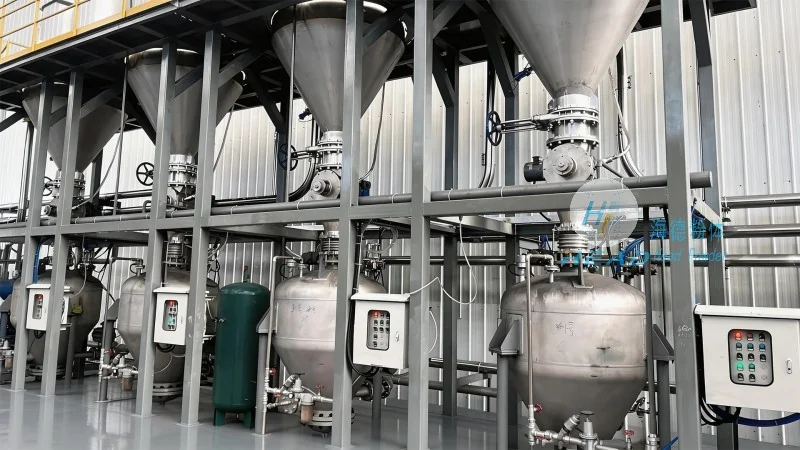
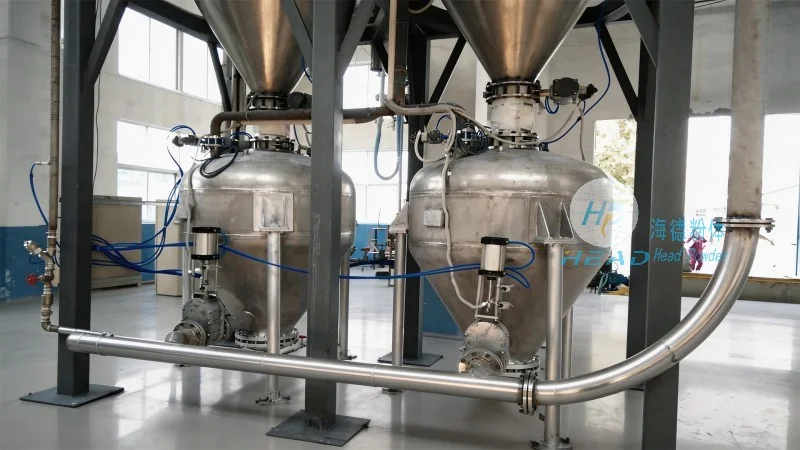
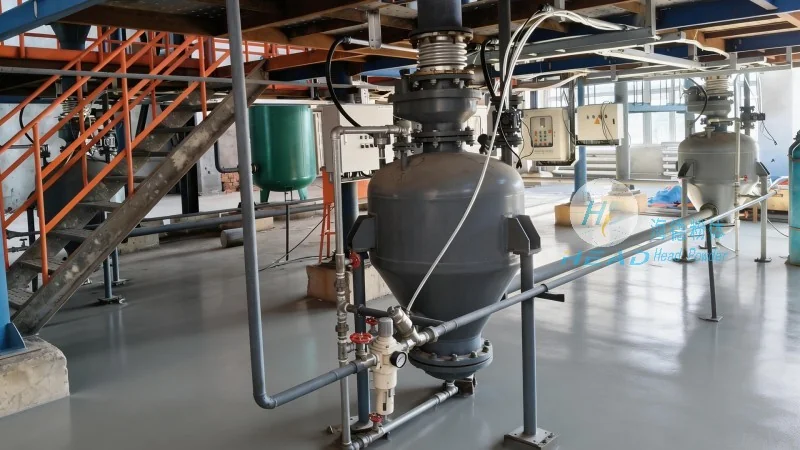
Air-pressure or pneumatic conveying is one of the most widely used methods for transporting catalyst powders due to its ability to handle fine materials over long distances. This system operates by using compressed air to create a pressure differential that propels the powder through a pipeline. There are two main types: pressure and vacuum systems. Pressure systems use a positive pressure at the inlet to push the material, while vacuum systems create a negative pressure at the outlet to draw the material. For catalyst powders, pressure systems are often preferred as they provide better control over flow rates and can handle abrasive materials more effectively. The conveying lines are typically made of stainless steel or other corrosion-resistant materials to prevent contamination. One of the key advantages of pneumatic conveying is its ability to transport powders in a closed system, which minimizes dust emissions and protects the environment. However, it is important to note that high-pressure systems require robust equipment and may be more expensive to install and maintain. Additionally, the velocity of the air must be carefully controlled to prevent particle degradation or pipeline wear.
2. Screw (Auger) Conveyors
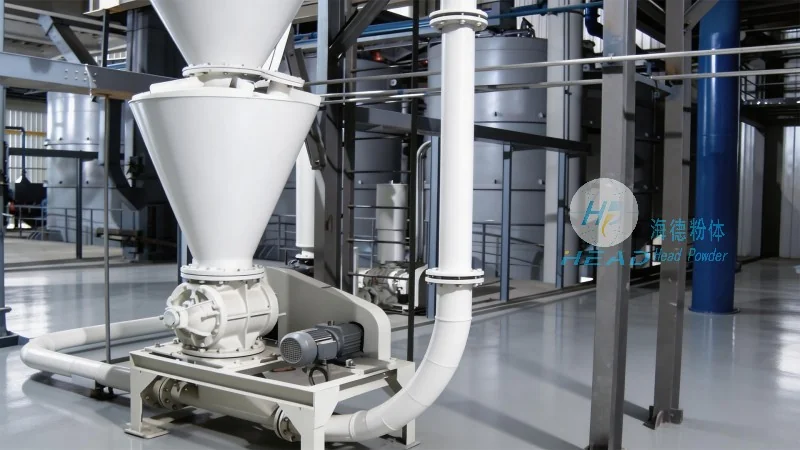
Screw or auger conveyors are another common method for transporting catalyst powders, especially in applications where horizontal or slight incline transport is required. These systems consist of a rotating screw inside a tube or housing, which moves the material forward by friction. Screw conveyors are particularly suitable for handling free-flowing, non-abrasive powders and can be designed with variable pitch screws to adjust the flow rate. They are often used in batch processing or for short to medium distance transport. A key advantage of screw conveyors is their simplicity and low maintenance requirements. They can be installed in a variety of configurations, including vertical or inclined, to meet different process needs. However, screw conveyors are not ideal for very fine or cohesive powders, as they may cause excessive wear or blockages. Additionally, they are less effective for long-distance transport compared to pneumatic systems, as the material may experience segregation or degradation over longer distances.
3. Vibratory Conveyors
Vibratory conveyors use mechanical vibration to move catalyst powders along a trough or conveyor bed. The system consists of a trough that is vibrated at a specific frequency and amplitude, causing the material to move by a combination of sliding and rolling. This method is particularly effective for handling cohesive or sticky powders, as the vibration helps to break up agglomerates and maintain flow. Vibratory conveyors are often used in applications where gentle handling is required, such as for heat-sensitive or delicate catalysts. They are also suitable for long-distance transport, as the vibration can maintain material movement over extended lengths. A major advantage of vibratory conveyors is their ability to handle a wide range of materials, including those with high moisture content or low flowability. However, they may not be as efficient for very fine powders, as the vibration can cause particle separation or segregation. Additionally, the maintenance of the vibration mechanism can be more complex compared to other systems.
4. Bucket Elevators
Bucket elevators are a vertical conveying method that uses a continuous chain with attached buckets to transport catalyst powders from a lower to a higher level. The buckets are filled with material at the bottom and then lifted vertically, depositing the powder at the top. This method is highly efficient for vertical transport and is often used in applications where the material needs to be elevated to a significant height. Bucket elevators are particularly suitable for handling abrasive or heavy catalyst powders, as the buckets are designed to withstand high impact and wear. They are also capable of handling large volumes of material at high speeds. A key advantage of bucket elevators is their ability to operate in a closed system, which prevents dust and contamination. However, they require regular maintenance to ensure the buckets and chain are in good condition, as wear can lead to material spillage or system failure. Additionally, the height of the elevator must be carefully considered, as excessive height can increase the risk of material degradation or equipment damage.
5. Comparison and Selection Criteria
When selecting a conveying method for catalyst powders, several factors must be considered to ensure optimal performance and cost-effectiveness. The first step is to evaluate the physical properties of the catalyst powder, including particle size, flowability, and moisture content. Fine, cohesive powders may require more gentle handling, making vibratory or screw conveyors more suitable, while free-flowing powders can be handled by pneumatic or bucket elevators. The distance and elevation changes between the start and end points of the transport are also critical. For short horizontal distances, screw conveyors may be sufficient, while long-distance or vertical transport may require pneumatic or bucket elevators. The required flow rate and throughput must also be considered, as different systems have varying capacities. Additionally, the cost of installation, operation, and maintenance should be evaluated, as some methods may be more economical in the long run despite higher initial costs. Shandong HeadPowder Engineering Co., Ltd. offers a range of conveying solutions tailored to these specific requirements, ensuring that clients can choose the most appropriate method for their catalyst powder handling needs.
Conclusion
In conclusion, the choice of catalyst powder conveying method depends on a combination of material properties, process requirements, and operational considerations. Air-pressure conveying systems are versatile and effective for fine powders, while screw and vibratory conveyors offer simpler, more cost-effective solutions for specific applications. Bucket elevators are ideal for vertical transport and high-volume handling. By carefully evaluating these factors and consulting with experts like Shandong HeadPowder Engineering Co., Ltd., industrial facilities can select the most suitable conveying method to ensure efficient, safe, and reliable transport of their catalyst powders. This approach not only improves operational efficiency but also protects the environment and maintains the quality of the catalyst material, which is essential for optimal performance in downstream processes.




