Shandong HeadPowder Engineering Co., Ltd., commonly known as HeadPowder, is a professional manufacturer and supplier of pneumatic conveying systems based in Shandong, China. The company specializes in the design, development, and production of equipment tailored for the efficient and reliable transportation of alumina particles. This article explores the fundamental principles behind alumina particle pneumatic conveying systems and highlights the key characteristics of their operational environments.
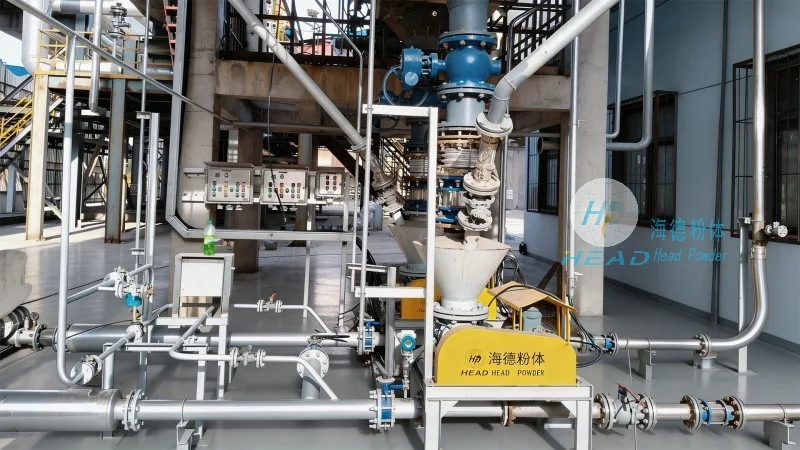
Overview of Pneumatic Conveying Systems for Alumina Particles
Alumina, a critical raw material widely used in industries such as ceramics, refractories, and chemical manufacturing, often requires specialized handling due to its particle size, density, and flow properties. Pneumatic conveying systems offer an effective solution by utilizing compressed air or other gases to transport alumina particles through a network of pipes and components. The core principle involves creating a flow of air that lifts and propels the particles, enabling them to move from one location to another without the need for mechanical conveyors like belts or buckets.
Key Components and Operational Principles
The alumina particle pneumatic conveying system typically consists of several essential components, each playing a crucial role in the overall process. The system begins with a feeding device, which accurately meters and introduces the alumina particles into the conveying line. This is followed by a pressure or vacuum source that generates the necessary airflow to move the particles. The conveying line itself is designed to withstand the pressure and temperature conditions of the alumina particles, often featuring materials like stainless steel or special alloys to prevent corrosion and wear. At the receiving end, a separation and collection system is employed to extract the alumina particles from the air stream, ensuring minimal loss and efficient recovery.
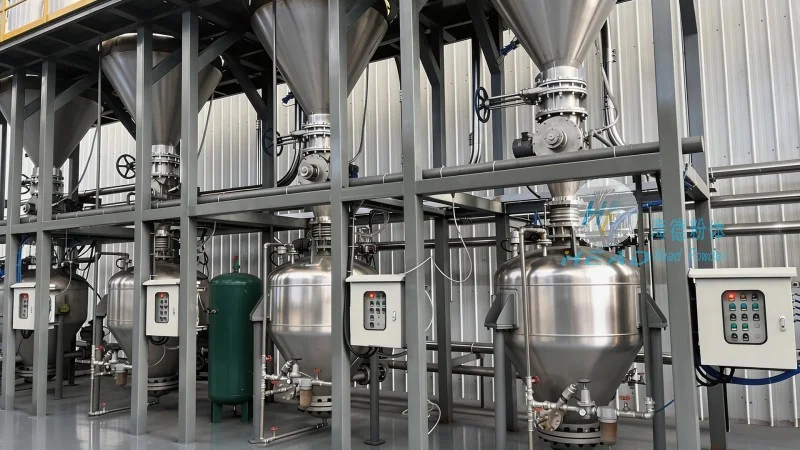
Working Scene Characteristics and Applications
The operational environments for alumina particle pneumatic conveying systems vary significantly based on the specific industrial application. In ceramic production facilities, for example, the system may be used to transport fine alumina powders from storage silos to mixing and molding equipment. The working scene in such settings often involves high-volume, continuous operation, with the system designed to maintain consistent particle flow rates to meet production demands. In refractory manufacturing, the system may handle larger alumina granules or aggregates, requiring higher air velocities and robust equipment to handle the increased particle size and density.
In chemical processing plants, the system might be integrated into a larger material handling network, where alumina is used as an additive or catalyst. The working scene here emphasizes precision and control, as the system must deliver the exact quantity of alumina to reactors or processing units without contamination or loss. Additionally, the system may operate in environments with varying temperatures and humidity levels, necessitating temperature-resistant materials and moisture-proof designs to maintain the quality of the alumina particles.
Advantages and Performance Characteristics
One of the primary advantages of alumina particle pneumatic conveying systems is their ability to handle materials that are difficult to transport using traditional methods. Unlike mechanical conveyors, which can cause particle degradation or blockages, pneumatic systems minimize these risks by using air to move the particles gently. This results in higher material recovery rates and reduced product loss. Additionally, the system offers enhanced safety features, as it eliminates the need for open hoppers or chutes that may pose dust explosion risks, especially when handling fine alumina powders.
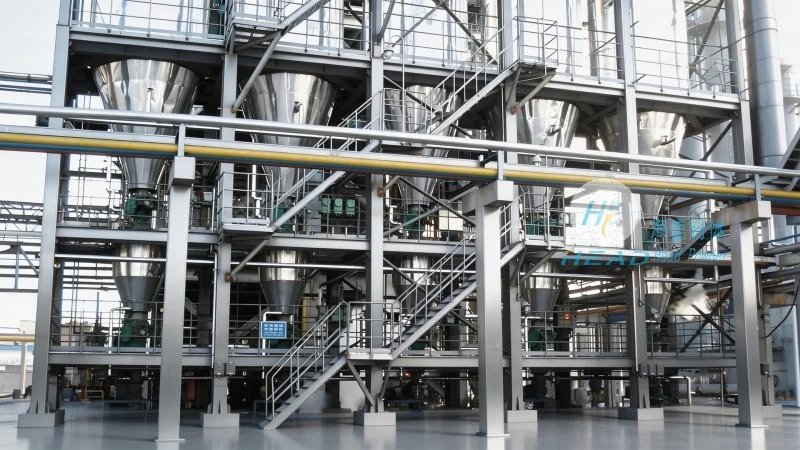
The performance characteristics of these systems are also tailored to the specific requirements of alumina particles. For instance, the system can be configured to operate under pressure or vacuum, allowing flexibility in different industrial setups. The design of the conveying line and components ensures minimal pressure drop, which optimizes energy efficiency and reduces operational costs. Furthermore, the system's adaptability allows it to handle a wide range of alumina particle sizes, from fine powders to larger granules, making it a versatile solution for various applications.
Conclusion
Alumina particle pneumatic conveying systems, developed and manufactured by Shandong HeadPowder Engineering Co., Ltd., represent a sophisticated solution for the efficient transportation of alumina materials in diverse industrial settings. By leveraging the principles of pneumatic transport, these systems offer advantages in terms of efficiency, safety, and material handling capabilities. The working scene characteristics, including high-volume production, precise control, and adaptability to varying particle sizes and environmental conditions, make them an essential component in modern alumina processing facilities. As a leading provider in the field, HeadPowder continues to innovate and refine its systems to meet the evolving needs of the alumina industry, ensuring reliable and effective material handling solutions for its clients.




