Heavy calcium powder, a critical raw material in various industries such as construction, plastics, and coatings, requires efficient and reliable handling solutions. Pneumatic conveying systems, particularly those designed for heavy calcium powder, offer a robust method to transport these materials with minimal loss and contamination. This article delves into the operation process and working principle of a heavy calcium powder pneumatic conveying machine, highlighting the key components, step-by-step procedures, and the technical advantages that make it an ideal choice for industrial applications.
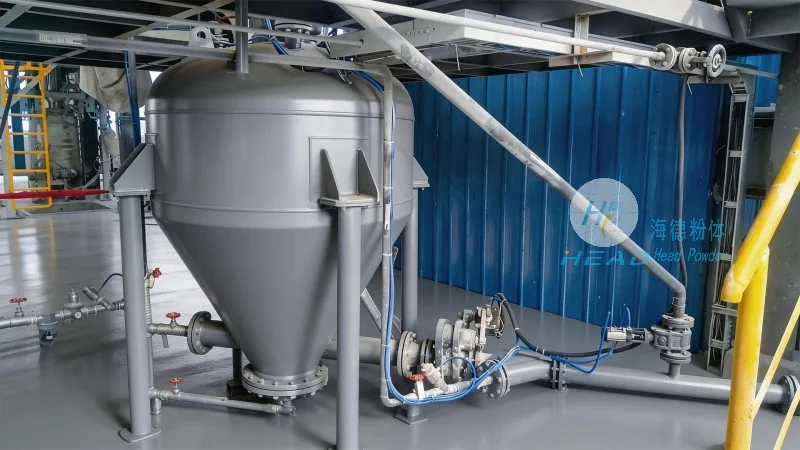
Introduction to Heavy Calcium Powder Pneumatic Conveying Equipment
HeadPowder, a leading engineering company based in Shandong, China, specializes in the design and manufacturing of advanced pneumatic conveying systems tailored for heavy calcium powder. The company's expertise in material handling technology ensures that their equipment meets the stringent requirements of modern industrial production lines. The heavy calcium powder pneumatic conveying machine is engineered to handle the unique properties of calcium carbonate powders, including their high density, moderate particle size, and tendency to agglomerate. By leveraging pneumatic transport, the system eliminates the need for traditional mechanical conveyors, reducing maintenance costs and improving operational efficiency.
Key Components and Their Functions
The heavy calcium powder pneumatic conveying system consists of several critical components, each playing a vital role in the overall operation. The main components include the material feeder, air supply system (either positive or negative pressure), conveying pipeline, separation and collection unit, and air filtration system. The material feeder is responsible for feeding the heavy calcium powder into the system at a controlled rate, ensuring a consistent flow of material. The air supply system generates the necessary airflow to move the powder through the pipeline, with positive pressure systems using a blower to push the material forward and negative pressure systems using a vacuum pump to pull it. The conveying pipeline is typically made of corrosion-resistant materials like stainless steel or PVC to withstand the abrasive nature of the powder. The separation and collection unit, often a cyclone separator, separates the powder from the air stream, allowing the powder to be collected in a hopper or storage tank. The air filtration system cleans the exhaust air, removing any residual powder particles to comply with environmental regulations.
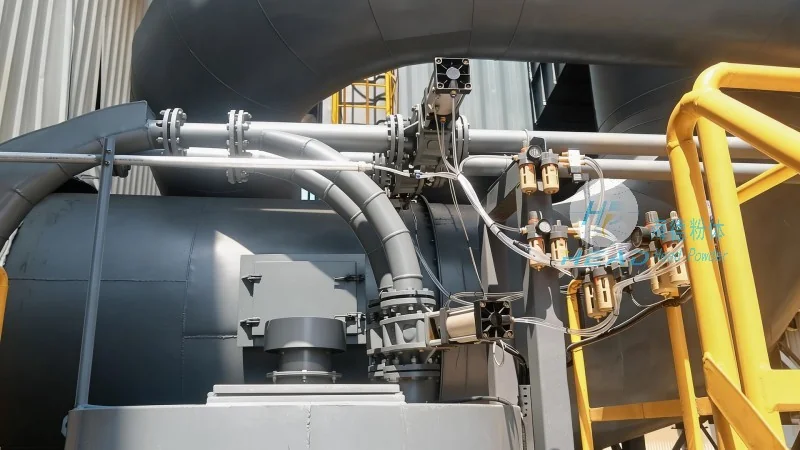
Operation Process of the Pneumatic Conveying System
The operation of a heavy calcium powder pneumatic conveying machine follows a systematic process that ensures efficient and continuous material transport. The process begins with the loading of heavy calcium powder into the material feeder. The feeder then dispenses the powder into the conveying pipeline at a controlled rate, synchronized with the airflow generated by the air supply system. In a positive pressure system, the blower creates a high-pressure air stream that propels the powder particles forward through the pipeline. The air and powder mixture travels through the pipeline to the separation unit, where the centrifugal force separates the powder from the air. The separated powder is collected in a storage hopper, while the clean air is either vented to the atmosphere or recirculated after filtration. In a negative pressure system, the vacuum pump creates a low-pressure environment that draws the powder and air mixture into the pipeline, moving it towards the collection point. The separation process is similar, with the cyclone separator capturing the powder and the air being filtered before release. The entire process is automated, with sensors and controls monitoring the flow rate, pressure, and powder level to maintain optimal performance.
Working Principle Explained
The working principle of a heavy calcium powder pneumatic conveying system is based on the fundamental concept of fluidization and particle transport. In pneumatic conveying, the powder is suspended in a stream of air, creating a fluidized mixture that can be transported through the pipeline. The key to effective transport is achieving a balance between the air velocity and the particle size and density of the heavy calcium powder. For heavy calcium powder, which has a particle size typically ranging from 5 to 100 microns and a density of around 2.7 g/cm³, the air velocity needs to be sufficient to overcome the gravitational force and the frictional resistance within the pipeline. The positive pressure system operates by forcing air into the pipeline at a high velocity, while the negative pressure system pulls air and powder into the pipeline using a vacuum. The separation unit, such as a cyclone, works on the principle of centrifugal force, where the heavier powder particles are forced to the outer wall of the cyclone and fall to the bottom for collection, while the lighter air is discharged from the top. This separation process is critical for maintaining the purity of the powder and preventing contamination from the air stream.
Benefits and Advantages for Heavy Calcium Powder Handling
Implementing a heavy calcium powder pneumatic conveying system offers numerous benefits for industrial operations. One of the primary advantages is the elimination of dust and contamination, as the powder is contained within the pipeline and separated from the air stream. This reduces the risk of respiratory issues for workers and minimizes product contamination. Additionally, pneumatic conveying allows for continuous and automated material transport, reducing labor costs and improving production efficiency. The system also minimizes material loss, as the powder is handled in a closed loop, preventing spillage and waste. Another key benefit is the flexibility of the system, which can be easily scaled to accommodate varying production volumes. The use of corrosion-resistant materials in the pipeline and components ensures long-term durability, reducing maintenance and replacement costs. Furthermore, the system's ability to handle heavy calcium powder with high efficiency makes it a cost-effective solution for industries that rely on this material for their products.
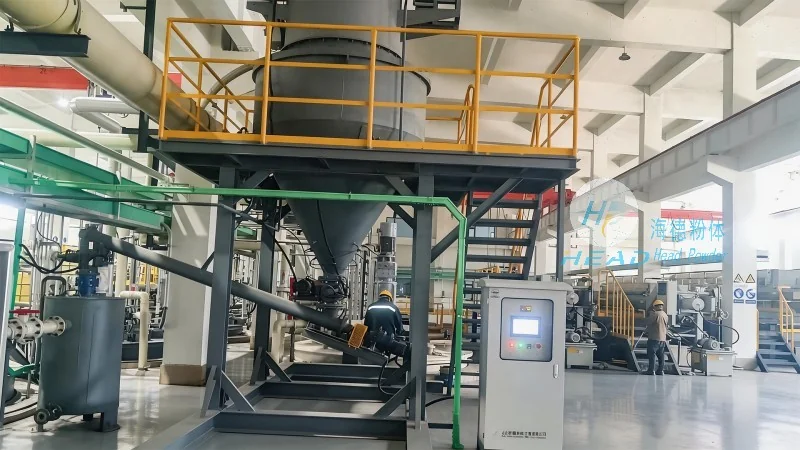
Application Scenarios and Industry Use Cases
The heavy calcium powder pneumatic conveying machine is widely used in various industries that require the handling of calcium carbonate powders. In the construction industry, it is used to transport heavy calcium powder to concrete mixing plants and plaster production lines. The powder is added to the concrete mix to improve its strength and durability. In the plastics industry, heavy calcium powder is used as a filler in polymer compounds, and the pneumatic conveying system ensures a consistent and clean supply of the powder to the extrusion and molding processes. The coatings and paints industry also utilizes heavy calcium powder as a pigment and filler, and the system helps maintain the quality of the final product by preventing contamination. Additionally, in the chemical industry, heavy calcium powder is used in the production of calcium-based chemicals, and the pneumatic conveying system facilitates the transport of the powder between production stages. The versatility of the system makes it suitable for a wide range of applications, from small-scale production lines to large industrial facilities.
Conclusion and Future Developments
Heavy calcium powder pneumatic conveying machines, as designed by HeadPowder, represent a sophisticated solution for the efficient handling of calcium carbonate powders. The combination of advanced engineering, robust components, and automated controls ensures that the system operates reliably and efficiently. By understanding the operation process and working principle of such equipment, industries can optimize their material handling processes, reduce costs, and improve product quality. As technology advances, future developments may include more energy-efficient air supply systems, advanced material sensors for real-time monitoring, and integration with industrial automation platforms to further enhance the performance and sustainability of pneumatic conveying systems. The continued innovation in this field will likely lead to even more efficient and environmentally friendly solutions for heavy calcium powder handling, supporting the growth and sustainability of industries that rely on this critical material.




