

Working Principle and Classification Application of PVC Resin Powder Pneumatic Conveying
Shandong HeadPowder Engineering Co., Ltd., commonly known as HeadPowder, is a professional enterprise specializing in the research, development, and application of pneumatic conveying technologies for various powder materials. HeadPowder is headquartered in Shandong, China, and has been committed to providing efficient and reliable solutions for the transportation of PVC resin powders and other industrial powders. The company leverages advanced engineering principles and practical experience to meet the diverse needs of clients in different industries.
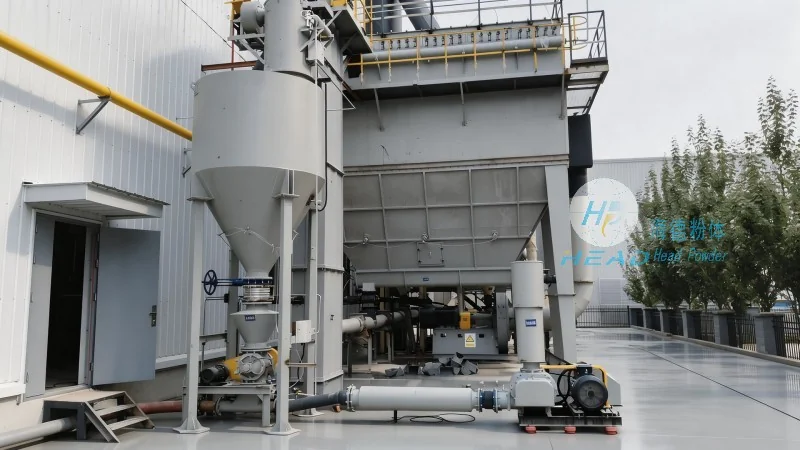
Working Principle of PVC Resin Powder Pneumatic Conveying
Pneumatic conveying, as a key technology for transporting PVC resin powders, operates based on the principle of using air flow to move solid particles. The process typically involves a conveying system that includes a hopper, a blower or compressor, a pipeline, and a receiver. When the system is activated, the blower generates a high-pressure air stream, which draws the PVC resin powder from the hopper into the pipeline. The air and powder mixture then travels through the pipeline to the receiving container. The separation of air and powder occurs in the receiver, where the powder is collected and the air is either discharged or recirculated. This method eliminates the need for mechanical components like belts or buckets, reducing maintenance costs and improving safety. The efficiency of the conveying process depends on factors such as the air velocity, particle size, and moisture content of the PVC resin powder.
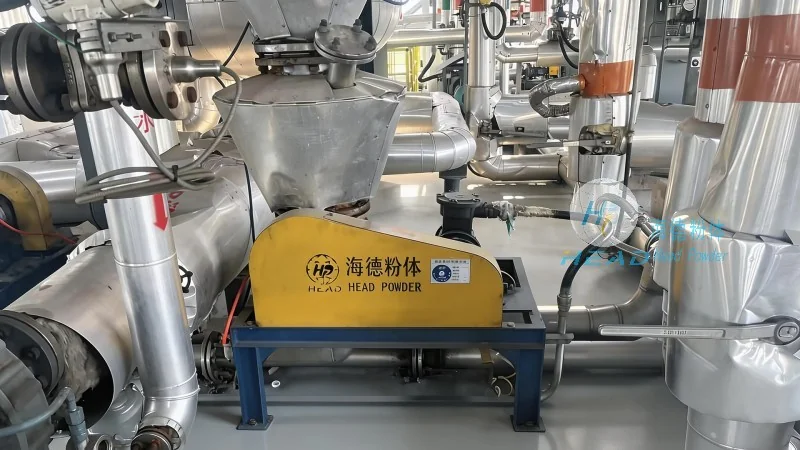
Classification and Application of PVC Resin Powder Pneumatic Conveying
Pneumatic conveying systems for PVC resin powders are classified into several types based on the conveying method and system design. The primary classifications include dense-phase conveying and dilute-phase conveying. Dense-phase conveying, also known as low-velocity conveying, uses lower air velocities to move the powder in a more concentrated state, reducing particle degradation and minimizing dust generation. This method is ideal for transporting sensitive PVC resin powders that are prone to clumping or degradation. Dilute-phase conveying, or high-velocity conveying, employs higher air velocities to move the powder in a more dispersed state, suitable for longer distances or larger volumes. Another classification is the choice of conveying direction, including horizontal, vertical, or combined horizontal-vertical systems. Horizontal systems are commonly used for short to medium distances, while vertical systems are suitable for transporting powders to higher elevations. The selection of the appropriate classification depends on the specific requirements of the application, including the distance, height, and characteristics of the PVC resin powder.
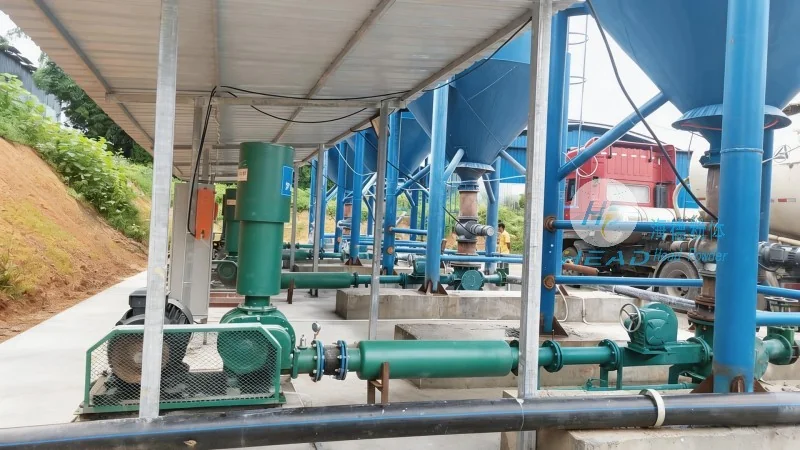
Applications and Benefits of PVC Resin Powder Pneumatic Conveying
The application of pneumatic conveying for PVC resin powders is widespread across various industries, including manufacturing, construction, and chemical processing. In the manufacturing sector, PVC resin powders are used in the production of plastic products, and pneumatic conveying ensures a consistent and controlled supply of raw materials to the processing equipment. This reduces downtime and improves production efficiency. In the construction industry, PVC resin powders are used in the production of building materials, and the efficient transportation of these powders helps streamline the production process. The benefits of pneumatic conveying for PVC resin powders include improved safety, as there is no need for manual handling of powders, reduced risk of dust explosions, and enhanced product quality due to the minimal exposure to air and moisture. Additionally, the system can be integrated with other processing equipment, such as mixers and extruders, to create a seamless production line. The use of pneumatic conveying also contributes to cost savings by reducing labor costs and minimizing material loss due to spillage or degradation.