

Preventing Pipeline Blockages in Pneumatic Conveying Systems for Rare Earth Powder Handling: Key Des
When handling rare earth powders, selecting the right pneumatic conveying system is crucial to ensure efficient material transport while preventing common issues like pipeline blockages. These systems rely on air pressure or vacuum to move powders through pipelines, and their design directly impacts performance and reliability. For industries dealing with rare earth materials, understanding how to mitigate blockages and the key design parameters involved is essential for maintaining smooth operations.
Understanding the Risks of Pipeline Blockages in Rare Earth Powder Handling
Blockages in pneumatic conveying pipelines can lead to significant operational disruptions, including downtime, increased maintenance costs, and potential damage to equipment. Rare earth powders, due to their fine particle size and specific physical properties, are particularly prone to agglomeration and bridging when exposed to air flow or static conditions. This makes it vital to implement effective prevention strategies from the initial system design stage. By addressing key design parameters, companies can minimize the risk of blockages and ensure consistent material flow.
Key Design Parameters for Preventing Blockages in Pneumatic Conveying Systems
Several critical design parameters must be considered when designing a pneumatic conveying system for rare earth powders to prevent blockages. These parameters include particle size distribution, material density, flow rate, and pipeline diameter, among others. Each of these factors influences how the powder behaves under air pressure and vacuum conditions, and optimizing them is key to avoiding agglomeration and bridging. For example, using larger pipeline diameters can reduce the risk of particle accumulation, while controlling the flow rate ensures that the air velocity remains within optimal ranges to prevent material settling.
Particle Size and Material Properties: A Critical Factor
The particle size of rare earth powders is a primary determinant of how they will behave in a pneumatic conveying system. Fine powders with a high surface area are more likely to agglomerate and cause blockages, as they can stick together or to the pipeline walls under certain conditions. To mitigate this, designers often use pre-treatment methods such as drying or adding anti-caking agents to improve flowability. Additionally, selecting the appropriate air velocity is crucial—too low, and the powder may settle; too high, and it can cause excessive wear on the system components. By carefully analyzing the particle size distribution and material properties, engineers can tailor the system design to minimize blockage risks.
Flow Rate and Air Velocity Optimization
Controlling the flow rate and air velocity is another essential design parameter for preventing blockages. The air velocity must be sufficient to keep the powder suspended but not so high that it causes excessive pressure drop or wear on the pipeline and components. For rare earth powders, typical air velocities range from 10 to 30 meters per second, depending on the particle size and system configuration. Maintaining a consistent flow rate also helps prevent uneven distribution of the powder, which can lead to localized blockages. Using variable speed drives and flow meters allows for real-time adjustments to maintain optimal conditions, further reducing the risk of system failures.
Pipeline Design and Material Selection
The design of the pipeline itself plays a significant role in preventing blockages. Using smooth, corrosion-resistant materials like stainless steel or PTFE can reduce friction and the likelihood of material sticking to the walls. Additionally, incorporating features such as bends, elbows, and expansion joints can help prevent particle accumulation by allowing for gradual changes in direction and flow. For rare earth powders, which may be abrasive, selecting materials with high wear resistance is crucial to extend the system's lifespan and maintain performance. Properly sizing the pipeline diameter to match the flow rate also ensures that the powder remains suspended and does not settle, reducing the risk of blockages.
System Integration and Control Strategies
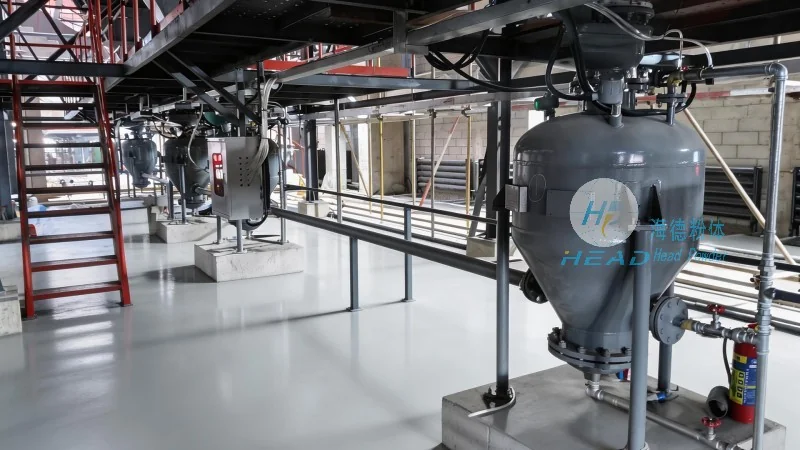
Effective control strategies are vital to maintaining optimal conditions and preventing blockages in pneumatic conveying systems. Implementing sensors to monitor pressure, flow rate, and temperature allows for early detection of potential issues. For example, if the pressure drop across a section of the pipeline increases, it may indicate a developing blockage, prompting immediate action. Using automated control systems to adjust air pressure or flow rate based on real-time data can help maintain stable operation. Additionally, incorporating cleaning mechanisms such as pulse jets or reverse flow can help clear minor blockages before they become major issues. By integrating these control strategies into the system design, companies can significantly reduce downtime and maintenance costs.
Case Study: Successful Implementation by Shandong HeadPowder Engineering Co., Ltd.
Shandong HeadPowder Engineering Co., Ltd., a leading provider of pneumatic conveying solutions, has successfully implemented systems for rare earth powder handling that effectively prevent blockages. The company’s expertise in material handling and system design has enabled them to tailor solutions to the specific needs of their clients. For instance, a client dealing with fine rare earth powders required a system that could handle high flow rates without causing blockages. By optimizing the pipeline diameter, adjusting the air velocity, and incorporating anti-caking agents, HeadPowder designed a system that maintained consistent flow and minimized downtime. This case study highlights the importance of considering all key design parameters and working with experienced engineers to develop effective solutions.