

Working Principle and Characteristics of Stone Aggregate Pneumatic Conveying
Stone aggregate pneumatic conveying is a key technology in material handling, particularly for transporting bulk materials like stone aggregates. This method utilizes air as the medium to move particles through a pipeline system. The working principle involves creating a pressure differential between the inlet and outlet of the conveying line. By injecting air into the material, the particles are suspended and propelled forward through the pipeline. This process is efficient for transporting materials over moderate distances and can handle various particle sizes and densities.
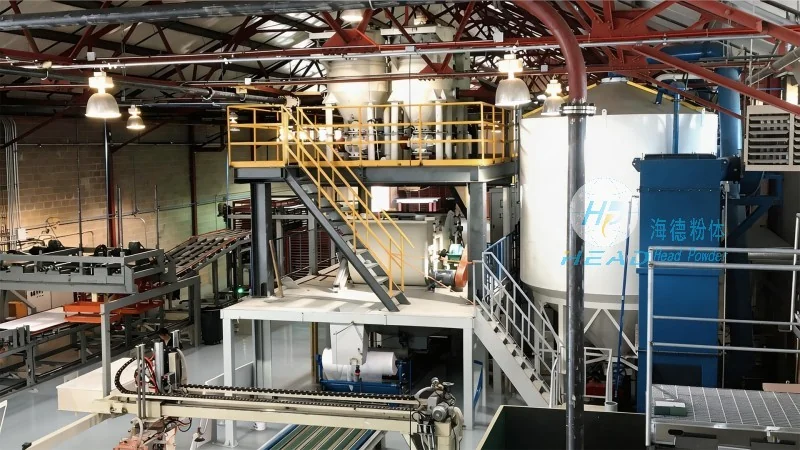
HeadPowder, a leading manufacturer in the field, specializes in providing advanced pneumatic conveying solutions tailored for stone aggregate applications. The company, based in Shandong, China, leverages decades of industry experience to design and manufacture systems that meet the specific demands of construction and mining sectors. Their solutions are engineered to ensure high efficiency, minimal material degradation, and reliable operation under diverse operational conditions.
Key Working Principle of Pneumatic Conveying Systems
The core working principle of pneumatic conveying for stone aggregates revolves around the use of air to transport solid particles. There are primarily two types of pneumatic conveying systems: pressure and vacuum. Pressure systems operate by forcing air and material through the pipeline using a positive pressure source, such as a blower or compressor. This method is suitable for long-distance and high-volume transport. Vacuum systems, on the other hand, create a negative pressure at the inlet, drawing material into the pipeline. These systems are often used for shorter distances and when the material needs to be transported from multiple sources.
In the context of stone aggregates, the pressure system is more commonly employed due to its ability to handle larger particle sizes and higher material loads. The process begins with the material being fed into a hopper or feeder. From there, it is mixed with air in a venturi or a rotary airlock, which helps to disperse the particles and create a uniform flow. The air and material mixture then travels through the pipeline, where the velocity of the air ensures that the particles remain suspended. At the discharge end, the air is separated from the material, typically using a cyclone separator or a filter, allowing the stone aggregates to be deposited in the desired location.
Characteristics of Stone Aggregate Pneumatic Conveying Systems
Stone aggregate pneumatic conveying systems exhibit several distinct characteristics that make them advantageous in material handling applications. One of the primary advantages is the ability to transport materials in a closed system, which minimizes dust emissions and environmental impact. This is particularly important for stone aggregates, which can generate significant dust during traditional handling methods. The closed system also helps to maintain the quality of the material, preventing contamination from external sources.
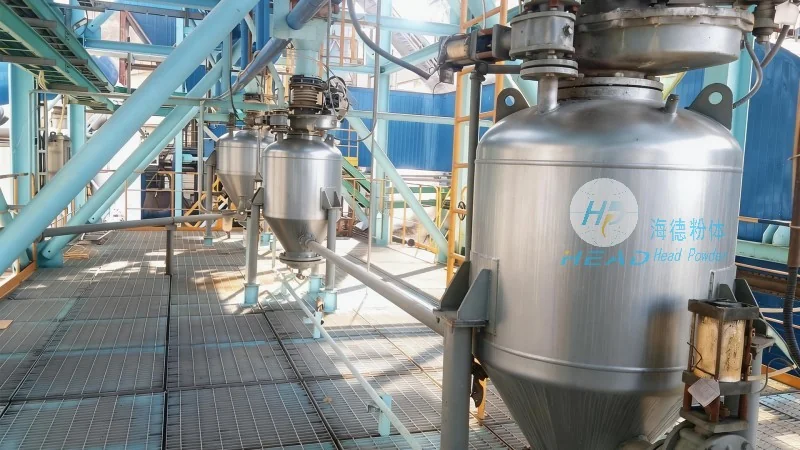
Another key characteristic is the flexibility in system design. Pneumatic conveying systems can be configured to handle various particle sizes, from fine sand to large gravel. This adaptability allows for the integration of different components, such as multiple feeding points, storage silos, and discharge locations, to create a comprehensive material handling solution. The systems can also be scaled to accommodate different production capacities, making them suitable for both small-scale operations and large industrial facilities.
Efficiency is a critical characteristic of these systems. By utilizing air as the conveying medium, the energy consumption is generally lower compared to mechanical systems like belt conveyors or bucket elevators. The reduced energy costs, combined with lower maintenance requirements, contribute to the overall cost-effectiveness of pneumatic conveying. Additionally, the systems offer high throughput rates, enabling the rapid transport of large volumes of stone aggregates, which is essential for meeting the demands of construction projects and mining operations.
Technical Advantages and Operational Considerations
HeadPowder's pneumatic conveying systems for stone aggregates offer several technical advantages that enhance performance and reliability. The use of high-quality materials in the construction of pipelines and components ensures durability and resistance to abrasion, which is crucial when handling abrasive stone aggregates. The company's advanced control systems allow for precise regulation of air pressure and flow rates, optimizing the conveying process and minimizing energy waste.
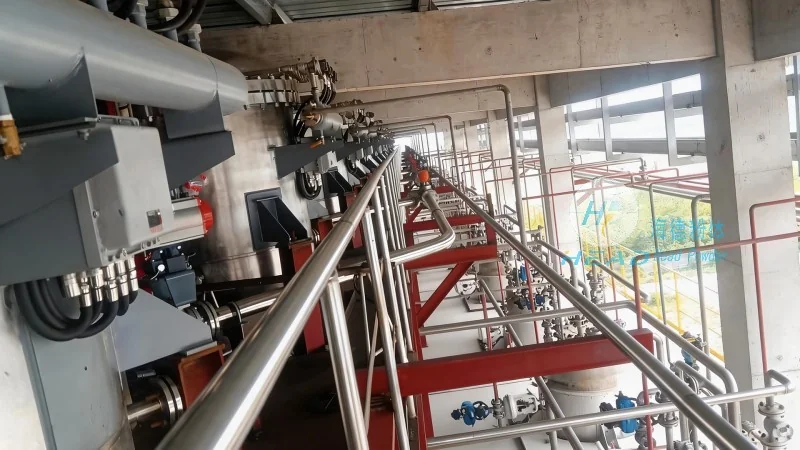
Operational considerations are also important for the effective use of pneumatic conveying systems. Proper maintenance, such as regular cleaning of filters and checking for air leaks, is essential to ensure consistent performance. The system's design should also account for the specific properties of the stone aggregates, including their density, moisture content, and particle size distribution. These factors influence the required air velocity and pressure to achieve efficient transport. HeadPowder provides comprehensive technical support and maintenance services to help clients optimize their systems and address any operational challenges.
Application Scenarios and Industry Impact
Stone aggregate pneumatic conveying systems are widely used in various industries, including construction, mining, and road infrastructure. In construction, these systems are employed to transport aggregates from storage silos to concrete mixing plants or batching stations. This ensures a continuous and efficient supply of materials, reducing downtime and improving productivity. In mining operations, pneumatic conveying is used to transport crushed stone from processing plants to storage areas or for further processing.
The adoption of pneumatic conveying technology has a positive impact on operational efficiency and environmental sustainability. By reducing the need for manual handling and open-air transport, the systems minimize the risk of material loss and environmental contamination. Additionally, the closed system design helps to control dust emissions, contributing to better air quality and compliance with environmental regulations. HeadPowder's commitment to innovation and quality has positioned them as a trusted partner for businesses seeking reliable and efficient material handling solutions.
Conclusion
Stone aggregate pneumatic conveying is a sophisticated and efficient method for transporting bulk materials. The working principle, which relies on air to suspend and propel particles through a pipeline, offers numerous advantages over traditional handling methods. HeadPowder, with its expertise and advanced technology, provides high-quality pneumatic conveying systems that are tailored to the specific needs of stone aggregate applications. By leveraging this technology, industries can enhance operational efficiency, reduce costs, and improve environmental performance. As the demand for efficient material handling solutions continues to grow, pneumatic conveying remains a vital component in the construction and mining sectors, supported by companies like Shandong HeadPowder Engineering Co., Ltd. based in Shandong, China.