Organic salt, a critical chemical material used across various industrial sectors, demands efficient and reliable handling solutions. Pneumatic conveying technology has become a cornerstone for transporting organic salts, offering advantages such as dust-free operation, reduced material degradation, and enhanced workplace safety. This article, presented by Shandong HeadPowder Engineering Co., Ltd., explores the fundamental principles behind organic salt pneumatic conveying systems and highlights the specific characteristics of working scenes where these systems are commonly applied.
The Working Principle of Pneumatic Conveying for Organic Salts
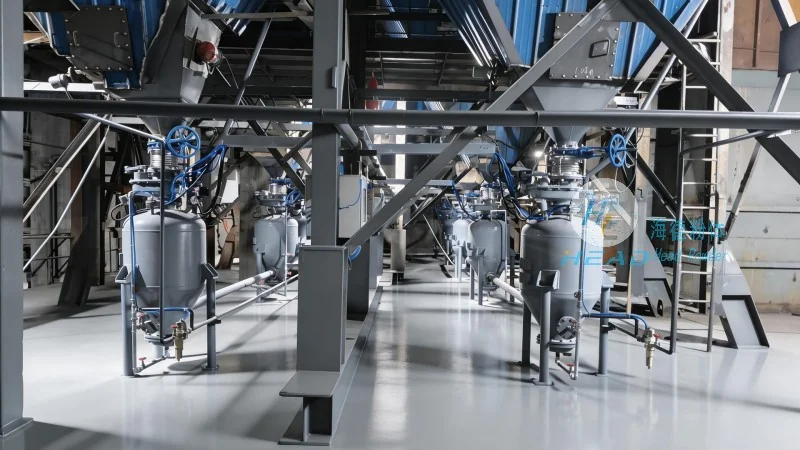
The core principle of pneumatic conveying involves the use of air or gas to transport bulk materials through a pipeline system. In the case of organic salt, the equipment typically operates under positive or negative pressure conditions. Positive pressure systems utilize compressed air to push the material forward, while negative pressure systems use suction to draw the material into the pipeline. The selection of pressure type depends on factors like material properties, distance, and system layout. The organic salt particles are entrained by the air stream, moving through the pipeline to the destination point. Key components of the system include a hopper for material storage, a feeder to control the flow rate, a conveying line, and a receiver for material discharge. The design of these components is critical to ensure efficient and stable operation, minimizing issues like blockages or material degradation.
Key Features of Organic Salt Pneumatic Conveying Equipment
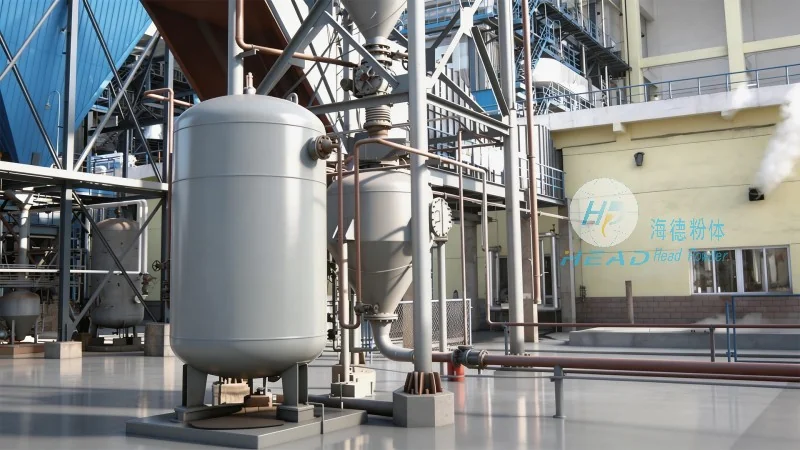
Organic salt pneumatic conveying systems are engineered with several key features that address the unique challenges of handling this material. First, the equipment is designed to handle fine or powdery organic salts, which can be prone to caking or agglomeration. The use of air classification or pre-treatment steps may be incorporated to improve material flowability. Second, the system is built for dust control, as organic salts can generate significant airborne particles. Enclosed designs and filtration systems are standard to maintain environmental compliance and worker safety. Third, the equipment is constructed from materials resistant to chemical corrosion, as organic salts may be acidic or have other corrosive properties. Stainless steel or specialized coatings are commonly used to protect the components from degradation over time. Additionally, the system is equipped with monitoring and control mechanisms to ensure consistent performance and detect any operational issues promptly.
Common Working Scene Characteristics
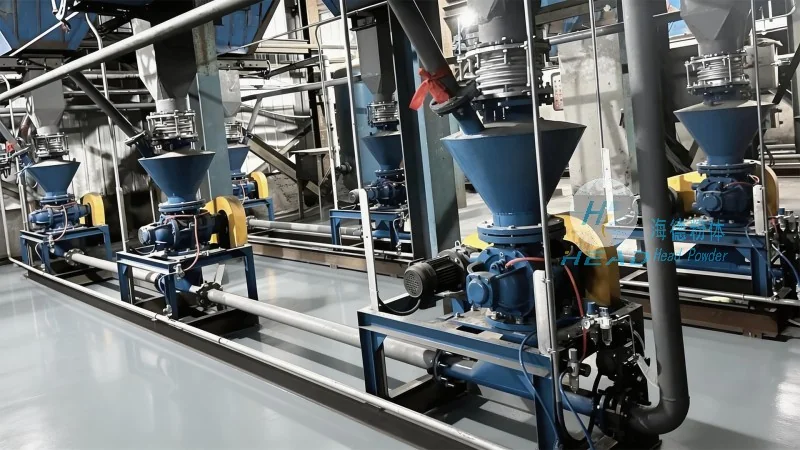
Organic salt pneumatic conveying equipment is deployed in diverse industrial settings, each with distinct characteristics that influence system design and operation. One common working scene is in chemical manufacturing facilities, where organic salts are used as intermediates in production processes. Here, the equipment is integrated into a larger production line, requiring seamless material transfer between reactors, storage tanks, and processing units. The system must handle varying flow rates and material compositions, often with the ability to switch between different organic salt types without significant downtime. Another typical scenario is in food processing industries, where organic salts are used as preservatives or flavor enhancers. In this context, the equipment must meet stringent hygiene standards, with stainless steel construction and easy-to-clean components. The working environment may involve high humidity or temperature variations, which the system must withstand to maintain material quality and operational reliability. Additionally, in mining and mineral processing operations, organic salts may be used as reagents for ore treatment. The equipment in these settings often operates under harsh conditions, with high material throughput and the need for robust, durable components to withstand abrasion and wear.
Applications and Benefits in Industrial Settings
The application of organic salt pneumatic conveying equipment brings numerous benefits to industrial operations. By eliminating the need for manual handling or traditional belt conveyors, the system reduces labor costs and minimizes the risk of workplace accidents. The dust-free operation also improves air quality and reduces the need for extensive cleaning and maintenance. Furthermore, the enclosed system prevents material contamination, ensuring that the organic salt remains pure and free from external pollutants. This is particularly important in industries where product quality is critical, such as pharmaceuticals or food processing. The flexibility of pneumatic conveying allows for easy integration into existing production lines, enabling companies to upgrade their material handling systems without major disruptions. The system's ability to transport materials over long distances without the need for intermediate storage points also optimizes space utilization and streamlines production workflows.
Conclusion
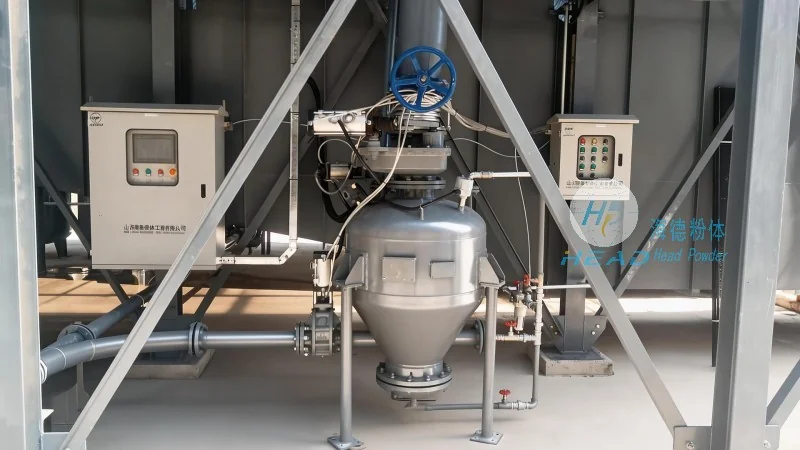
Organic salt pneumatic conveying equipment represents a sophisticated solution for the efficient and safe handling of organic salts in various industrial applications. By understanding the fundamental principles of pneumatic conveying and the specific characteristics of working scenes, manufacturers can design and implement systems that meet the unique demands of their operations. The key features of these systems, including dust control, corrosion resistance, and material flowability, ensure reliable performance and long-term operational efficiency. As industries continue to rely on organic salts for their production processes, the importance of advanced pneumatic conveying technology will only grow, making it an essential component of modern material handling solutions.




