HeadPowder, a leading manufacturer based in Shandong, China, specializes in the design and production of advanced pneumatic conveying systems for transporting aggregate powders. This article explores the fundamental principles behind these systems and highlights the key working scene characteristics that define their application in various industrial settings.
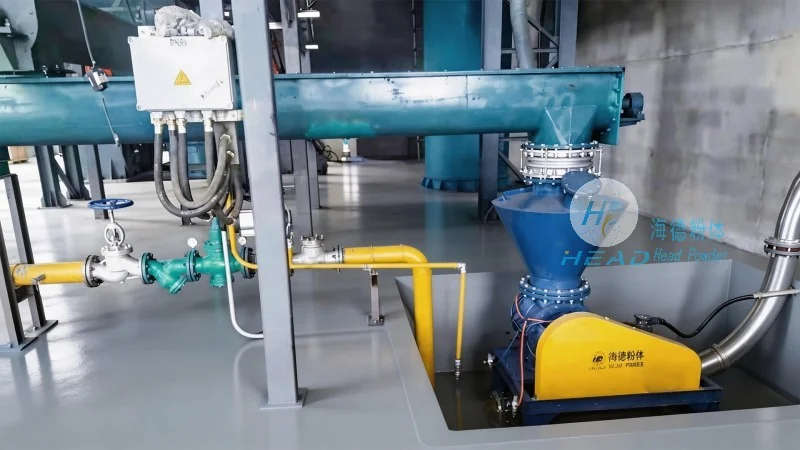
The Core Principle of Pneumatic Conveying for Aggregate Powders
The primary principle of aggregate powder pneumatic conveying involves the use of air or gas as the conveying medium to transport bulk materials. Unlike traditional mechanical conveying methods, which rely on belts, buckets, or screws, pneumatic systems utilize pressure differentials to move materials through pipelines. In this process, a fan or blower generates a flow of air that draws or pushes the powder particles along the pipeline. The efficiency of this method depends on several factors, including the particle size, density, and moisture content of the aggregate, as well as the air velocity and pressure within the system. HeadPowder's equipment is engineered to optimize these parameters, ensuring reliable and efficient material transport. The company's systems typically employ either positive pressure or negative pressure (suction) modes. Positive pressure systems force air and material through the pipeline, while negative pressure systems draw material into the pipeline using a vacuum. Both approaches are designed to handle a wide range of aggregate types, from fine powders to coarse granules, with minimal degradation or segregation of the material.
Key Working Scene Characteristics
The working scene characteristics of aggregate powder pneumatic conveying equipment are critical in determining its suitability for specific applications. These characteristics include:
1. **Material Handling Flexibility**: Pneumatic systems excel in handling a diverse range of aggregate powders, including cement, limestone, sand, and various industrial minerals. The ability to transport these materials without the need for intermediate storage or transfer points makes them ideal for continuous production lines. HeadPowder's equipment is designed to accommodate different particle sizes and flow rates, ensuring consistent performance across various material types.
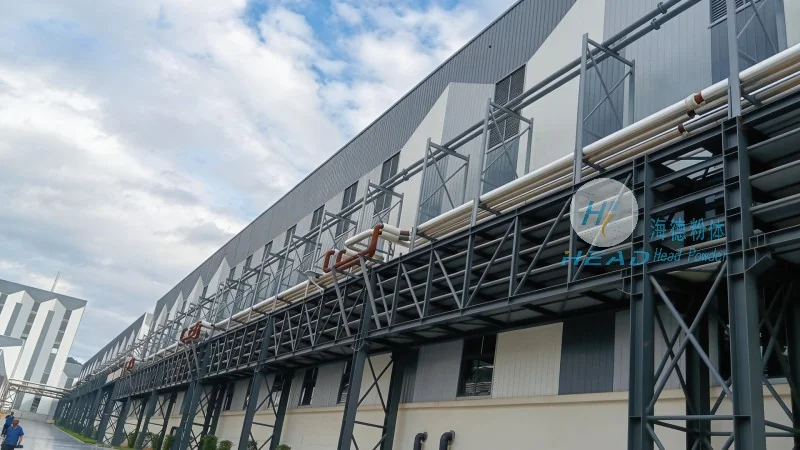
2. **Space Efficiency and Layout Adaptability**: Unlike traditional conveying methods that require extensive space for equipment and transfer points, pneumatic systems can be installed in compact areas and follow complex layouts. This is particularly advantageous in industrial facilities where space is limited or where the material flow path needs to navigate around obstacles. The flexible piping design allows for easy integration into existing production lines, reducing the need for major structural modifications.
3. **Reduced Maintenance and Downtime**: Pneumatic conveying systems generally have fewer moving parts compared to mechanical systems, which translates to lower maintenance requirements and reduced downtime. HeadPowder's equipment incorporates robust components, such as high-quality fans, seals, and filters, to minimize wear and tear. Regular maintenance, including filter cleaning and component inspections, is essential to ensure long-term reliability. The company's systems are designed with user-friendly interfaces and diagnostic tools, enabling quick troubleshooting and minimizing operational disruptions.
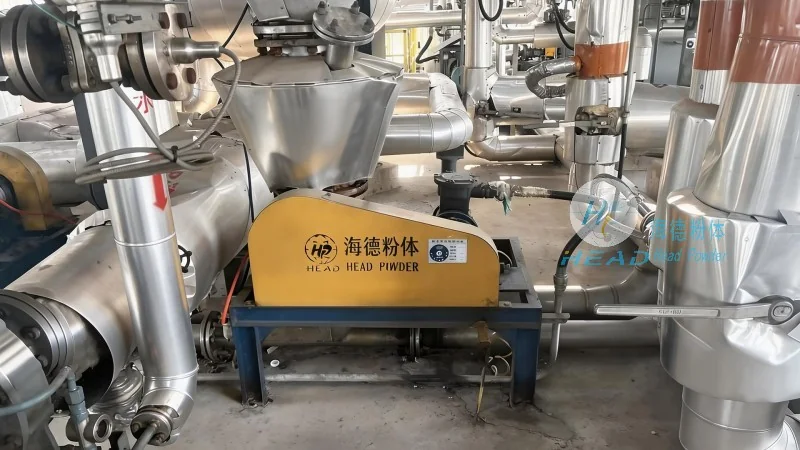
4. **Environmental and Safety Benefits**: Pneumatic conveying offers several environmental and safety advantages over other methods. By enclosing the material in a pipeline, it prevents dust emissions and contamination, which is crucial in industries where air quality and product purity are critical. The sealed system also reduces the risk of material spillage or exposure to personnel, enhancing workplace safety. HeadPowder's equipment adheres to strict environmental standards and incorporates features like dust collection and air filtration to comply with regulatory requirements.
Application Scenarios and Performance
HeadPowder's aggregate powder pneumatic conveying equipment is widely used in various industrial sectors, including construction materials, mining, and chemical processing. In the construction industry, these systems are commonly employed to transport cement, sand, and other raw materials to mixing plants and batching stations. The ability to deliver materials directly to the point of use reduces transportation time and improves production efficiency. In mining operations, pneumatic systems are used to transport ore powders from processing facilities to storage or further processing units. The high capacity and reliability of HeadPowder's equipment make it suitable for handling large volumes of material in demanding environments. In chemical processing, the systems are utilized to transport powders such as limestone, clays, and other additives, ensuring precise dosing and minimal material loss.
The performance of HeadPowder's pneumatic conveying systems is characterized by high throughput rates, typically ranging from several tons per hour to over 100 tons per hour, depending on the system configuration. The equipment is designed to maintain consistent material flow rates, which is essential for maintaining production line stability. HeadPowder's engineers conduct thorough system analysis and simulations to ensure optimal performance, considering factors such as pipeline length, elevation changes, and material properties. The company's systems are also equipped with advanced control systems that allow for real-time monitoring and adjustment of conveying parameters, further enhancing operational efficiency.




