For glass manufacturers, efficient and reliable handling of raw material powders is crucial to maintaining production quality and operational efficiency. Pneumatic conveying systems offer a sophisticated solution for transporting glass raw materials, ensuring minimal contamination and optimal flow control. This article explores the operation process and working principles of a pneumatic conveying line designed for glass raw material powders, highlighting the key components, operational steps, and benefits of this technology.
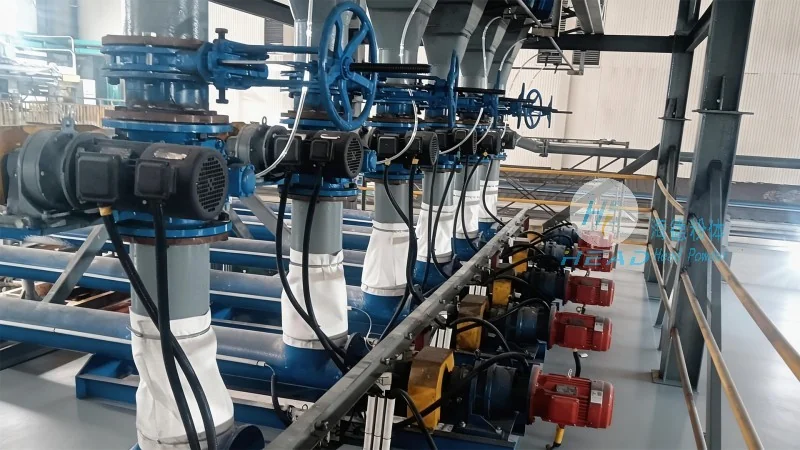
Introduction to Pneumatic Conveying Systems for Glass Raw Materials
Pneumatic conveying lines are engineered to transport bulk powders, such as those used in glass manufacturing, through a network of pipes using air or gas as the conveying medium. These systems are particularly advantageous for glass raw materials due to their ability to handle fine powders without the need for mechanical components that could introduce contaminants or cause wear. The technology is widely adopted in the glass industry for its ability to maintain product purity, reduce labor costs, and enhance overall production throughput.
Working Principle of Pneumatic Conveying
The fundamental principle of pneumatic conveying involves the use of air pressure to move material particles through a pipeline. There are two primary types of pneumatic conveying systems: positive pressure (pressure) systems and negative pressure (vacuum) systems. Positive pressure systems generate air pressure at the inlet, pushing the material through the pipeline, while negative pressure systems create a vacuum at the outlet, drawing material into the system.
For glass raw material powders, a combination of these systems may be used depending on the application. The choice between positive and negative pressure depends on factors such as the distance of material transport, the nature of the powder (e.g., dustiness, moisture content), and the desired level of control over the conveying process. In both systems, the material is typically fed into the pipeline via a feeder device, and the air flow is controlled to ensure consistent and stable transport.
Operation Process of the Conveying Line
The operation of a pneumatic conveying line for glass raw materials involves several sequential steps, each designed to ensure efficient and safe material handling. The process begins with the preparation of raw materials, which may include storage, pre-screening, and moisture control to prevent clogging or degradation of the powder.
Once prepared, the material is fed into the system using a feeder, such as a rotary valve or a star feeder, which regulates the flow rate and prevents material buildup. The feeder is connected to the conveying pipeline, which may include bends, expansions, and reductions to accommodate changes in direction and pressure. The air is introduced into the system via a blower or compressor, creating the necessary pressure or vacuum to move the material.
During transport, the material travels through the pipeline, often in a suspended state, as the air flow carries it to the destination point. At the receiving end, the material is separated from the air using a separator or cyclone, which uses centrifugal force to separate the heavier material particles from the lighter air. The separated material is then discharged into a storage bin or processing equipment, while the air is filtered and returned to the system or released to the atmosphere.
Key Components and Their Functions
A pneumatic conveying line for glass raw materials consists of several critical components, each playing a vital role in the overall operation. The main components include:
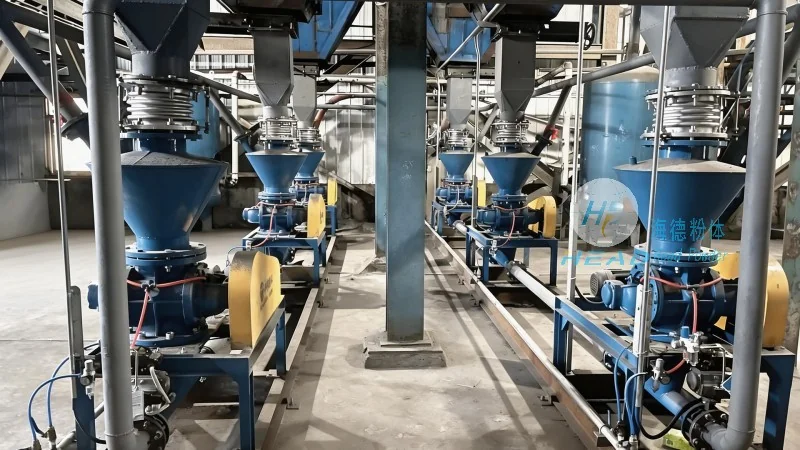
1. Feeder: The feeder is responsible for controlling the flow of raw material into the conveying system. It ensures a consistent feed rate, preventing overloading or underloading of the pipeline. Common feeder types include rotary valves, star feeders, and screw feeders, which are chosen based on the characteristics of the glass powder.
2. Conveying Pipeline: The pipeline is the main pathway for transporting the material. It is typically made of stainless steel or other corrosion-resistant materials to withstand the abrasive nature of glass powders and prevent contamination. The pipeline design includes appropriate bends, elbows, and expansions to minimize pressure loss and ensure smooth material flow.
3. Blower or Compressor: This component generates the air pressure or vacuum required for conveying. The choice between a blower and a compressor depends on the system type and the distance of material transport. Blowers are commonly used for positive pressure systems, while compressors are used for negative pressure systems.
4. Separator/Cyclone: The separator is used to separate the glass raw material from the air at the receiving end. It operates on the principle of centrifugal force, where the heavier material particles are forced to the outer wall and fall to the bottom, while the air is directed to the outlet. This component is essential for maintaining product purity and preventing dust emissions.
5. Dust Collector: In many applications, a dust collector is integrated into the system to capture any airborne particles that may escape from the separator. The dust collector uses filtration or cyclonic separation to remove fine particles from the air, ensuring compliance with environmental regulations and maintaining a clean working environment.
Advantages of Pneumatic Conveying for Glass Raw Materials
Implementing a pneumatic conveying line for glass raw materials offers several significant advantages over traditional mechanical conveying methods. These benefits contribute to improved operational efficiency, product quality, and cost-effectiveness.
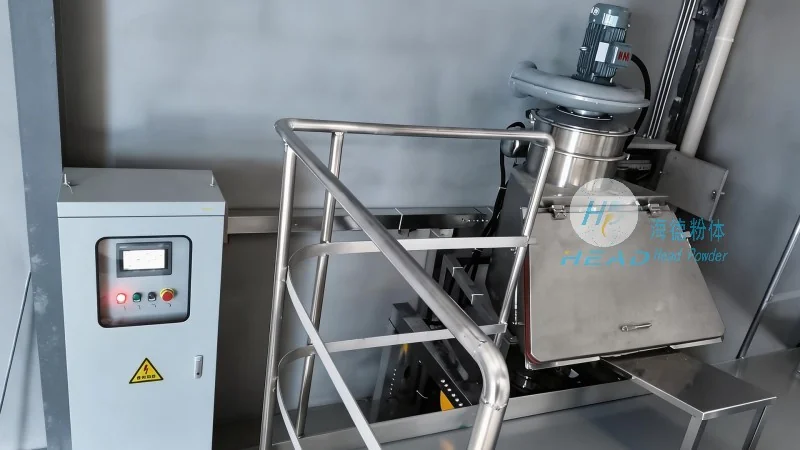
Firstly, pneumatic conveying minimizes product contamination. Since the material is transported in a closed system, there is no direct contact with the environment or mechanical parts that could introduce impurities. This is particularly important for glass raw materials, where even small amounts of contaminants can affect the final product's optical and mechanical properties.
Secondly, the system enhances operational efficiency by reducing labor costs and increasing throughput. Automated feeding and conveying processes minimize the need for manual handling, reducing the risk of human error and improving production consistency. The ability to control flow rates and pressure allows for precise material delivery, ensuring that the glass manufacturing process operates at optimal levels.
Thirdly, pneumatic conveying systems are highly flexible and can be adapted to various production requirements. They can handle a wide range of powder characteristics, including different particle sizes, moisture contents, and flowability. The system can be easily scaled up or down to accommodate changes in production volume, making it a versatile solution for glass manufacturers.
Finally, the technology contributes to a cleaner and safer working environment. By containing the material within a closed pipeline and using dust collectors to capture airborne particles, the system reduces dust emissions and minimizes the risk of respiratory issues for workers. This not only improves workplace safety but also helps manufacturers comply with environmental regulations.
Company Profile: Shandong HeadPowder Engineering Co., Ltd.
Shandong HeadPowder Engineering Co., Ltd., commonly known as HeadPowder, is a leading provider of engineering solutions for bulk material handling, including pneumatic conveying systems for glass raw materials. With a focus on innovation and customer satisfaction, HeadPowder specializes in designing and manufacturing customized conveying lines tailored to the specific needs of glass manufacturers.
HeadPowder is headquartered in Shandong, China, and has a strong reputation for delivering high-quality, reliable equipment that meets the demanding requirements of the glass industry. The company's expertise lies in understanding the unique challenges of glass raw material handling and developing solutions that enhance production efficiency, product quality, and operational safety.
By leveraging advanced engineering and manufacturing capabilities, HeadPowder ensures that its pneumatic conveying systems are built to last, with durable components and robust design features that withstand the abrasive nature of glass powders. The company's commitment to quality and customer support has made it a trusted partner for glass manufacturers worldwide.




