HeadPowder, a leading engineering firm based in Shandong, China, specializes in the design and implementation of advanced pneumatic conveying systems tailored for the efficient handling of lime powder materials. This technology is crucial for industries that require reliable and low-cost material transport solutions, especially in the processing of lime, a widely used chemical in various industrial applications such as water treatment, construction, and chemical manufacturing.
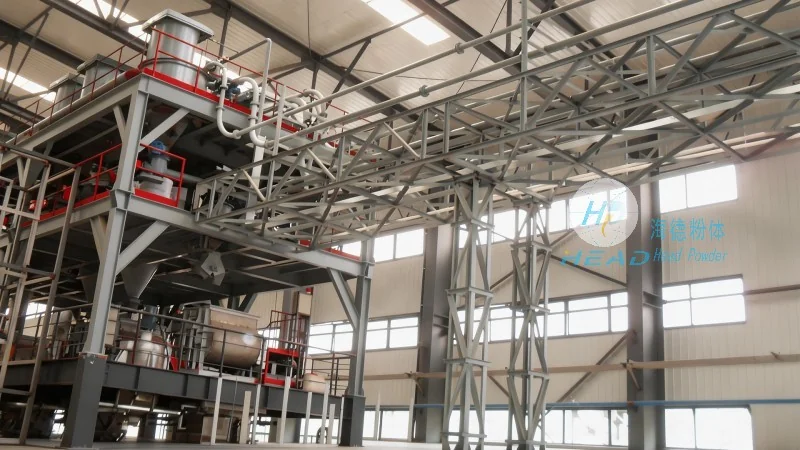
Working Principle of Pneumatic Conveying Systems
The core of pneumatic conveying for lime powder materials lies in the use of air as the transport medium. The system typically operates by generating a high-pressure air stream that draws or pushes the powder particles through a pipeline. There are two main types of pneumatic conveying: dilute-phase and dense-phase. Dilute-phase systems use low air velocity and high air-to-material ratios, suitable for long-distance transport with minimal pressure drops. Dense-phase systems, on the other hand, employ higher air velocities and lower air-to-material ratios, which are ideal for handling abrasive or sensitive materials like lime powder, ensuring minimal particle degradation and system wear.
Key Components and Their Roles in the Conveying Process
Several critical components work in tandem to ensure the smooth operation of a pneumatic conveying system for lime powder. The primary components include the material feed hopper, which holds the lime powder and controls the flow rate; the air compressor or blower, which generates the necessary air pressure; the pipeline network, which transports the material from the source to the destination; and the receiver or discharge hopper, where the material is collected. Additionally, control valves, filters, and dust collectors are essential for maintaining system efficiency and safety. The feed hopper often includes a rotary valve or a star valve to regulate the material discharge, preventing blockages and ensuring a consistent flow. The air compressor must be capable of delivering sufficient pressure and volume to overcome the pipeline resistance and lift the material to the desired height or distance. The pipeline design, including bends, elbows, and straight sections, is optimized to minimize pressure losses and prevent material deposition or blockages. The receiver hopper may include a venting system and a discharge valve to control the material release at the destination.
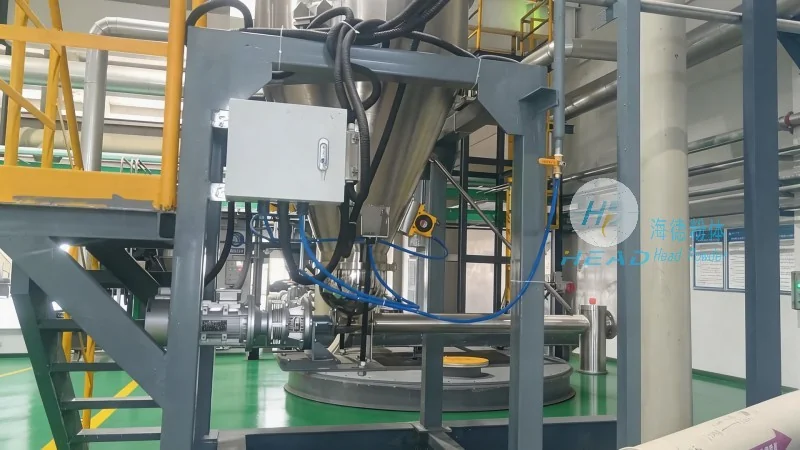
Operation Process of the Pneumatic Conveying System
The operation process of a pneumatic conveying system for lime powder begins with the loading of the material into the feed hopper. The rotary valve or star valve then starts to rotate, allowing the lime powder to fall into the pipeline as the air stream is activated by the compressor. The high-pressure air pulls the powder particles into the pipeline, creating a suspension that moves through the system. As the material travels through the pipeline, it may encounter various components such as filters to remove any debris or dust, and pressure regulators to maintain consistent air pressure. The receiver hopper at the end of the pipeline collects the conveyed lime powder, where it is stored until further processing or use. The system operates continuously, with the air compressor running to maintain the air flow and the feed hopper replenished as needed. The entire process is automated, with sensors and control systems monitoring the flow rate, pressure, and material level to ensure optimal performance and prevent system failures.
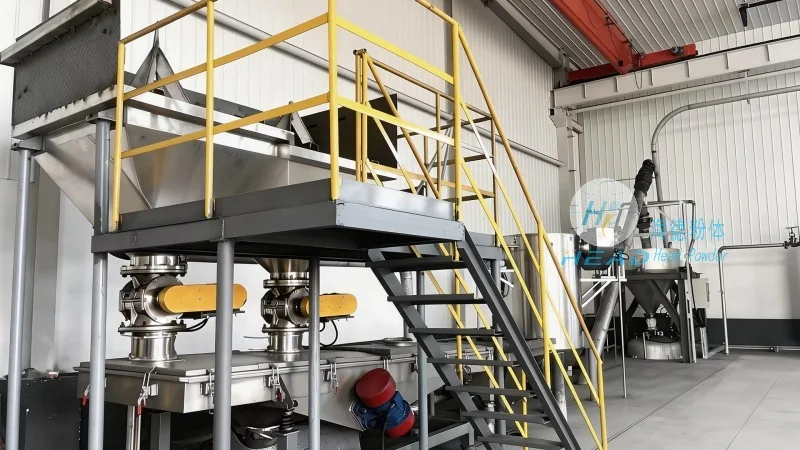
Advantages of Air-Driven Pneumatic Conveying for Lime Powder
Compared to traditional bulk material handling methods like belt conveyors or bucket elevators, air-driven pneumatic conveying offers several advantages for lime powder materials. First, it provides a dust-free and enclosed transport environment, which is crucial for maintaining material quality and preventing contamination. Second, the system is highly flexible, allowing for easy reconfiguration of the pipeline layout to accommodate changes in production or facility layout. Third, it reduces labor costs and maintenance requirements, as there are fewer moving parts compared to mechanical conveyors. Fourth, the system can handle a wide range of particle sizes and moisture contents, making it suitable for various lime powder applications. Additionally, pneumatic conveying systems are energy-efficient, especially when using efficient air compressors and optimized pipeline designs, which helps in reducing operational costs over time.
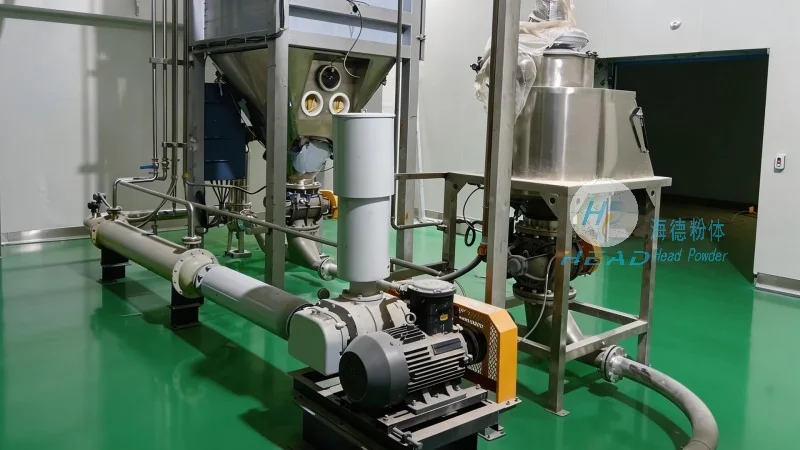
Applications and Industries Benefiting from Pneumatic Conveying
Lime powder is a versatile material used in numerous industries, and the air-driven pneumatic conveying system is particularly beneficial in applications where material transport needs to be efficient and reliable. In the water treatment industry, lime is used to adjust pH levels and remove impurities from water. The pneumatic conveying system ensures that the lime powder is delivered to the treatment facilities without any loss or contamination. In the construction industry, lime is used as a binder in mortar and plaster, and the system efficiently transports the material to the construction sites. In the chemical manufacturing industry, lime is used as a raw material in the production of calcium compounds, and the system provides a safe and efficient way to handle the material during processing. Other industries that benefit from this technology include food processing, where lime is used as a preservative, and agriculture, where lime is used to adjust soil pH.
Conclusion and Company Expertise
HeadPowder Engineering Co., Ltd., with its headquarters in Shandong, China, is a trusted provider of pneumatic conveying solutions for lime powder materials. The company leverages its expertise in engineering and material handling to design and implement customized systems that meet the specific needs of its clients. By utilizing advanced technology and efficient design principles, HeadPowder ensures that its pneumatic conveying systems operate reliably, efficiently, and safely, providing long-term value to its customers. The company's commitment to quality and innovation has made it a leader in the industry, helping businesses across various sectors to optimize their material handling processes and improve overall productivity.




