For industrial facilities dealing with dust collection and ash handling, efficient material transport is crucial to maintain operational efficiency and environmental compliance. Pneumatic conveying systems, particularly those designed for dust collector ash, offer a reliable solution to move fine particulate materials from collection points to processing or disposal locations. This article explores the operation process and working principles of such systems, highlighting key components, operational dynamics, and the technical advantages they provide.
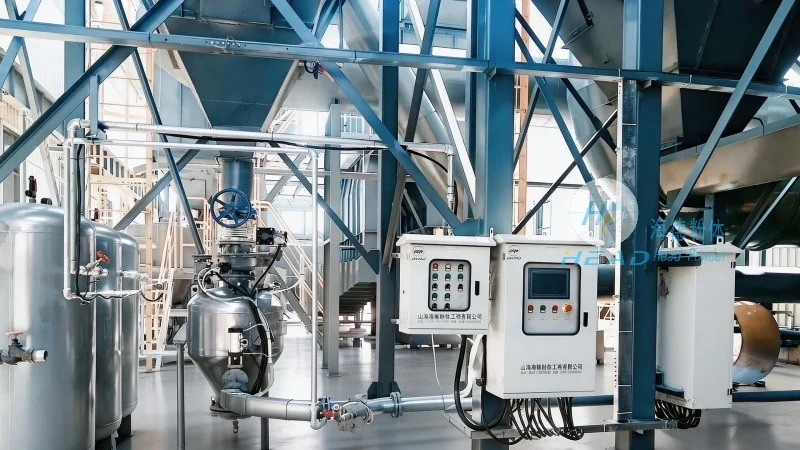
Overview of Pneumatic Conveying Systems for Dust Collector Ash
Pneumatic conveying systems utilize air or gas to transport bulk materials, including fine dust and ash, through a network of pipes. These systems are widely adopted in industries like power generation, cement production, and metallurgy, where large volumes of collected ash need to be moved over short to medium distances. The primary advantage of pneumatic conveying is its ability to handle materials that are difficult to transport via traditional methods, such as screw conveyors or belt conveyors, due to their abrasive nature or tendency to clog.
Key Components of the Pneumatic Conveying System
The pneumatic conveying system for dust collector ash typically consists of several critical components that work in tandem to ensure smooth material transport. These include the dust collector hopper, where ash accumulates; a feed device, such as a rotary valve or a star feeder, which controls the flow of ash into the conveying line; a conveying line, usually made of stainless steel or other corrosion-resistant materials to handle the abrasive nature of ash; a blower or air compressor, which generates the necessary air pressure to move the material; and a discharge device, such as a rotary valve or a cyclone separator, which directs the ash to its final destination.
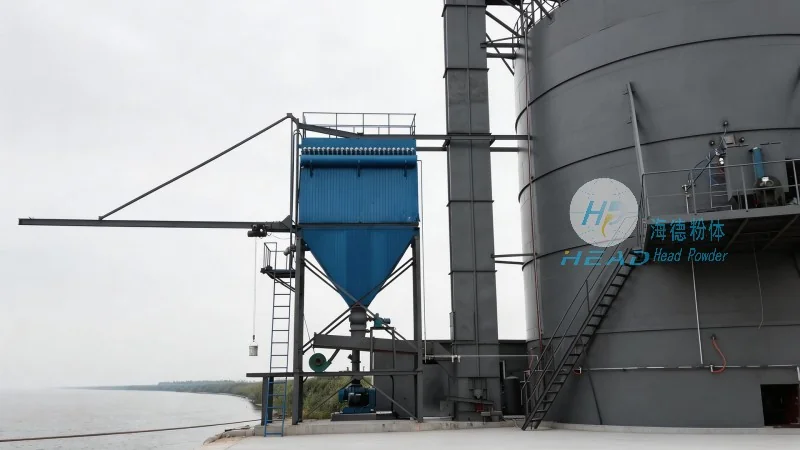
Operation Process of the Pneumatic Conveying System
The operation process of a pneumatic conveying system for dust collector ash begins with the ash accumulating in the dust collector hopper. The feed device then releases a controlled amount of ash into the conveying line, where it is mixed with the air stream generated by the blower. The air, carrying the ash particles, travels through the conveying line to the discharge point. At the discharge end, the air and ash are separated, with the ash being collected and the air being either recirculated or vented, depending on the system design. The entire process is typically automated, with sensors and control systems monitoring pressure, flow rates, and material levels to ensure optimal performance.
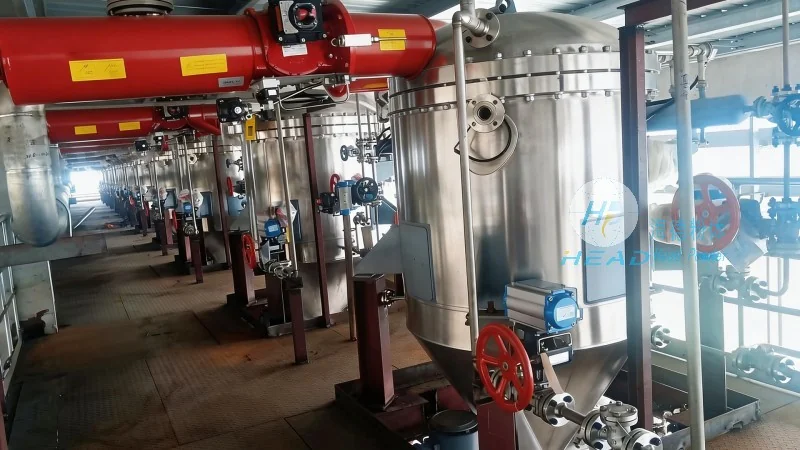
Working Principle of the Pneumatic Conveying System
The working principle of the pneumatic conveying system relies on the fundamental physics of fluid dynamics and particle transport. When air is introduced into the conveying line at a sufficient velocity, it creates a low-pressure zone that draws the ash particles into the air stream. The air velocity must be high enough to overcome the gravitational force acting on the ash particles and to maintain their suspension within the pipe. The system operates on either positive pressure or negative pressure (or a combination of both), with positive pressure systems being more common for short-distance conveying and negative pressure systems for longer distances or when handling dusty environments.
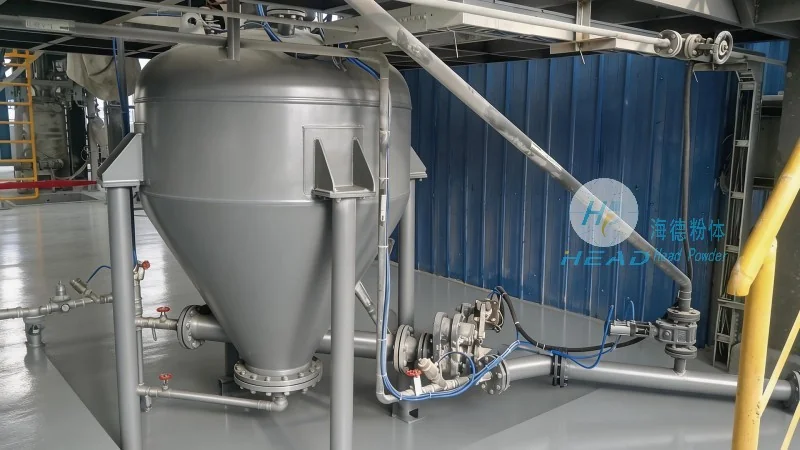
Technical Advantages and Considerations
Pneumatic conveying systems for dust collector ash offer several technical advantages, including high efficiency in material transport, minimal maintenance requirements compared to mechanical conveyors, and the ability to handle abrasive materials without clogging. However, the system design must consider factors such as the ash's particle size distribution, moisture content, and density, as these characteristics affect the air velocity and pressure required for effective conveying. Additionally, the system must be equipped with proper filtration and dust control measures to prevent air pollution and ensure compliance with environmental regulations.
About Shandong HeadPowder Engineering Co., Ltd.
Shandong HeadPowder Engineering Co., Ltd., a leading provider of industrial material handling solutions, specializes in designing and manufacturing pneumatic conveying systems tailored to the needs of dust collector ash handling. With years of experience in the industry, the company leverages advanced engineering and material science to develop reliable, efficient, and cost-effective systems that meet the highest standards of performance and safety. HeadPowder's commitment to quality and customer satisfaction has made it a trusted partner for facilities seeking to optimize their ash handling processes and improve overall operational efficiency.




