HeadPowder, or Shandong HeadPowder Engineering Co., Ltd., based in Shandong, China, specializes in the technology and application of pneumatic conveying systems for metal particles. This article explores the fundamental principles behind this method and highlights key characteristics of its operational scenarios.
The Principle of Pneumatic Conveying for Metal Particles
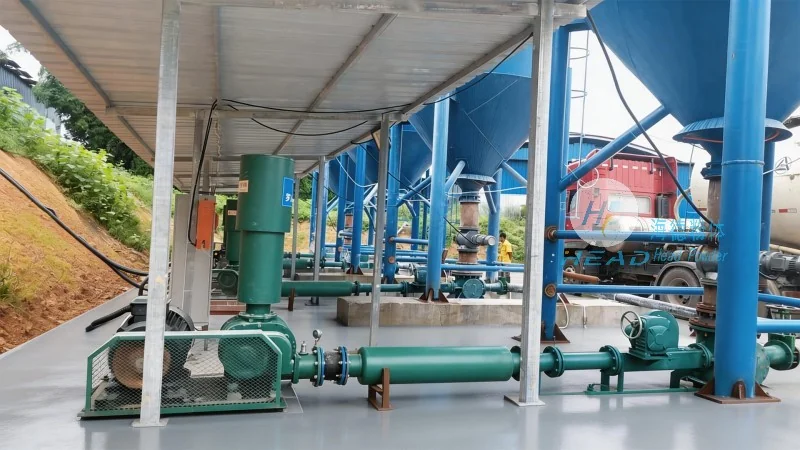
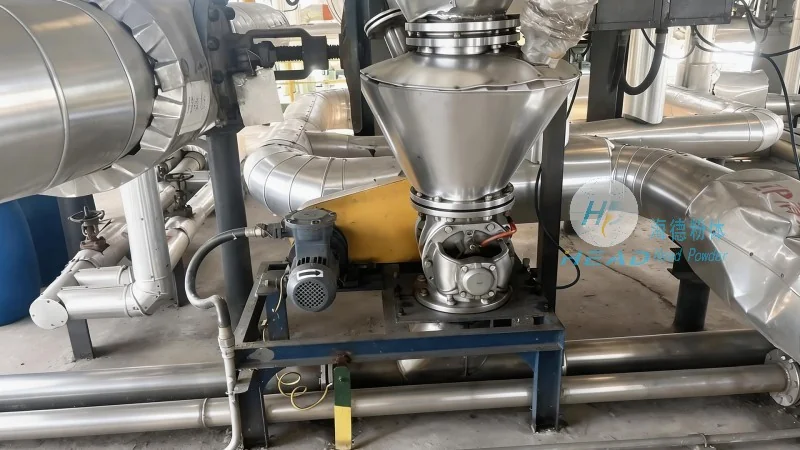
Pneumatic conveying is a process that uses air or other gases to transport solid materials, such as metal particles, through a pipeline. The core principle involves creating a pressure differential or using suction to move the particles along the conveying line. There are two main types of pneumatic conveying systems: pressure systems, which operate under positive pressure, and vacuum systems, which operate under negative pressure. For metal particles, the choice of system depends on factors like particle size, density, and the distance to be conveyed. The system typically includes a hopper for material storage, a conveyor line, and a receiver for the discharged material. Air is introduced into the system, either by a blower or a vacuum pump, to generate the necessary flow. The metal particles are then entrained by the moving air and transported through the pipeline. The velocity of the air must be sufficient to overcome the gravitational and frictional forces acting on the particles, ensuring stable and efficient transport. The design of the conveying line, including the diameter, length, and bends, is critical to maintaining the required air velocity and preventing particle deposition or blockages.
Key Characteristics of Operational Scenarios
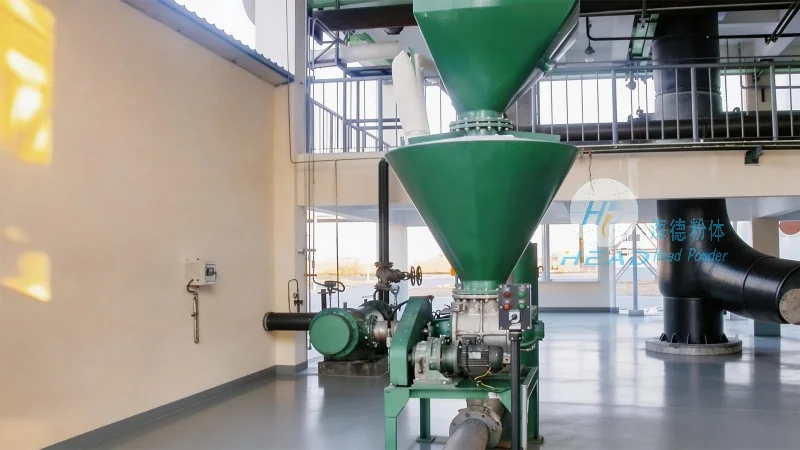
The operational scenarios for pneumatic conveying of metal particles exhibit several distinct features that influence system performance and application suitability. First, the particle characteristics play a crucial role. Metal particles can vary widely in size, from fine powders to coarse granules, and in density, which affects their settling velocity. The system must be designed to handle these variations, often requiring adjustable air flow rates and pressure levels. Second, the conveying distance and layout are significant factors. Short-distance conveying may use simple straight lines, while long-distance or complex layouts may involve multiple bends, vertical lifts, and horizontal sections, necessitating more sophisticated control systems. Third, the environment and safety considerations are paramount. Metal particles can be abrasive or potentially hazardous, requiring materials for the conveying line that resist wear and corrosion. Additionally, the system must comply with safety regulations to prevent dust explosions or other hazards, which may involve the use of explosion-proof components and proper ventilation. Fourth, the integration with other processes is important. Pneumatic conveying systems are often integrated with upstream and downstream equipment, such as feeders, classifiers, and storage silos, to form a continuous material handling line. This integration requires precise control and coordination to ensure smooth operation and minimize downtime. Finally, the efficiency and cost-effectiveness of the system are key considerations. Factors like energy consumption, maintenance requirements, and material recovery rates are evaluated to optimize the overall performance of the conveying system.
Application Examples and Benefits
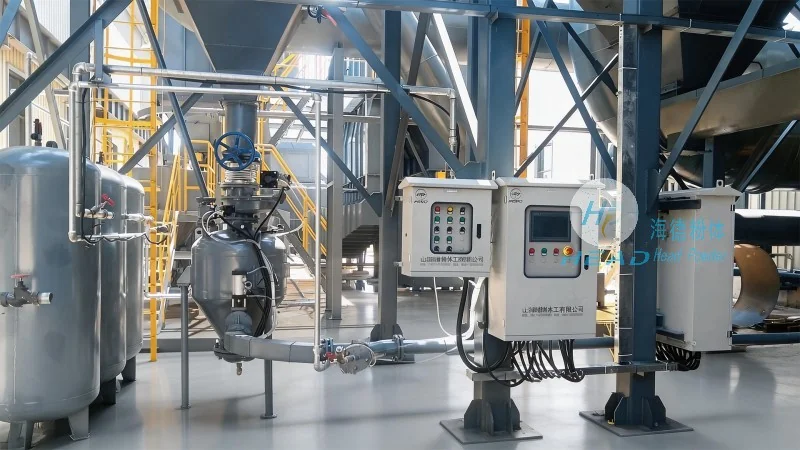
HeadPowder's pneumatic conveying systems for metal particles are applied in various industrial sectors, including metal processing, chemical manufacturing, and food processing. In metal processing, for example, the system is used to transport metal powders for sintering, casting, or coating applications. The ability to handle fine metal powders with high precision and minimal loss is a significant advantage. In chemical manufacturing, the system may be used to convey metal-based catalysts or additives, where consistent particle size and purity are critical. The benefits of pneumatic conveying for metal particles include improved material handling efficiency, reduced labor costs, and enhanced safety compared to traditional methods like bucket elevators or belt conveyors. The system also offers flexibility in layout, allowing for integration into existing facilities or new plant designs. Furthermore, the use of pneumatic conveying can reduce material degradation and contamination, which is particularly important for high-value metal powders. Overall, the technology provides a reliable and efficient solution for the transportation of metal particles in industrial settings.




