For industries dealing with anhydrous aluminum chloride powder, efficient and reliable material handling is crucial. Pneumatic conveying equipment offers a solution that ensures safe, dust-free, and continuous transport of this hazardous material. This article delves into the operation process and working principle of such equipment, highlighting its importance in maintaining operational efficiency and safety standards.
Key Components of the Pneumatic Conveying System
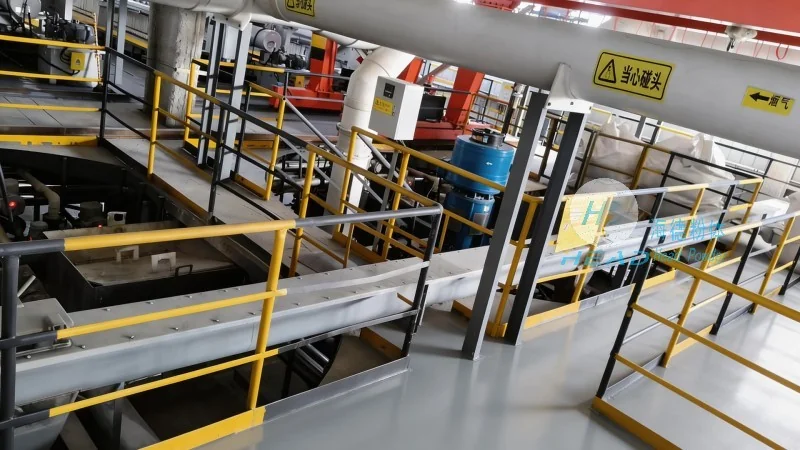
The pneumatic conveying system for anhydrous aluminum chloride powder typically consists of several critical components. These include a hopper for material storage, a rotary valve or feeder to control the flow of powder, a conveying line (often with bends and straight sections), a dust filter or cyclone separator to capture fine particles, and a blower or compressor to generate the necessary air pressure. Each component plays a vital role in the smooth operation of the system, ensuring that the powder is transported without clogging or loss.
Operation Process: Step-by-Step Overview
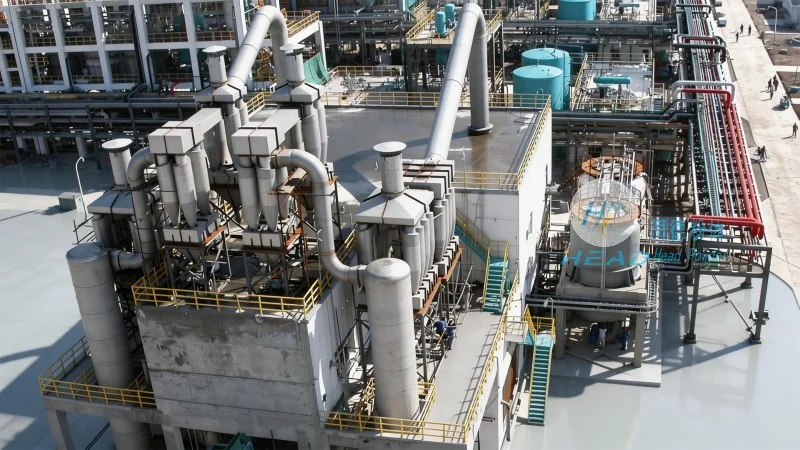
The operation of the pneumatic conveying equipment for anhydrous aluminum chloride powder follows a systematic process. Initially, the powder is loaded into the hopper from a storage silo or bag. The rotary valve then regulates the amount of powder released into the conveying line, controlling the flow rate to match the system's capacity. Simultaneously, the blower generates a high-pressure air stream that travels through the conveying line, carrying the powder particles forward. As the mixture moves through the system, it passes through bends and straight sections, with the cyclone separator at the end capturing the powder and returning it to the system or discharging it to a collection bin. The air, now filtered of fine particles, is released back into the environment or recirculated if necessary.
Working Principle: How the System Transports Powder
The working principle of the pneumatic conveying system relies on the principles of fluid dynamics and particle suspension. The blower creates a pressure differential between the inlet and outlet of the conveying line. This pressure difference generates a flow of air that entrains the powder particles, lifting them from the hopper and transporting them through the system. The velocity of the air is critical; it must be sufficient to keep the powder suspended but not so high as to cause excessive wear on the equipment or cause the powder to be deposited prematurely. The cyclone separator works on the principle of centrifugal force, where the heavier powder particles are forced to the wall and fall to the collection point, while the air continues through the filter and exits.
Advantages of Using Pneumatic Conveying for Anhydrous Aluminum Chloride
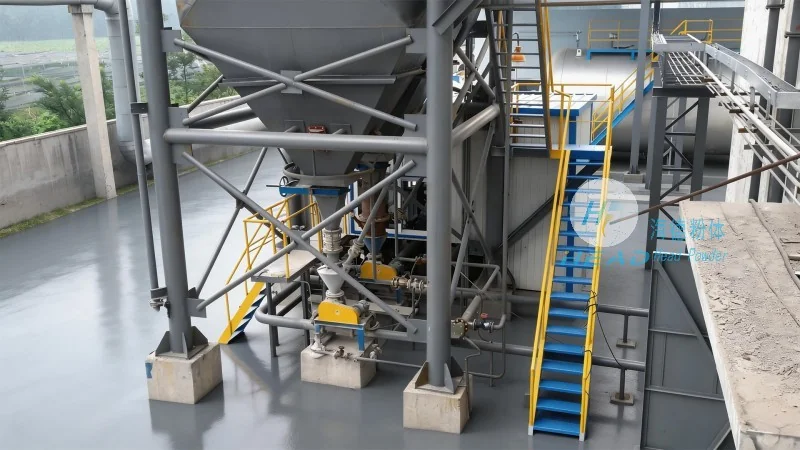
Employing pneumatic conveying for anhydrous aluminum chloride powder offers several advantages over traditional methods like bucket elevators or belt conveyors. Firstly, it eliminates the risk of dust explosion, as the material is contained within the system. Secondly, it provides a continuous and gentle handling process, reducing the risk of product degradation or agglomeration. Thirdly, the system is compact and can be integrated into existing production lines, saving space and installation costs. Additionally, it allows for easy control of the flow rate and pressure, enabling precise material handling for varying production demands.




