Welcome to Shandong HeadPowder Engineering Co., Ltd., a leading provider of advanced pneumatic conveying solutions for polyester fiber powder applications. Our expertise lies in designing and implementing efficient systems that ensure reliable material transport, minimal product degradation, and optimal operational performance. This article explores the fundamental principles behind polyester fiber powder pneumatic conveying systems and highlights the key working scene characteristics that define their effectiveness in various industrial settings.
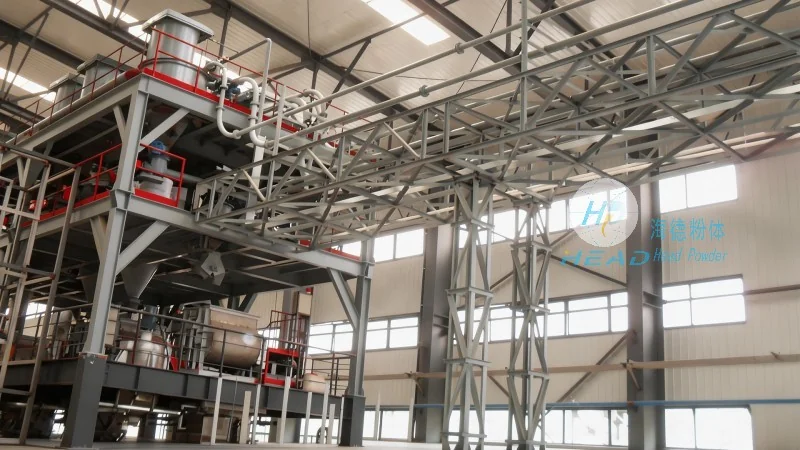
Understanding the Core Principles of Pneumatic Conveying for Polyester Fiber Powders
Pneumatic conveying systems utilize air or gas as the primary medium to transport bulk materials like polyester fiber powders. The fundamental principle revolves around creating a pressure differential between the material source and the destination. By generating airflow through a pipeline network, the system lifts, transports, and deposits the powder without the need for mechanical components such as belts or buckets. This method offers several advantages, including reduced product contamination, lower maintenance requirements, and the ability to handle materials in enclosed environments, which is critical for maintaining the quality of polyester fibers.
The system typically operates on one of two main principles: pressure or vacuum. In pressure systems, compressed air is introduced at the material source, creating a positive pressure that propels the powder through the pipeline. This approach is ideal for applications requiring high transport rates and long-distance conveying. Vacuum systems, on the other hand, use a vacuum pump to create a negative pressure at the destination, drawing the powder from the source. Vacuum systems are often preferred for short-distance or gentle handling, as they minimize particle breakage and maintain the integrity of the polyester fibers.
Key Working Scene Characteristics of Polyester Fiber Powder Pneumatic Conveying Systems
The effectiveness of a pneumatic conveying system for polyester fiber powders is heavily influenced by several working scene characteristics. These characteristics include the material's physical properties, the system's design, and the operational environment. Understanding these factors is essential for selecting the right system configuration and ensuring optimal performance.
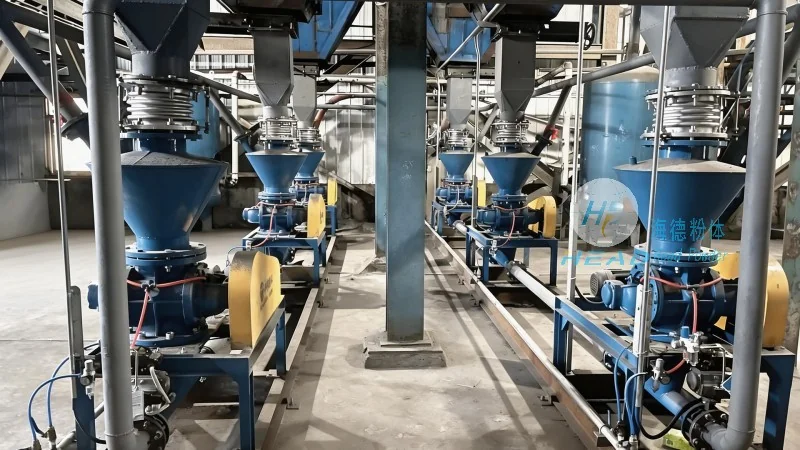
Firstly, the physical properties of polyester fiber powders, such as particle size, density, and moisture content, play a crucial role. Fine particles or those with high moisture content may require specialized equipment to prevent clogging or agglomeration. Our systems are engineered to handle a wide range of particle sizes, from coarse to fine, ensuring consistent and reliable transport. The design of the conveying line, including the diameter and length of the pipes, is tailored to match the material's characteristics and the required transport distance. For instance, larger pipe diameters are used for high-volume applications, while smaller diameters are suitable for shorter, more localized conveying tasks.
Secondly, the operational environment and the need for enclosed systems are critical considerations. Polyester fibers are often used in industries like textiles, where maintaining a clean and dust-free environment is paramount. Pneumatic conveying systems provide an enclosed solution, preventing dust emissions and protecting both the material and the surrounding workspace. This is particularly important for polyester fibers, which can be sensitive to contamination from other materials or environmental factors. The system's ability to operate in a closed loop also enhances safety and compliance with environmental regulations.
Thirdly, the system's integration with other industrial processes is a key working scene characteristic. Many applications require the polyester fiber powder to be transferred from one process unit to another, such as from a storage silo to a processing machine. Our systems are designed to seamlessly integrate with existing equipment, ensuring smooth material flow and minimizing downtime. This integration is achieved through the use of appropriate valves, filters, and control systems that coordinate the transport with the downstream processes.
Applications and Performance in Real-World Scenarios
Pneumatic conveying systems for polyester fiber powders are widely used in various industrial applications. In the textile industry, for example, these systems are employed to transport raw polyester fibers from storage to spinning machines. The systems ensure that the fibers are delivered in a consistent manner, which is essential for maintaining the quality of the final textile products. In the chemical industry, polyester fibers may be used as a filler or reinforcement material, and pneumatic conveying systems facilitate the efficient transfer of these materials between production stages.
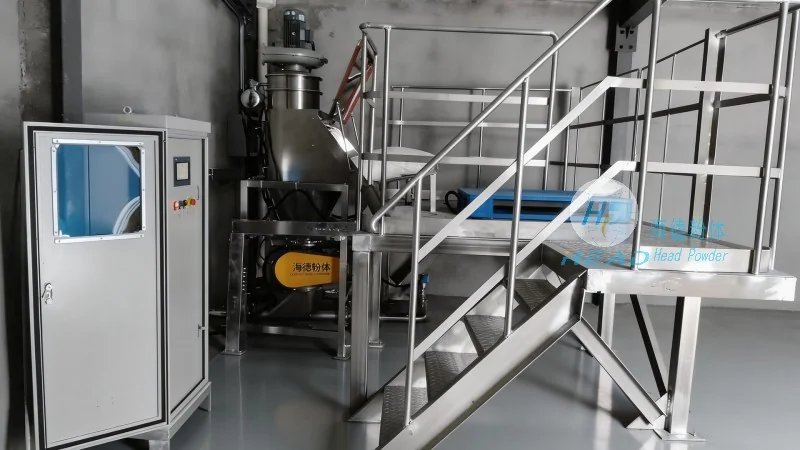
The performance of these systems is measured by several key indicators, including transport capacity, pressure drop, and material handling efficiency. Transport capacity refers to the amount of material that can be conveyed per unit time, which is influenced by factors such as the system's pressure, pipe diameter, and the material's properties. Pressure drop, or the reduction in pressure as the material moves through the pipeline, is an important consideration as it affects the energy consumption and overall system efficiency. Our systems are optimized to minimize pressure drop while maintaining high transport capacity, ensuring cost-effective operation.
Material handling efficiency is another critical aspect, as it relates to the system's ability to handle the polyester fibers without causing damage or degradation. This includes preventing particle breakage, which can affect the fiber's strength and performance. Our systems incorporate features such as gentle air flow and appropriate pipe design to minimize mechanical stress on the fibers. Additionally, the use of filters and cleaning mechanisms ensures that the system remains free from blockages and maintains consistent performance over time.
Conclusion and Company Overview
Shandong HeadPowder Engineering Co., Ltd. specializes in providing customized pneumatic conveying solutions for polyester fiber powder applications. Our systems are designed to meet the unique requirements of each working scene, ensuring efficient, reliable, and safe material transport. By leveraging our expertise in material handling and system design, we help industries improve their operational efficiency, reduce costs, and maintain the quality of their polyester fiber products. With our commitment to innovation and customer satisfaction, we remain a trusted partner for businesses seeking advanced pneumatic conveying solutions.




