Vanadium oxide powder pneumatic conveying systems are critical in industrial applications for efficiently transporting fine powders like vanadium oxide. These systems utilize air or gas as the conveying medium to move particles from one location to another, offering advantages such as reduced equipment wear, lower maintenance requirements, and the ability to handle materials in hazardous environments. The operation process and working principle of such systems involve several key components and steps that ensure reliable and efficient material transport.
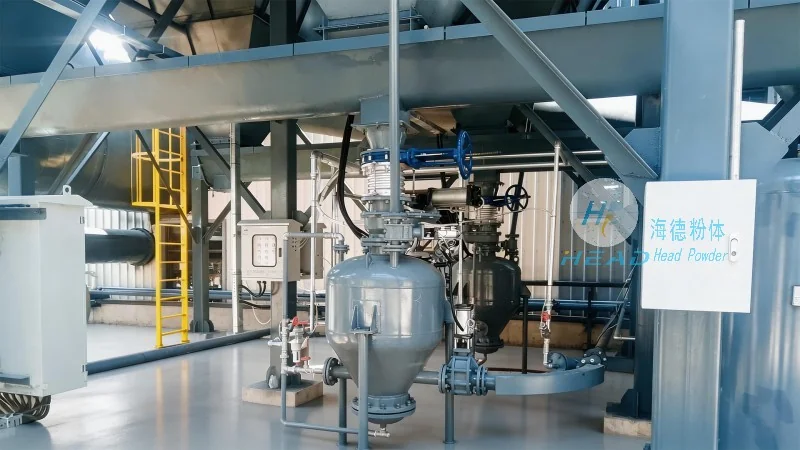
Key Components of Pneumatic Conveying Systems
The core components of a vanadium oxide powder pneumatic conveying system typically include a hopper for material storage, a conveyor line (either positive or negative pressure), a dust collector, and a control system. The hopper is designed to hold the vanadium oxide powder and feed it into the system at a controlled rate. The conveyor line can operate under positive pressure (where air is forced through the system) or negative pressure (where air is drawn out). For vanadium oxide, which is often sensitive to moisture and contamination, the system may incorporate features like moisture-proof seals and filtration to maintain material quality.
Operation Process of Vanadium Oxide Powder Pneumatic Conveying
The operation process begins with loading the vanadium oxide powder into the hopper. The material is then fed into the conveyor line using a rotary valve or feeder, which controls the flow rate. In a positive pressure system, compressed air is introduced at the discharge end, creating a pressure differential that propels the powder through the pipeline. The air and powder mixture travels to the receiving hopper or processing unit. In a negative pressure system, a vacuum is created at the discharge end, drawing the powder and air through the pipeline. The system may include intermediate cyclones or filters to separate the powder from the air before it is discharged or recirculated. The control system monitors pressure, flow rate, and material level to ensure smooth operation and prevent blockages or overloading.
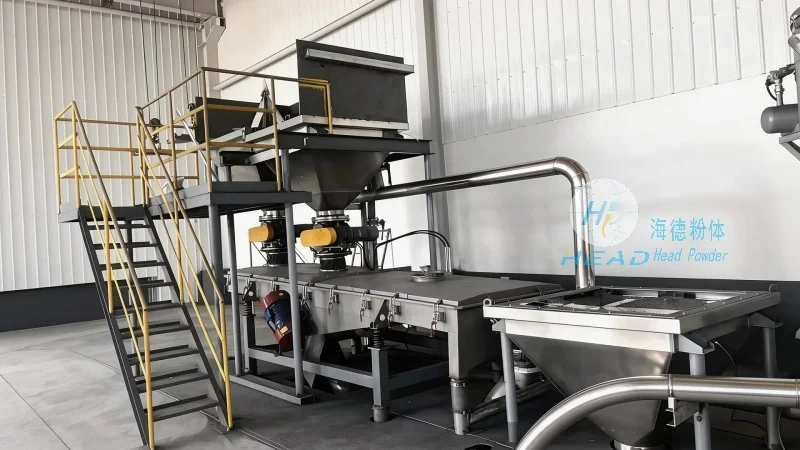
Working Principle of Pneumatic Conveying for Vanadium Oxide
The working principle of pneumatic conveying relies on the interaction between the powder particles and the air stream. In a positive pressure system, the air velocity is maintained above the minimum fluidization velocity of the vanadium oxide particles, ensuring that the particles remain suspended and transported. The pressure differential between the hopper and the discharge point provides the necessary force to move the material. In a negative pressure system, the vacuum pulls the particles into the air stream, and the air velocity again must exceed the minimum fluidization velocity to prevent settling. The system's design, including pipeline diameter, air flow rate, and particle size distribution, is critical to achieving efficient conveying without excessive energy consumption or particle degradation.
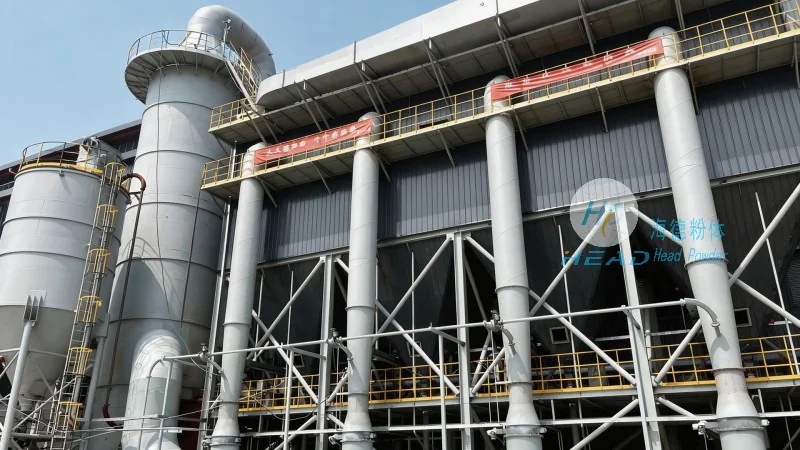
Advantages of Pneumatic Conveying for Vanadium Oxide
Pneumatic conveying offers several advantages for handling vanadium oxide powder. These include the ability to transport materials over long distances without the need for mechanical components like belts or buckets, which reduces wear and maintenance. The system can also be integrated with other processing equipment, such as reactors or reactors, to streamline production. Additionally, pneumatic conveying can handle materials that are difficult to transport by other methods, such as those with high moisture content or those that are prone to caking. The enclosed system also helps to prevent dust emissions and contamination, which is important for vanadium oxide, which is often used in high-purity applications.
About Shandong HeadPowder Engineering Co., Ltd.
Shandong HeadPowder Engineering Co., Ltd., commonly known as headpowder, is a leading manufacturer of pneumatic conveying systems and related equipment for industrial applications. With headquarters in Shandong, China, the company specializes in designing and manufacturing systems tailored to the specific needs of clients, including those handling vanadium oxide and other fine powders. headpowder's expertise lies in creating efficient, reliable, and cost-effective conveying solutions that meet the highest standards of performance and safety. The company's products are widely used in industries such as chemical, pharmaceutical, and metallurgy, where the transport of fine powders is essential to production processes.




