When it comes to transporting PVC powder via pneumatic systems, selecting the right conveying method is crucial for efficiency, cost-effectiveness, and operational safety. Two primary approaches dominate the industry: negative pressure (or vacuum) conveying and positive pressure conveying. Each method has distinct characteristics, advantages, and limitations that affect its suitability for different applications. This article provides a detailed comparison of negative pressure and positive pressure conveying for PVC powder, helping industry professionals make informed decisions based on their specific operational needs.
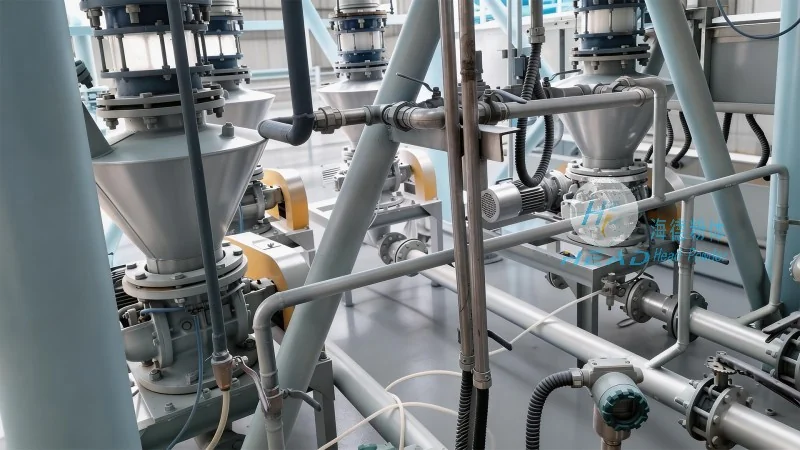
Introduction to Pneumatic Conveying for PVC Powder
PVC powder, a key raw material in manufacturing various products such as pipes, fittings, and flooring, requires reliable and efficient transport from storage to processing units. Pneumatic conveying offers a non-contact, flexible, and often faster alternative to traditional mechanical conveying methods. The choice between negative pressure and positive pressure systems depends on factors like material properties, distance, system complexity, and environmental considerations.
Understanding Negative Pressure (Vacuum) Conveying
Negative pressure conveying operates by creating a vacuum in the conveying line, drawing material from the source to the destination. This method is particularly effective for materials that are prone to dusting or require gentle handling to prevent degradation. The primary advantage of negative pressure systems is their ability to draw material from multiple sources or even from a hopper located at a higher elevation than the destination, without the need for complex mechanical components at the source.
Key advantages of negative pressure conveying for PVC powder include:
- Reduced risk of material spillage and dust contamination, as the system draws material rather than forcing it through the line.
- Lower initial investment and maintenance costs compared to positive pressure systems, as they typically require fewer moving parts and less robust equipment.
- Ability to handle fine powders and materials that are sensitive to pressure changes, as the vacuum environment minimizes particle degradation.
However, negative pressure conveying also has notable drawbacks. The main limitation is the maximum conveying distance, which is generally shorter than that of positive pressure systems due to the energy required to maintain a vacuum over longer distances. Additionally, the system can be more susceptible to clogging if the material is highly cohesive or contains moisture, as the vacuum may not provide sufficient force to move the material through the line.
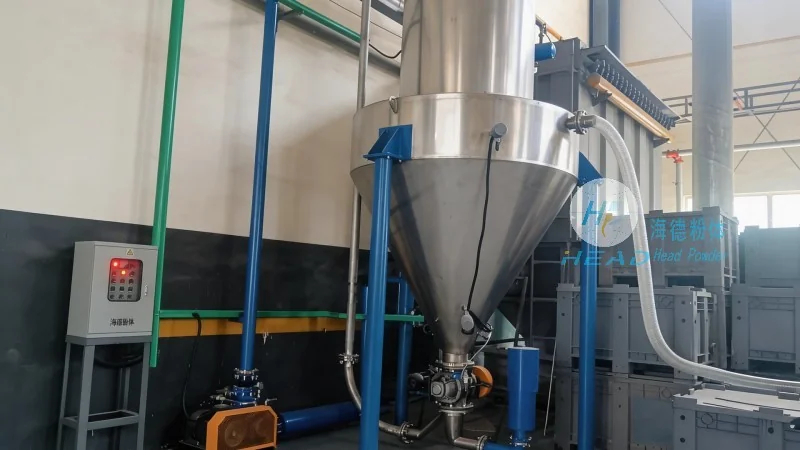
Understanding Positive Pressure (Pressure) Conveying
Positive pressure conveying, on the other hand, uses compressed air to push material through the conveying line. This method is ideal for longer distances and for materials that are less sensitive to pressure changes. The system operates by blowing air (or a mixture of air and material) through the line, creating a positive pressure that propels the material from the source to the destination.
Key advantages of positive pressure conveying for PVC powder include:
- Ability to convey materials over longer distances, often up to several hundred meters or more, making it suitable for large-scale industrial applications.
- Higher material throughput, as the positive pressure can handle larger volumes of material per unit time compared to negative pressure systems.
- More robust and reliable operation, as the system is less affected by changes in source or destination elevation, and can handle a wider range of material properties.
Despite these benefits, positive pressure conveying has its own set of challenges. The primary drawback is the higher initial investment and operational costs, as it requires powerful compressors and more durable equipment to maintain the necessary pressure. Additionally, the system can generate more dust and noise, which may require additional environmental controls. Furthermore, positive pressure systems are generally less effective for handling fine, cohesive powders, as the high pressure can cause particle degradation or agglomeration.
Comparison of Negative Pressure vs. Positive Pressure Conveying for PVC Powder
When comparing negative pressure and positive pressure conveying for PVC powder, several factors must be considered to determine the most suitable option. The choice often hinges on the specific application, material characteristics, and operational constraints.
For short-distance conveying of fine, sensitive PVC powders, negative pressure systems are often preferred due to their gentle handling and lower cost. These systems are ideal for applications where the source and destination are close together, and where minimizing dust and material degradation is critical. In contrast, for long-distance or high-throughput applications, positive pressure systems offer superior performance and reliability.
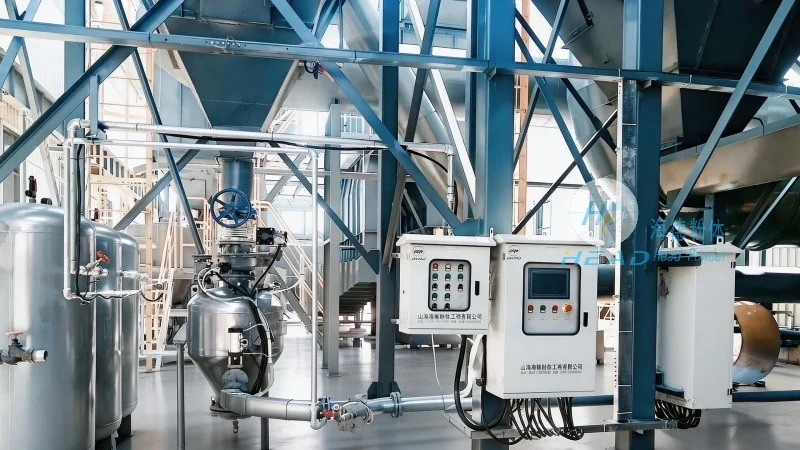
Another critical factor is the material's properties. Highly cohesive or moisture-sensitive PVC powders may perform better in negative pressure systems, as the vacuum environment reduces the risk of agglomeration. Conversely, less sensitive materials that require high throughput over long distances are better suited for positive pressure systems.
Operational considerations also play a role. Negative pressure systems are generally easier to install and maintain, as they do not require complex compressors at the source. However, they may be more challenging to scale up for large-scale operations due to the limitations in conveying distance. Positive pressure systems, while more complex to install, can be scaled up more easily and are better suited for large industrial plants.
Conclusion and Recommendations
Both negative pressure and positive pressure conveying offer viable solutions for transporting PVC powder, but the optimal choice depends on a careful evaluation of operational requirements, material characteristics, and cost considerations. For applications requiring gentle handling and short distances, negative pressure conveying is a cost-effective and efficient option. For long-distance, high-throughput operations, positive pressure conveying provides the necessary performance and reliability.
When selecting a pneumatic conveying system for PVC powder, it is essential to consult with industry experts and consider factors such as material flow rate, distance, and environmental regulations. By understanding the advantages and limitations of each method, manufacturers can choose the most suitable conveying system to ensure efficient, safe, and cost-effective operation.




